Indonesian rescue teams announced on Sunday a new development in the disappearance of the small plane that lost contact in the east of the country, as the teams were able to locate the wreckage of the plane, but the fate of the ten passengers who were on board remains shrouded in mystery, amid growing concerns about their safety.
Details of finding the wreckage
Indonesian authorities launched an intensive search operation Saturday afternoon after losing contact with the Indonesia Air Transport plane. The aircraft was on a domestic flight from Yogyakarta to Makassar when it disappeared from radar. At a press conference, Muhammad Arif Anwar, head of the Makassar search and rescue agency, confirmed that aerial search teams had spotted what appeared to be the aircraft's fuselage, including the rear section and windows, confirming that it had crashed.
The Indonesian official noted that the plane crashed on Mount Pulusaraung, located within the Pantmurong-Pulusaraung National Park, an area characterized by harsh geography.
Official mission and rescue challenges
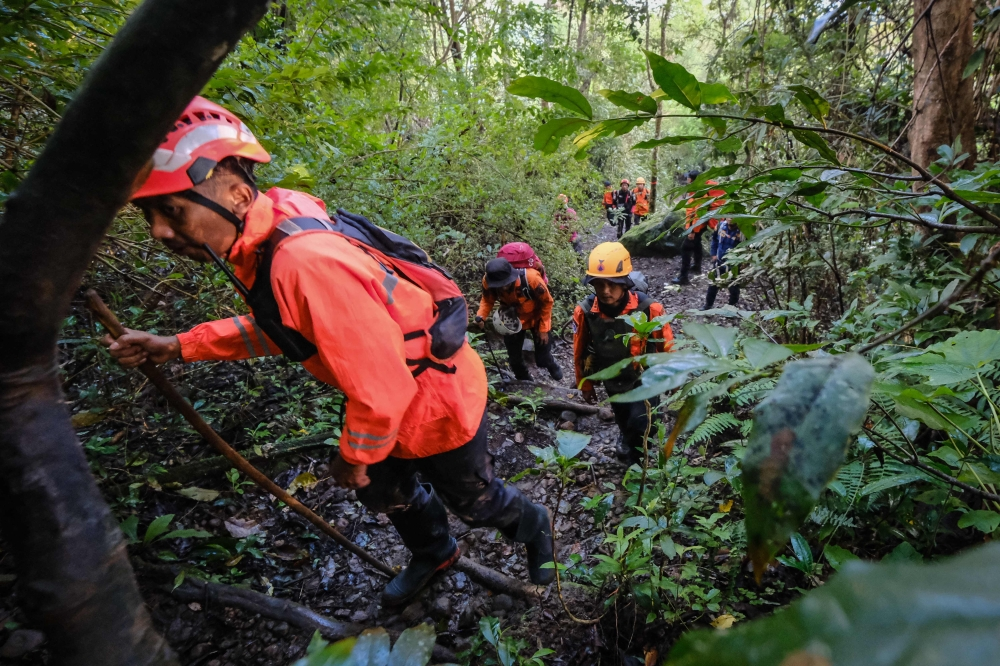
The aircraft was carrying three government employees from the Ministry of Maritime Affairs and Fisheries, who were on an official mission to monitor marine resources in the area, in addition to the seven-member crew. More than a thousand people were mobilized to participate in the complex search and rescue operations.
For his part, local military official Bangon Nawo explained that reaching the wreckage site is facing significant logistical challenges. The rugged mountainous terrain, dense forests in the national park, as well as heavy fog and poor weather conditions, are all hindering the progress of ground rescue teams and limiting visibility for air units.
The context of aviation in Indonesia: geographical and historical challenges
This incident has once again highlighted the challenges facing the aviation sector in Indonesia, a sprawling archipelago of thousands of islands where air transport is a vital lifeline for travel between different regions. Due to its complex geography and rapidly changing tropical climate, air traffic in the country faces ongoing safety challenges.
Despite significant government efforts in recent years to improve air safety standards and modernize fleets, accidents still occur occasionally, particularly involving small aircraft operating in remote or mountainous areas. Search and rescue operations in Indonesia are among the most challenging in the world due to its diverse terrain, which combines volcanic mountains, dense tropical forests, and vast bodies of water.
The Indonesian public and the families of the missing are anxiously awaiting the results of the rescue teams' arrival at the wreckage site, hoping to find survivors despite the difficult initial indications shown by the aerial images of the wreckage.