Increased volcanic activity in East Java
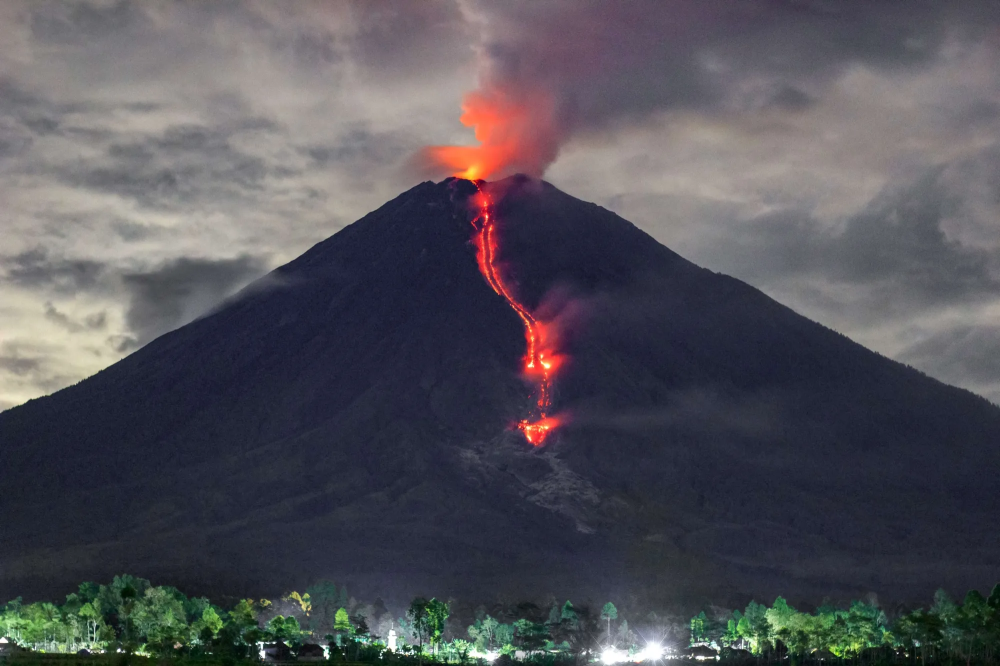
Indonesia experienced intense volcanic activity this morning, with Mount Semeru, the highest peak on the island of Java, erupting seven times in less than three hours. The volcano, located on the border of Lomajang and Malang regencies in East Java province, spewed massive columns of volcanic ash ranging from 300 to 800 meters above its crater, triggering heightened alert in the surrounding areas.
According to the Mount Semeru Observatory, as reported by the Indonesian news agency Antara, the first eruption began at 4:58 a.m. local time, with the initial eruption sending a 500-meter-high column of ash northeastward. Subsequent eruptions followed, with a second eruption at 6:10 a.m. producing an ash column reaching 700 meters, and a third eruption at 6:56 a.m. producing a shorter, 300-meter-high, grayish-white ash column.
Geological and historical context of Mount Simero
Mount Semeru, at 3,676 meters, is one of Indonesia's most active volcanoes. The country lies within the Pacific Ring of Fire, a region characterized by high seismic and volcanic activity due to tectonic plate movement. This geographical location makes Indonesia home to more than 120 active volcanoes.
Mount Semeru has a history of frequent eruptions. In December 2021, a large and sudden eruption killed dozens and displaced thousands, as lava and ash flows destroyed entire villages. Since then, the volcano has remained intermittently active, with authorities maintaining the alert level at level three (out of four), meaning residents and visitors must stay outside the designated danger zone around the crater.
The importance and potential impacts of volcanic activity
The renewed activity of Mount Semeru is causing significant concern at both the local and regional levels. Locally, volcanic ash poses a direct threat to public health, potentially causing respiratory problems and eye and skin irritation. The ash also negatively impacts crops and water sources, threatening to disrupt the daily lives of residents living near the volcano.
At the regional level, the greatest risk is disruption to air traffic. Volcanic ash plumes can reach great heights and spread over long distances, posing a serious threat to aircraft engines. Indonesian authorities are issuing continuous warnings to airlines to avoid airspace near the volcano. Authorities are closely monitoring volcanic activity, warning of the potential for lava flows and hot gases, and urging residents to exercise extreme caution and adhere to official evacuation instructions.