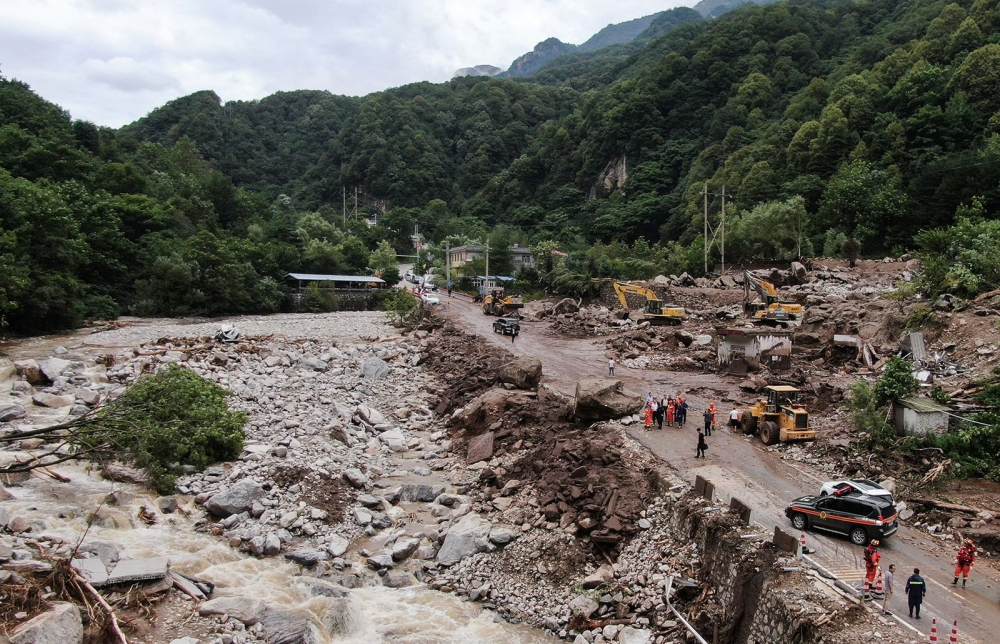
Indonesia's National Disaster Management Agency announced today a new humanitarian disaster in West Java province, where a massive landslide killed at least seven people and left 82 others missing in a remote village in West Bandung. The disaster was triggered by hours of torrential rain, which destabilized the soil and caused mudslides to engulf residential areas.
Details of the disaster and rescue efforts
The agency's spokesperson, Abdul Mahari, explained in an official statement that search and rescue teams are facing significant challenges in reaching the victims due to the rugged terrain and continued rainfall. He confirmed that the number of missing persons remains high, raising concerns that the death toll could rise in the coming hours. Local authorities are working in coordination with the army, police, and volunteers to intensify search operations, using heavy equipment and hand tools in areas inaccessible to vehicles.
The geographical and climatic context of Indonesia
Indonesia, a vast archipelago of more than 17,000 islands, is one of the world's most disaster-prone countries. It lies on the Pacific Ring of Fire, a region prone to earthquakes and volcanic activity. However, landslides and floods are a frequent seasonal threat, particularly during the tropical rainy season, which typically runs from October to April. The mountainous terrain of many islands, including the densely populated island of Java, exacerbates the risk of landslides when the soil becomes saturated with water.
Environmental factors and the impact of climate change
Environmental experts point out that the recurrence of these incidents is not solely due to natural factors, but is exacerbated by human activities such as deforestation and unplanned urban expansion in sloping areas. The removal of vegetation weakens soil cohesion, leaving villages at the foot of hills constantly vulnerable. Furthermore, climate change is playing an increasingly significant role in intensifying extreme weather events, with rainy seasons becoming heavier and more violent than in previous decades.
Ongoing warnings and precautionary measures
In a related development, the Indonesian Meteorology, Climatology, and Geophysics Agency (BMKG) issued preemptive warnings of continued severe weather conditions, forecasting heavy rain and strong winds for a full week in the region. Authorities urged residents living near cliffs and riverbanks to exercise extreme caution and be prepared to evacuate immediately if the rains persist, in order to avoid further loss of life under these challenging conditions.