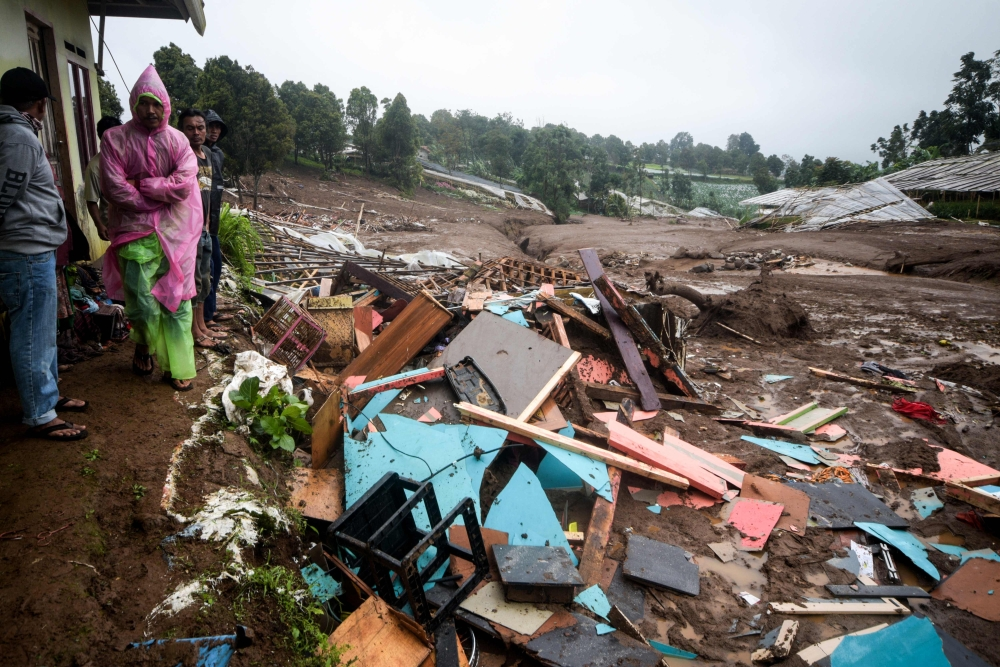
Indonesian authorities on Sunday resumed intensive search and rescue operations in a race against time to find 80 missing people following a devastating landslide that struck a residential area in West Java province, killing 10 people so far, according to official sources.
Challenges hindering rescue operations
Rescue teams faced extremely difficult logistical and weather challenges in recent hours. Local media quoted officials from the Disaster Management Agency as saying that operations were temporarily suspended on Saturday due to unstable soil and continued heavy rainfall, which prevented the deployment of machinery and heavy equipment needed to remove debris and reach those trapped. The teams are currently working with extreme caution for fear of further landslides that could endanger the lives of the rescuers.
Geographical and climatic context of the disaster
This disaster occurs within a typical seasonal pattern, as Indonesia regularly experiences similar incidents during its rainy season, which usually runs from November to April. West Java province, where the incident occurred, is characterized by its mountainous terrain and high population density, making it particularly vulnerable to landslides and flash floods.
Historical and environmental background
Indonesia, a vast archipelago of more than 17,000 islands, is one of the world's most disaster-prone countries. This is partly due to its geographical location and a range of environmental factors. In addition to heavy monsoon rains, environmental degradation caused by logging and deforestation exacerbates these disasters, as the soil loses its cohesion and becomes easily eroded when saturated with water.
Human impact and response
On the humanitarian front, the disaster triggered a wave of displacement, with floods and landslides forcing hundreds of families to evacuate their homes in the hardest-hit areas. Residents were moved to higher ground and temporary shelters in safer locations, while government agencies and relief teams continue to provide urgent assistance to those affected.
The international and regional community is closely monitoring the situation, as these incidents repeatedly highlight the need to strengthen infrastructure and early warning systems in rural and mountainous areas of Southeast Asia to reduce future human losses.