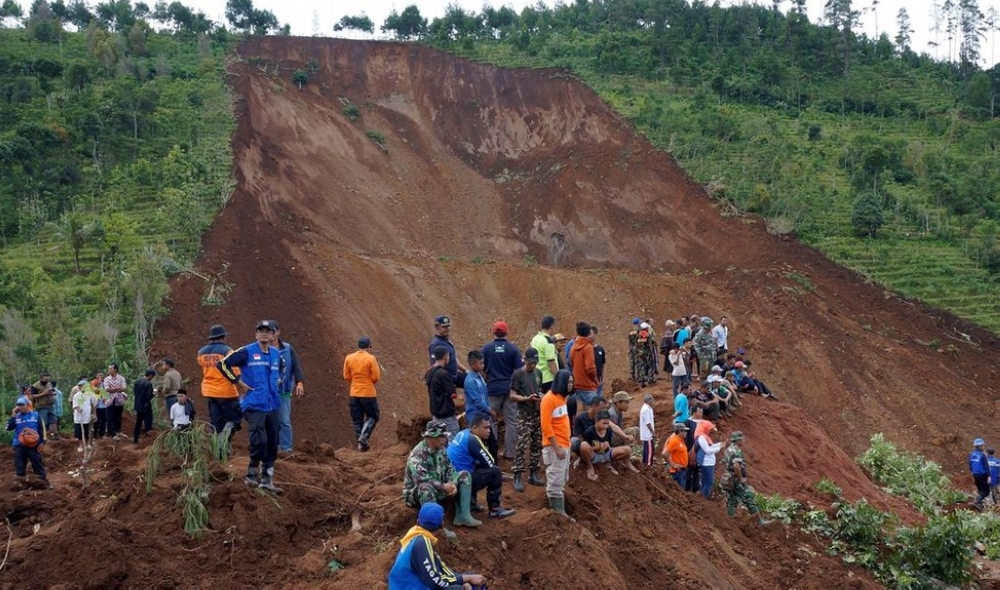
Indonesian authorities have announced that the death toll from the devastating landslide that struck a mountain village in the Bandung region of West Java province has risen to 74, while search and rescue operations continue for dozens of people still missing under tons of mud and debris. This disaster has once again highlighted the environmental and geological challenges facing Indonesia.
Details of the disaster and rescue efforts
The landslide occurred on January 24th, triggered by several days of torrential monsoon rains that saturated the soil, causing it to collapse onto dozens of homes in the village of Pasirlango. The disaster forced hundreds of residents to flee their homes, while others were buried under the mud. Rescue teams, comprised of thousands of army personnel, police officers, and volunteers, are facing significant challenges in their search operations. Adi Dian Permana, head of the local search and rescue agency, stated that "the weather is the main obstacle," explaining that dense fog and continuous rain not only impede visibility but also increase the risk of further landslides, jeopardizing the safety of rescuers.
General context: Indonesia and the challenge of natural disasters
Indonesia, an archipelago of thousands of islands, is one of the world's most disaster-prone countries. Its location on the Pacific Ring of Fire makes it vulnerable to earthquakes and volcanic eruptions, while its tropical climate brings torrential monsoon rains that regularly cause flooding and landslides, particularly between October and April. These natural hazards are exacerbated by human activities, most notably widespread deforestation for agricultural expansion or mining, which weakens the soil structure and increases its susceptibility to collapse during rainfall.
The importance and expected impact of the disaster
At the local level, the disaster caused immense devastation, with entire families losing their homes and loved ones, resulting in a humanitarian crisis requiring sustained relief efforts and psychological support for survivors. At the national level, the recurrence of such incidents places enormous strain on state resources and disaster management agencies, and raises pressing questions about the effectiveness of land-use policies and urban development plans in populated mountainous regions. Internationally, these tragedies draw global attention to the vulnerability of communities to climate change and environmental degradation, and underscore the urgent need to strengthen early warning systems and implement sustainable practices to protect lives and property in at-risk countries.