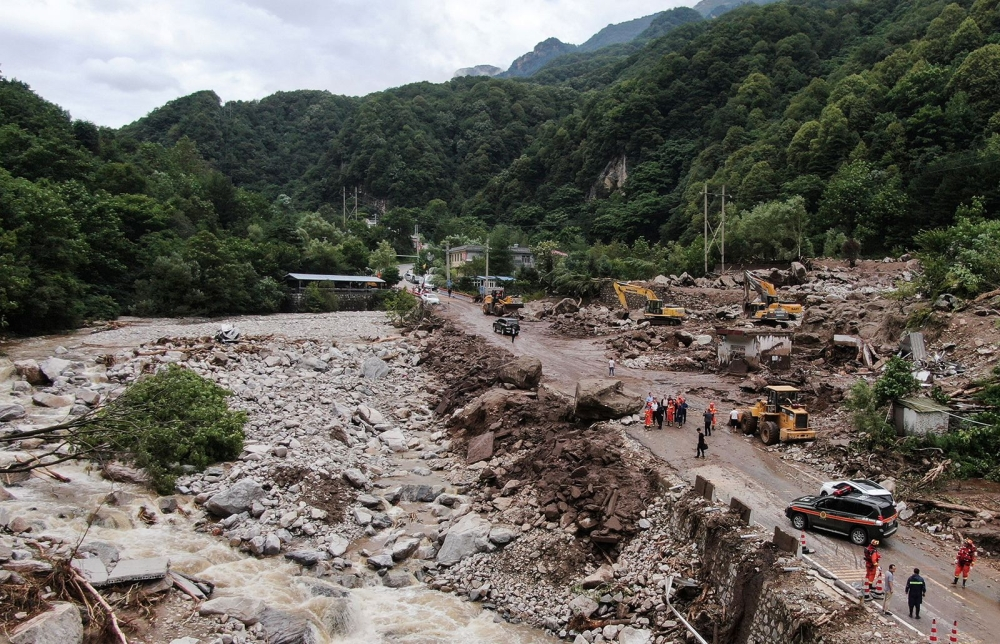
Indonesian authorities announced on Wednesday that the death toll from the tragic landslide that occurred last Saturday near the city of Bandung on the island of Java has risen to 38, while dozens remain missing, raising fears that the number of victims could rise further as search and rescue operations continue in extremely difficult conditions.
Details of the disaster and rescue efforts
The disaster was caused by torrential rains that saturated the soil, leading to landslides that buried two villages about 25 kilometers from Bandung, the country's fourth-largest city. More than 50 houses were buried under piles of mud and rocks, either completely destroyed or severely damaged. Adi Dian Permana, head of Bandung's search and rescue agency, confirmed in an official statement that 38 bodies have been recovered and identified so far, while 27 people remain missing. More than 650 local residents have been evacuated to safer areas for fear of a recurrence of the disaster.
Rescue teams are facing significant challenges, advancing with extreme caution due to the unstable terrain and ongoing rainfall, which could trigger further landslides. Adding to the complexity of the situation, landslides have trapped 23 soldiers participating in training exercises in the area, necessitating additional rescue efforts.
The geographical and climatic context of Indonesia
Landslides and floods are common natural disasters in Indonesia, especially during the monsoon season, which typically runs from October to March. The geography of the Indonesian archipelago, comprising thousands of islands with mountainous and volcanic terrain, exacerbates this risk. Steep slopes, combined with fertile but often unstable volcanic soil, create ideal conditions for landslides to occur during heavy rainfall.
The impact of deforestation on exacerbating disasters
This disaster has once again highlighted the critical role deforestation plays in exacerbating natural disasters. The Indonesian government previously indicated that deforestation was a major contributing factor to the devastating floods and landslides that struck Sumatra late last year, killing approximately 1,200 people. Tree roots stabilize the soil and increase its capacity to absorb rainwater; with the removal of vegetation, the soil is exposed and becomes more susceptible to erosion and collapse, turning torrential rains into deadly catastrophes.
Importance and expected impact
Locally, this disaster represents a humanitarian tragedy for the affected communities, with loss of life and property and the displacement of hundreds of families. Nationally, it places increasing pressure on the government to strengthen early warning systems, implement stricter land-use management policies, and halt illegal deforestation. Internationally, this incident stands as further evidence of the devastating effects of climate change and environmental degradation, underscoring the urgent need for international cooperation to address these borderless challenges.