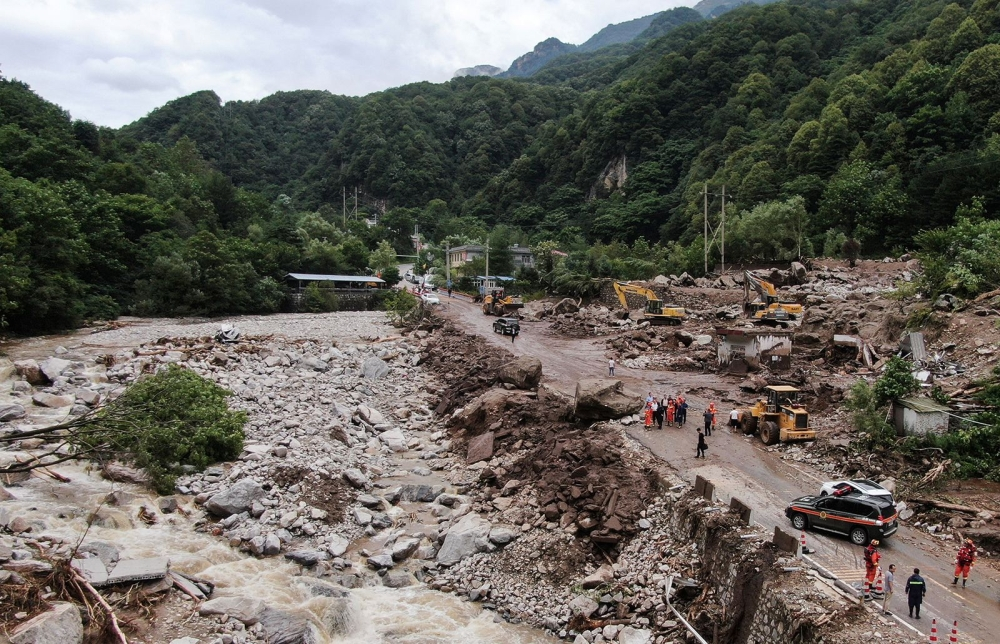
Indonesian authorities announced on Monday that the death toll from the devastating landslide that struck Java island had risen to 17, while search and rescue efforts continued for dozens of people still missing. The disaster occurred near Bandung, the country's fourth-largest city, after torrential rains over the weekend triggered a massive mudslide that buried homes in two villages.
Risky rescue efforts
Nearly 2,000 people, including military and police personnel and volunteers, are involved in the search and rescue operations, supported by heavy equipment. However, their efforts face enormous challenges, as they work with extreme caution due to the unstable terrain and continued rainfall, which could trigger further landslides. The National Disaster Management Agency confirmed that more than 50 houses were severely damaged, displacing over 650 people to temporary shelters. The head of the local search and rescue department reported that the number of missing persons has been revised to approximately 46 after data was verified with local authorities.
Indonesia and its geographical challenges
Indonesia, the world's largest archipelago, is one of the most disaster-prone regions on Earth. This is due to its location on the Pacific Ring of Fire, a region characterized by high seismic and volcanic activity. Additionally, its tropical climate brings heavy monsoon rains, typically from October to March, which saturate the soil and significantly increase the risk of flooding and landslides, particularly in mountainous and densely populated areas like Java.
Underlying causes: The role of deforestation
The causes of this disaster extend beyond mere heavy rainfall. The Indonesian government has previously indicated that deforestation and land degradation play a crucial role in exacerbating such disasters. Tree roots stabilize the soil and increase its capacity to absorb rainwater, and with the removal of vegetation, slopes become more vulnerable to erosion and collapse under the weight of the rain. This incident once again highlights the environmental challenges facing the country and the urgent need for sustainable land and forest management policies to prevent the recurrence of such tragedies.
Local and national influences
At the local level, landslides represent a human tragedy for affected communities, as residents lose loved ones, homes, and livelihoods. At the national level, these recurring disasters highlight the immense pressure on emergency management agencies and the ongoing need to improve early warning systems and land-use planning to protect vulnerable communities. They also place a responsibility on the government to address root causes, including unregulated development and harmful environmental practices, to prevent such tragedies from recurring in the future.