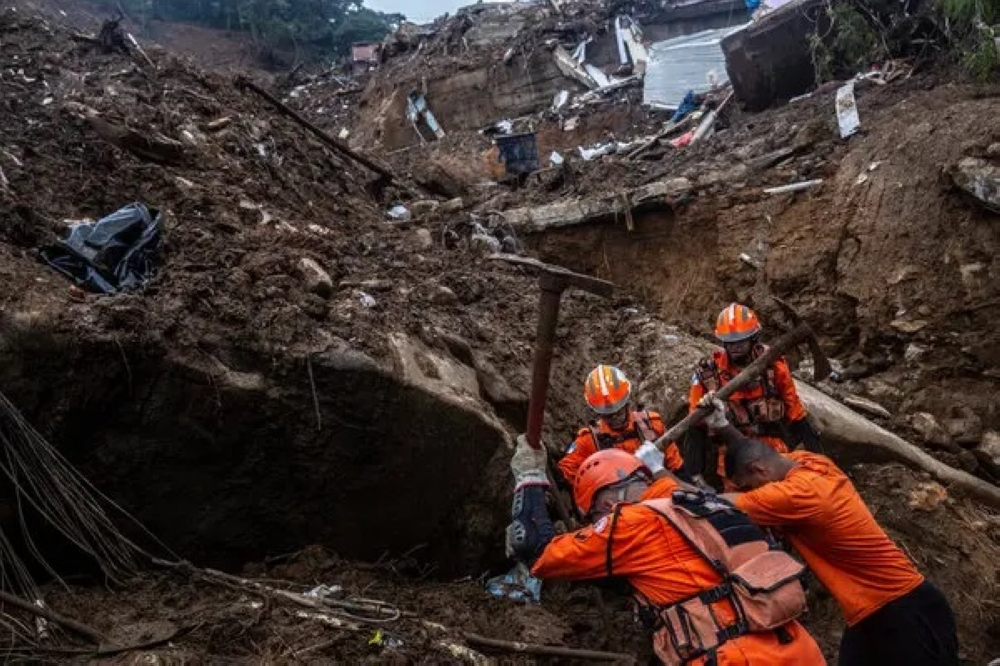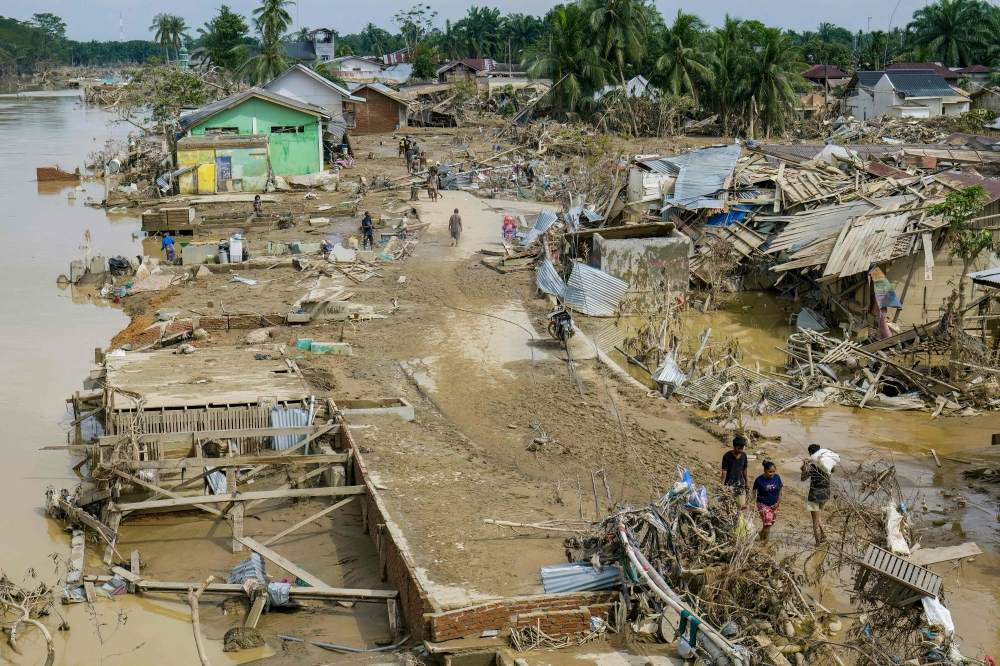
The Indonesian island of Sumatra has been struck by a devastating humanitarian and environmental catastrophe, with the death toll from catastrophic floods and landslides reaching record levels. The Indonesian National Disaster Management Agency reported in its latest update that the confirmed death toll has surpassed 800, a significant jump from the previous count of 631, reflecting the scale of the devastation and the difficulty of reaching the affected areas.
Rescue teams continue to face immense challenges in their search operations, with official figures indicating that at least 650 people are still missing. Hopes of finding survivors are fading as time passes and the mud and debris left by the flash floods and landslides that struck villages and towns across the island accumulate.
Unprecedented displacement crisis
In addition to the devastating loss of life, the disaster triggered a massive displacement, forcing more than 570,000 people to flee their homes and seek refuge in temporary shelters or safer areas. This large influx of displaced people is placing immense pressure on local infrastructure and relief efforts, amid growing fears of outbreaks of waterborne diseases and epidemics, especially given the damage to sanitation systems and clean water sources.
Geographical and climatic context of the disaster
Indonesia, a vast archipelago of thousands of islands, is one of the world's most disaster-prone countries. The geography of Sumatra, with its mountainous terrain and dense forests, plays a dual role: it grants the region unique biodiversity, but simultaneously makes it vulnerable to deadly landslides during heavy rainfall. These phenomena are often exacerbated by human activities such as deforestation, which weakens soil stability.
During the monsoon season, which peaks at specific times of the year (between July and September, according to the aforementioned climate pattern), the country typically experiences torrential rainfall that exceeds the land's absorption capacity. Meteorologists and environmental experts confirm that global climate change is increasing the intensity and frequency of these extreme weather events, making them more difficult and complex for local authorities to predict and prepare for.
Disaster repercussions and relief efforts
This disaster calls for a large-scale response, not only locally but also internationally. Indonesian authorities are working tirelessly to deliver food and medical aid to those affected, but road closures and damaged bridges are hindering the access of logistical support teams to remote areas. This tragedy underscores the urgent need to strengthen early warning systems and develop infrastructure to be more resilient to future natural disasters, thus protecting the lives of people in vulnerable areas.