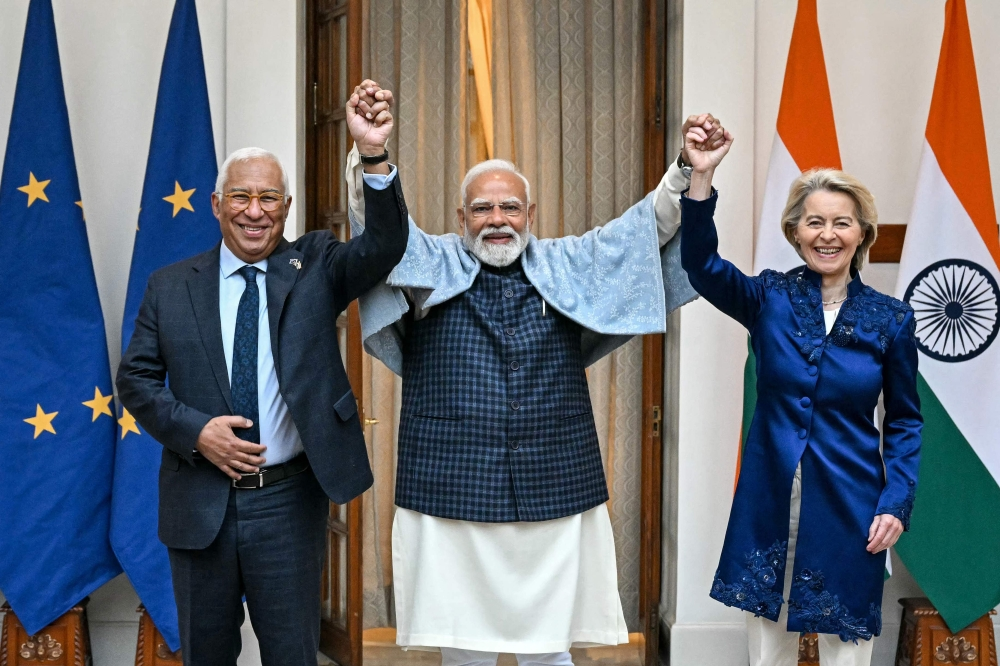
In a historic move culminating nearly two decades of diplomatic and economic efforts, Indian Prime Minister Narendra Modi announced a comprehensive free trade agreement between India and the European Union. Modi described the agreement as the “mother of all deals,” asserting that it would unlock tremendous economic opportunities for both sides and establish a new era of strategic partnership in addressing global challenges.
Historical background to long and arduous negotiations
The path to this agreement was not easy. Formal talks between India and the European Union first began in 2007, with the aim of removing trade barriers and boosting investment. However, negotiations stalled in 2013 due to fundamental disagreements on sensitive issues, including tariffs on European cars and alcoholic beverages, intellectual property rights, and access for Indian professionals to the European labor market. The talks remained suspended for years before being officially revived in 2021, driven by global geopolitical shifts and a shared desire to deepen economic ties.
Economic importance and expected impact
The agreement is of paramount importance given the size of the two economic entities. The European Union, with its 27 member states, is one of India's largest trading partners, while India, with its market of 1.4 billion people, represents a tremendous growth opportunity for European companies. The agreement aims to eliminate or reduce tariffs on a wide range of goods, facilitate trade in services, and protect investments, which could double the volume of trade between the two sides, already strong in recent years.
Domestically, the agreement is expected to boost the “Make in India” program by attracting European investment and advanced technology, particularly in sectors such as automotive, renewable energy, and digital manufacturing. It will also open new markets for Indian exports, especially in textiles, pharmaceuticals, and IT services.
Geopolitical dimensions in a changing world
The agreement's significance extends beyond economic considerations, representing a strategic move for both parties. Amid global trade tensions and protectionist policies pursued by some major powers, both India and the European Union are seeking to diversify their trading partners and reduce reliance on specific supply chains. This deal is part of the EU's strategy to strengthen its ties with the Indo-Pacific region and a step by India to solidify its position as a significant global economic power. This rapprochement between the world's largest democracy and the largest democratic trading bloc sends a powerful message of support for the rules-based global trading system.
Modi stated, “A landmark agreement was signed yesterday between the European Union and India. The world will call it the mother of all deals. This agreement will unlock tremendous opportunities for 1.4 billion people in India and millions more in Europe.” A joint statement from Modi and European Commission President Ursula von der Leyen is expected, outlining the details and terms of this historic partnership.