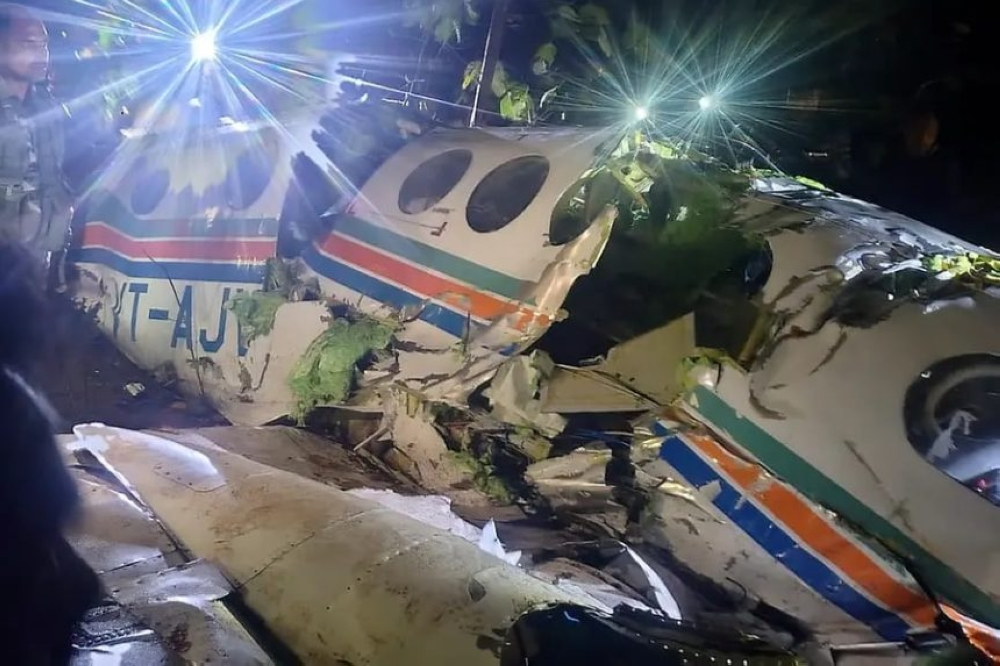
In a tragic accident, seven people were killed today when a small air ambulance carrying them crashed in a densely forested area of eastern India. The plane, which was on a humanitarian mission to transport a critically ill patient, crashed shortly after takeoff, killing all those on board in a tragedy that has shocked the local community.
Details of the incident and the victims
According to preliminary data from the Indian Civil Aviation Authority, the ill-fated Beechcraft C90 aircraft took off from Ranchi Airport, the capital of Jharkhand state. It was en route to New Delhi to transport a patient suffering from severe burns for advanced medical treatment. The official statement indicated that the aircraft encountered severe turbulence a few minutes after takeoff, resulting in a loss of control and the crash. The patient, a doctor, a paramedic, two family members, the pilot, and the co-pilot were on board.
General context of air ambulance services in India
This incident highlights the vital role of air ambulance services in India, a vast country with diverse and complex terrain. These aircraft serve as a lifeline for patients in remote areas or those lacking specialized medical facilities, providing a rapid means of transporting critical cases to major hospitals in key cities. However, these operations face significant challenges, including unpredictable weather conditions, particularly during the monsoon season, and difficult terrain such as mountains and dense forests, which place additional strain on aircrews and demand extremely stringent safety standards.
The importance of the investigation and the impact of the incident
As is customary in such air accidents, the Indian authorities, represented by the Directorate General of Civil Aviation (DGCA), launched an immediate and thorough investigation to determine the precise causes of the crash. Investigators will focus on examining the aircraft wreckage, analyzing the data from the black box recorder, which includes technical flight information and cockpit voice recordings, as well as reviewing aircraft maintenance records, crew experience, and the weather conditions prevailing at the time of the accident. These investigations aim to draw the necessary lessons to strengthen safety protocols in the medical aviation sector and prevent the recurrence of such tragedies in the future.
The accident left a profound shock, not only to the victims' families but also to the medical community, which relies on these services to save lives. The loss of an entire medical team, along with the patient they were trying to help, is a devastating blow. This incident serves as a stark reminder of the inherent risks of air medical transport and underscores the critical importance of adhering to the highest aviation safety standards to ensure the protection of the lives entrusted to these vital flights.