A recent report by international non-governmental organizations has revealed a deeply concerning global development: a significant increase in the number of nuclear weapons ready for use over the past year. This alarming development comes at a time when the world is witnessing an unprecedented escalation in armed conflicts and geopolitical tensions, placing international peace and security at risk.
The roots of armament and the history of nuclear deterrence in the world
To understand the implications of this report, it is necessary to consider the historical context of the arms race. Since the end of World War II and the beginning of the Cold War, the superpowers have relied on the principle of “nuclear deterrence” to prevent direct confrontations. Despite concerted international efforts culminating in the Treaty on the Non-Proliferation of Nuclear Weapons (NPT) in 1968, nuclear arsenals have remained a crucial instrument of sovereignty. Today, nine countries possess nuclear weapons: the United States, Russia, France, the United Kingdom, China, India, Pakistan, Israel, and North Korea.
Terrifying statistics about current destructive capabilities
According to the “Nuclear Weapons Prohibition Monitor” report by the Norwegian People’s Aid in collaboration with the Federation of American Scientists, the total number of nuclear warheads possessed by these countries at the beginning of this year was 12,187. While this number represents a slight decrease of 144 warheads compared to last year, the real danger lies in the high number of warheads ready for immediate use, estimated at 9,745. To put this into perspective, the total number of these weapons is equivalent to 135,000 warheads with the destructive power of the atomic bomb dropped on Hiroshima in 1945, which killed 140,000 people.
Ready-to-use nuclear weapons launch platforms
The report highlights technical details that exacerbate the situation, noting that 40% of available nuclear warheads (approximately 4,012) are deployed on ballistic missiles on fixed platforms, as well as mobile platforms, strategic submarines, and bomber bases. This tactical deployment represents an increase of 108 warheads compared to 2023. In this regard, Hans Kristensen, director of the Federation of American Scientists, argues that the continued annual increase in the number of deployed warheads raises the risks of rapid escalation, miscalculation, and catastrophic accidental use.
Regional and international repercussions of the new arms race
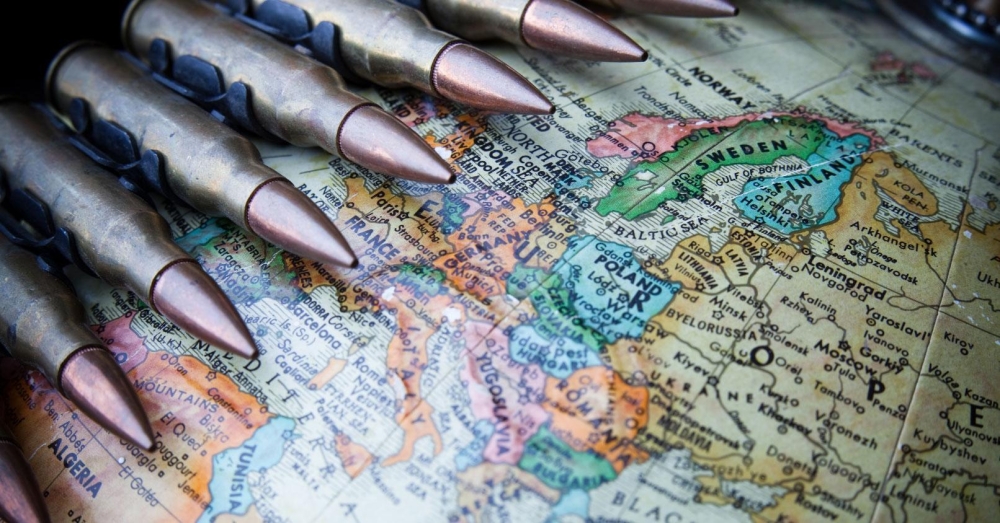
The significance of this event and its anticipated impact extend far beyond the geographical boundaries of nuclear-armed states. Regionally, this proliferation is fueling a parallel arms race in areas of tension such as the Middle East, the Korean Peninsula, and Eastern Europe. Internationally, it threatens to undermine the existing global order based on strategic stability. The International Campaign to Abolish Nuclear Weapons (ICAN), a Nobel Peace Prize laureate, has warned that this situation makes the world more dangerous for everyone, particularly given the erosion of the disarmament and control system, especially following the expiration of the New START Treaty between Russia and the United States.
Huge investments in modernization versus efforts to block
On the other side of the spectrum, despite 99 countries having joined the 2017 Treaty on the Prohibition of Nuclear Weapons, nuclear-weapon states continue to invest enormous sums in modernizing and expanding their arsenals. These policies are supported by 33 countries that benefit from the “nuclear umbrella” of their allies. Melissa Park, Executive Director of ICAN, asserts that countries claiming nuclear weapons guarantee their security must recognize a fundamental scientific and historical truth: the nuclear umbrella offers no real protection from danger; rather, it increases the likelihood of mutual annihilation.