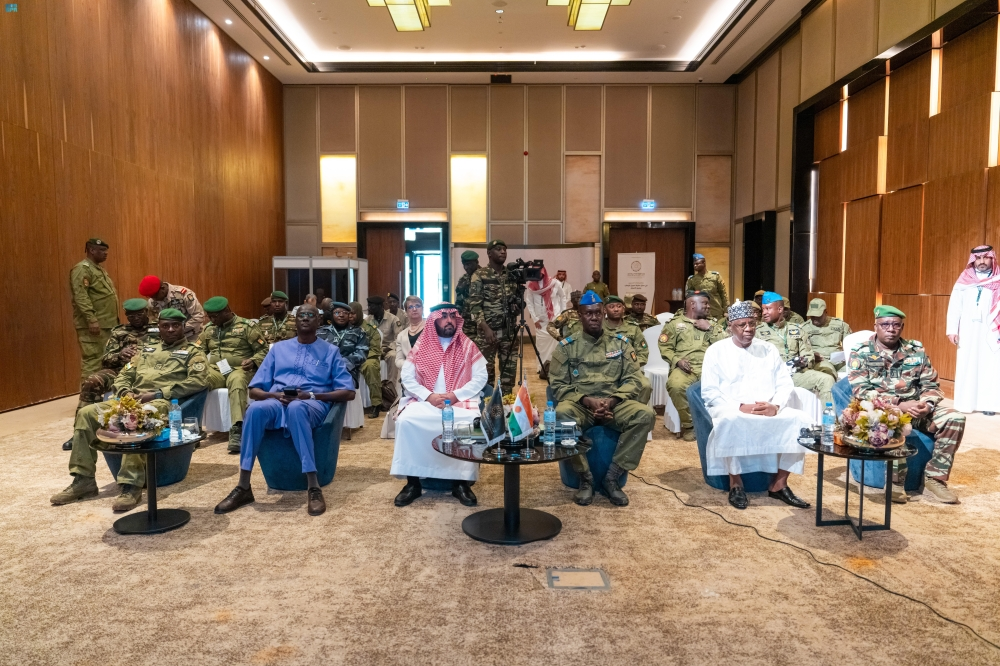
The Islamic Military Counter Terrorism Coalition (IMCTC) concluded its advanced training program for trainers in combating terrorist financing and money laundering on Friday in Niamey, the capital of Niger. This program is part of a series of advisory and training services offered by the coalition to support member states in building their institutional capacities and strengthening their financial systems against exploitation by terrorist groups.
The intensive five-day program saw the participation of 25 trainees, representing a select group of specialists from the financial, security, regulatory, and military sectors in the Republic of Niger. Participants received advanced training and consulting content that integrated theoretical frameworks with practical applications, enhancing their professional readiness and their ability to transfer knowledge and localize expertise within their national institutions, in line with the Alliance's strategy of creating a sustainable impact.
The importance of timing and regional context
This program is of paramount importance given the geographical and security context of the Sahel region of Africa, which faces escalating security challenges. Niger is a strategic partner in counterterrorism efforts in the region. Experts emphasize that cutting off terrorist financing is a crucial pillar, no less important than military and ideological confrontation, as extremist organizations rely on complex financial channels to fund their operations and recruit members. This makes developing local expertise an urgent necessity for national and regional security.
Training methodology and international standards
The program included a specialized training package focused on the latest methods in detecting financial crimes, and featured a comprehensive trainer qualification track. The training emphasized developing skills in designing, implementing, and evaluating future training programs. The scientific content included specific, high-quality topics, most notably:
- Studying the relevant international legal and legislative frameworks.
- Analysis of modern terrorist financing methods and digital currencies.
- Money laundering mechanisms and advanced financial analysis and detection techniques.
- Tracking suspicious financial flows across borders.
These axes were designed in accordance with the recommendations of the Financial Action Task Force (FATF), the international body responsible for setting global standards to combat money laundering and terrorist financing.
The role of the Islamic Military Alliance
The Islamic Military Counter Terrorism Coalition (IMCTC), headquartered in Riyadh, was established in December 2015 at the initiative of the Kingdom of Saudi Arabia and comprises 42 member states. The coalition operates in four main areas: intellectual, media, countering the financing of terrorism, and military. This program in Niamey is an activation of the "countering the financing of terrorism" area, where the coalition seeks to strengthen institutional cooperation among financial, regulatory, and security bodies in member states, thereby contributing to the consolidation of security and stability at both the regional and international levels.