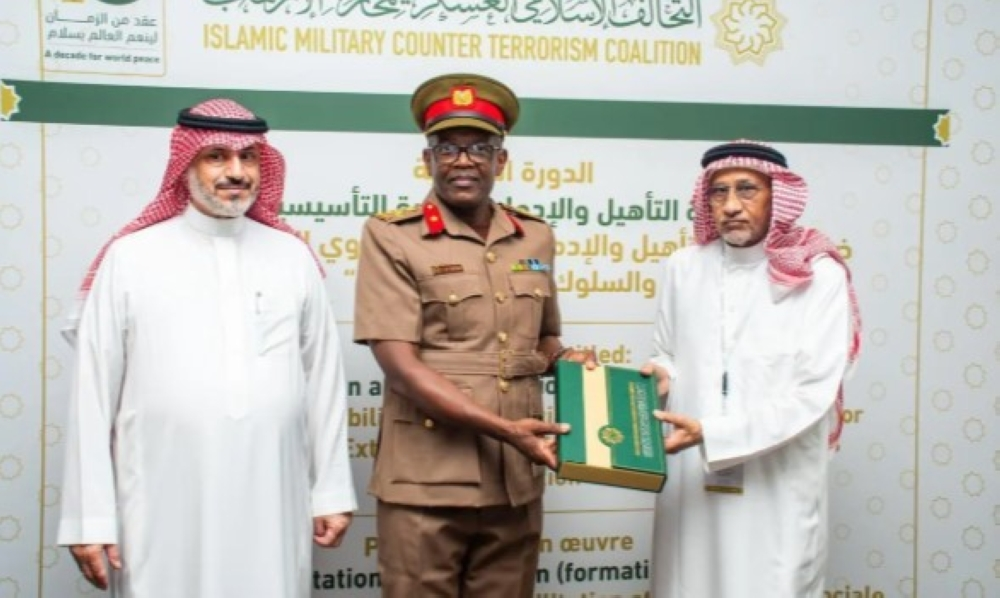
The Islamic Military Counter Terrorism Coalition (IMCTC) concluded its capacity-building program for rehabilitation and social reintegration specialists in Nairobi, Kenya. This program was part of the "Integration" initiative, which focuses on the rehabilitation and social reintegration of individuals with extremist ideologies and terrorist behavior. The five-day program brought together leading experts and professionals in rehabilitation and reintegration from member states, and was attended by a high-level delegation including Brigadier General Joel Karimi, Deputy Chief of Military Intelligence of the Republic of Kenya.
Strategic context: The Islamic Alliance and its pivotal role
This program is an extension of the ongoing efforts of the Islamic Military Counter Terrorism Coalition (IMCTC) since its establishment in December 2015 at the initiative of the Kingdom of Saudi Arabia. The Coalition, headquartered in Riyadh and comprising 42 member states, aims to unify Islamic and international efforts to combat terrorism in all its forms and manifestations. The Coalition's strategy is not limited to the military aspect alone, but is based on four main areas of action: the intellectual sphere, the media sphere, the counter-terrorism financing sphere, and the military sphere. This makes the "Integration" program a practical application of the intellectual pillar, which seeks to dismantle the arguments of extremist ideology.
Program details and six themes
The program's primary objective was to build the professional and intellectual capacities of those responsible for rehabilitation and reintegration programs, and to enhance their understanding of the scientific foundations and applied methodologies for addressing issues of extremism and terrorist behavior. The course included six main themes, among them:
- Concepts of rehabilitation and integration, and the model framework for rehabilitation programs.
- Principles of designing rehabilitation and integration programs.
- Understanding the nature of the crime of terrorism and its psychological motives.
- The scientific basis for rehabilitation and integration according to the latest theories.
- Challenges in formulating rehabilitation and integration programs in different environments.
- Practical applications and interactive discussion sessions.
The program was implemented by a group of prominent experts and specialists, namely: Dr. Nasser Al-Arifi, an expert in clinical, social and criminal psychology; Dr. Abdulrahman Asiri, a specialist in issues of intellectual extremism; Dr. Mansour bin Saeed Al-Qarni, Director of the Intellectual Department at the Islamic Alliance; and Dr. Yahya Abu Mughayth, the program’s scientific supervisor.
The importance of “integration” and its regional and international impact
The significance of this event lies in its timing and location; East Africa, and Kenya in particular, is a region facing security challenges that require comprehensive approaches beyond traditional security solutions. The shift from a "confrontation" phase to a "rehabilitation and reintegration" phase represents a qualitative transformation in global counterterrorism strategies. Rehabilitation programs contribute directly to reducing recidivism rates and work to strengthen communities from within.
At the international level, this program reflects the Islamic Alliance's commitment to transferring expertise and building capacity in member states, thereby strengthening the international peace and security system. The success of such programs in a pivotal country like Kenya serves as a model that can be replicated in other countries suffering the consequences of extremism, underscoring that the fight against terrorism is as much an intellectual and psychological battle as it is a military one.
The program concluded with the presentation of participation certificates to the trainees, with an emphasis on the need to sustain the exchange of experiences and activate the acquired skills in the national environments of the participants, to ensure the highest levels of effectiveness in future counseling and rehabilitation programs.