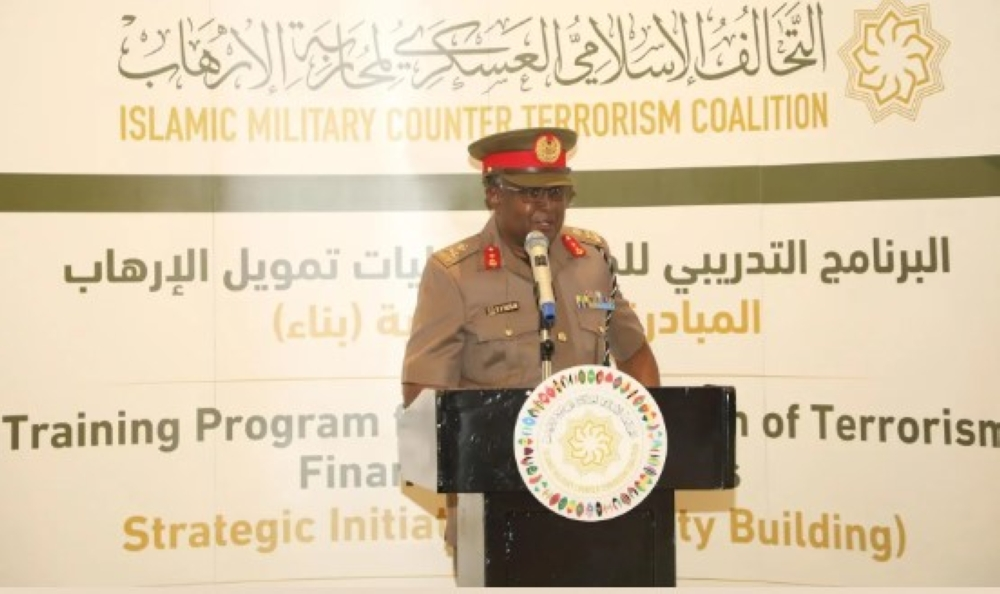
The Islamic Military Counter Terrorism Coalition (IMCTC) concluded its advanced training program, "Combating Terrorist Financing and Money Laundering – Advanced Level," today in Nairobi, Kenya. This program, part of the coalition's ongoing efforts to enhance the security and financial capabilities of its member states, was conducted over five consecutive days under the "Building" strategic initiative.
The closing ceremony was attended by Kenyan Deputy Army Chief Major General Mohammed Noor Hassan, along with a number of high-level civilian and military officials, reflecting the great importance that Kenya and the coalition attach to the issue of financial security and combating the financing of extremist organizations.
The Islamic Alliance Strategy and its Four Dimensions
This program comes within the framework of the pivotal role played by the Islamic Military Counter Terrorism Coalition, headquartered in Riyadh, Saudi Arabia. Since its inception, the Coalition's work has been based on four main pillars: the intellectual sphere, the media sphere, the military sphere, and the sphere of combating the financing of terrorism. This program is a practical application of the fourth pillar, as the Coalition believes that cutting off the financial resources of terrorism is no less important than direct military confrontation, since terrorist organizations rely primarily on financial flows to recruit members, purchase weapons, and carry out operations.
Details of the training program and shared experiences
The program was distinguished by the participation of a wide range of specialists and experts from the banking, financial, and security sectors. This included financial compliance officers, financial investigators specializing in tracing money flows, personnel involved in combating money laundering and terrorist financing, as well as representatives from regulatory and supervisory bodies in Kenya.
Intensive training content was provided, combining modern theoretical frameworks with practical field applications. The sessions covered specific topics including:
- The latest international legislation and UN resolutions related to combating financial terrorism.
- New methods used by terrorist groups to finance their activities away from traditional oversight.
- The complex mechanisms of money laundering and how to dismantle them.
- Using digital technologies and artificial intelligence in financial monitoring and analysis processes.
Regional and international importance of the event
The convening of this program in Nairobi is of particular strategic importance, given Kenya's geographical location in East Africa, a region facing ongoing security challenges that require high vigilance and international coordination. Strengthening Kenya's financial system will contribute to creating a robust bulwark against the exploitation of the region's banking system to finance illicit activities that could threaten international peace and security.
The program also focused on leadership skills and corporate compliance management, supported by real-world case studies and specialized exercises aimed at honing participants’ skills in tracking suspicious financial flows and analyzing complex patterns of cross-border financial crimes.
Ongoing commitment to combating financial crimes
At the conclusion of the program, the Islamic Alliance affirmed that the implementation of this advanced course underscores its unwavering commitment to supporting member states in building effective and robust national systems. Through its "Building" initiative, the Alliance aims to enhance the capabilities of specialists and develop integrated responses that address rapidly evolving challenges, thereby bolstering security and stability at both the regional and international levels, and strengthening strategic partnerships among member states in combating the scourge of terrorism in all its forms.