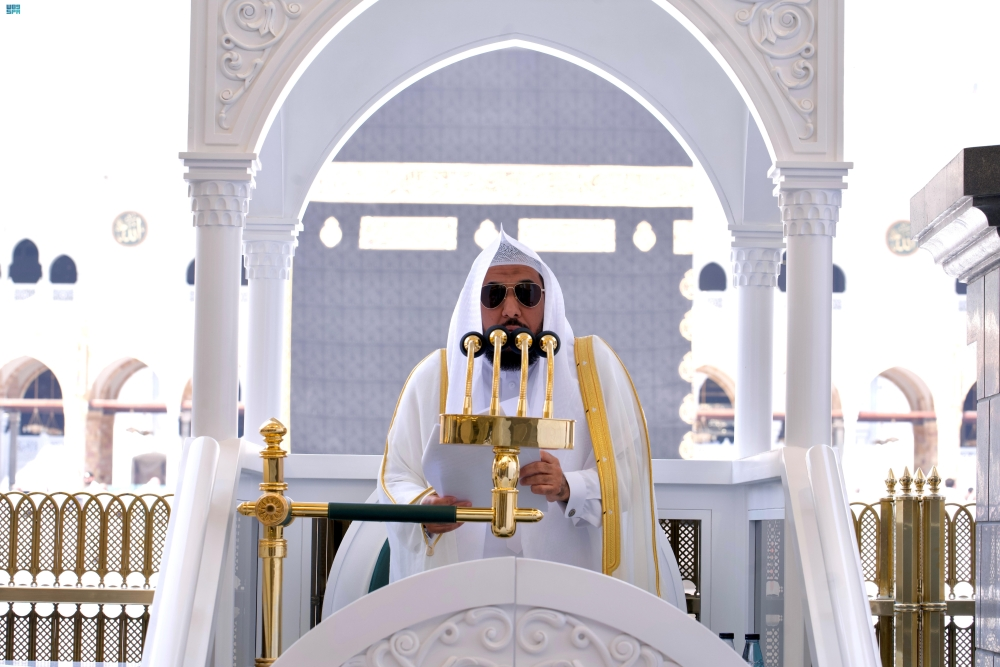
In a comprehensive sermon delivered from the Grand Mosque in Mecca, His Eminence Sheikh Dr. Abdullah Al-Juhani, Imam and Khateeb of the Grand Mosque, emphasized that the blessed month of Ramadan is a month of work, diligence, and striving, not a season of laziness and lethargy as some might think. He stressed that God Almighty has honored and distinguished this month, and has made fasting obligatory for believers as an opportunity to increase their piety and renew their faith.
The historical context of Ramadan: a month of major transformations
Throughout Islamic history, Ramadan has not been a month of rest, but rather a pivotal period marked by numerous significant events and great victories. It was in this month that the first revelation descended upon the Prophet Muhammad (peace be upon him) in the Cave of Hira, heralding the beginning of the final message. Ramadan also witnessed the Battle of Badr in the second year of the Hijra, a decisive battle that distinguished truth from falsehood and laid the foundations for the Islamic state. And it was in Ramadan that the greatest conquest, the conquest of Mecca, took place, restoring the Sacred Mosque to its status as the center of monotheism. These historical events underscore that the life of the Prophet and his companions during Ramadan was one of preaching, striving, and tireless work, as they spent their nights in prayer and worship, and their days organizing the affairs of life and reforming society.
The importance of the sermon and its global impact
Such sermons delivered from the pulpit of the Grand Mosque in Mecca carry immense significance, as they are followed by millions of Muslims worldwide. Their impact extends beyond the local level within Saudi Arabia, shaping regional and international awareness of the true meaning of fasting. This message corrects misconceptions that link Ramadan to decreased productivity, emphasizing that true fasting motivates Muslims to be active and positive members of their communities. Fasting is not merely abstaining from food and drink; it is a school for self-discipline and restraining one's senses from all that God has forbidden.
The essence of fasting: piety and guarding one's limbs
Sheikh Al-Juhani explained that fasting was ordained so that the believer may cultivate piety, which is one of the most important foundations of faith and a reason for the acceptance of deeds, citing the verse: “Indeed, Allah only accepts from the righteous.” He called upon Muslims to guard their limbs from forbidden acts, to refrain from injustice, cheating, and deception, to lower their gaze from what is unlawful, and to protect their tongues from lying, backbiting, slander, cursing, and insults. He added that it is incumbent upon the Muslim to fast throughout his life from what Allah has forbidden, and to seize the days and nights of this blessed month by increasing acts of worship such as prayer, reciting the Quran, giving charity, remembrance of Allah, and all good deeds, so that he may emerge from this month with his soul purified and his spirit refined.