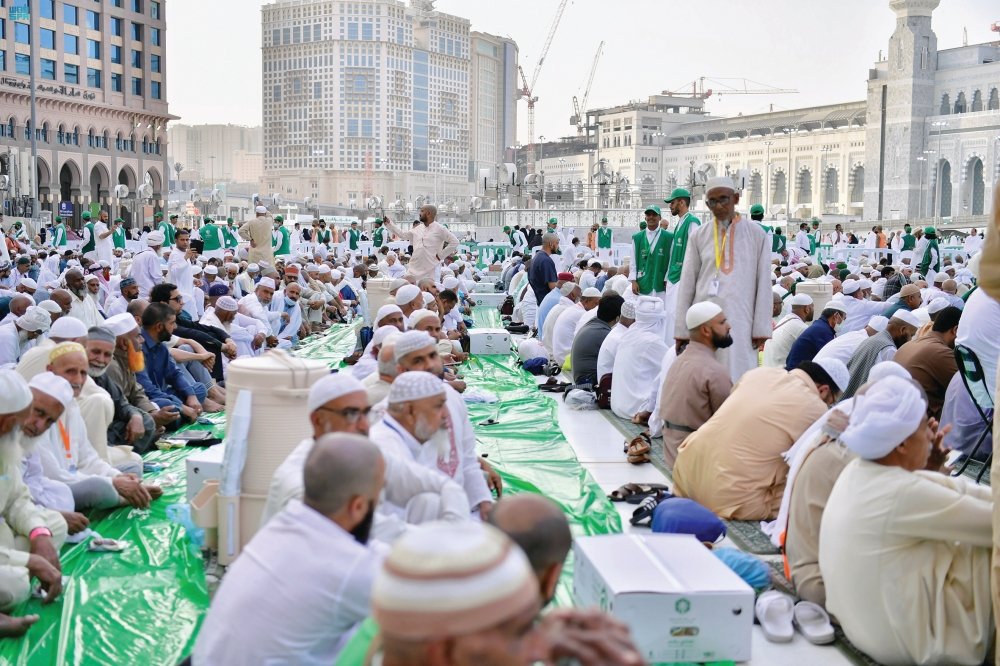
The General Authority for the Care of the Two Holy Mosques announced the opening of applications for permits to provide iftar meals for fasting individuals within the Two Holy Mosques during the holy month of Ramadan 1447 AH. This initiative comes as part of a strategic partnership with the national charitable platform "Ihsan" and the "Nusk" humanitarian foundation, within a regulatory framework aimed at providing iftar services according to the highest standards of quality and corporate governance.
Application deadlines
The authority explained in its statement the details of the timetables allocated for receiving applications, where periods were divided between individuals and non-profit organizations to ensure the smooth flow of procedures, and the dates were as follows:
- For individuals (Masjid al-Haram): Applications will be accepted from 3 to 5 Shaban.
- For individuals (Prophet's Mosque): Applications will be accepted from 6 to 8 Sha'ban.
- For non-profit organizations (Al-Masjid Al-Haram): Applications will be accepted from 6 to 8 Shaban.
- For non-profit organizations (Al-Masjid an-Nabawi): Applications will be accepted from 9 to 11 Shaban.
Controls and specified quantities
Regarding permitted quantities, the authority clarified that permits granted to individuals are limited to one trip only, with two options: either 50 or 25 meals per day. As for non-profit organizations and charities, the minimum limit has been set at 10 trips in the men's section and 10 trips in the women's section, allowing these charities to contribute more broadly during this blessed season.
Payment mechanism and e-governance
The authority confirmed that the payment process for fees and meal costs is entirely electronic through the "Ihsan" platform. Payment must be completed within 72 hours of submitting the request to ensure booking confirmation. The set price includes the complete preparation of the meal by approved catering companies, guaranteeing food safety and quality service, and eliminating the need for direct contracting or transportation for the donor, thus providing a precise regulatory environment.
The spiritual and social dimension of the Iftar meals in the Two Holy Mosques
The iftar meals provided at the Two Holy Mosques are among the most prominent spiritual and social features of the holy month of Ramadan in the Kingdom of Saudi Arabia. These meals have gained international renown, as millions of Muslims from diverse ethnicities and nationalities gather around a single table in a scene that embodies the highest ideals of Islamic brotherhood and social solidarity. The continuation and organization of this annual tradition reflects the wise leadership's commitment to reviving the values of generosity and hospitality for which this country has been known since ancient times, extending the concept of "rafada" (providing food and water) for pilgrims and Umrah performers.
The importance and impact of institutional organization
The shift towards digital governance and collaboration with platforms like "Ihsan" and "Nusk" reflects a qualitative leap in crowd management and services provided to pilgrims. This meticulous organization contributes to reducing food waste, ensuring the cleanliness of the Two Holy Mosques, and facilitating the movement of worshippers and pilgrims during peak times before sunset. This measure also enhances the credibility of charitable work, guaranteeing that donors' contributions reach those in need among the fasting pilgrims through transparent and approved mechanisms, thus contributing to the realization of the Kingdom's Vision 2030 goals of enriching the pilgrims' experience and providing world-class services.