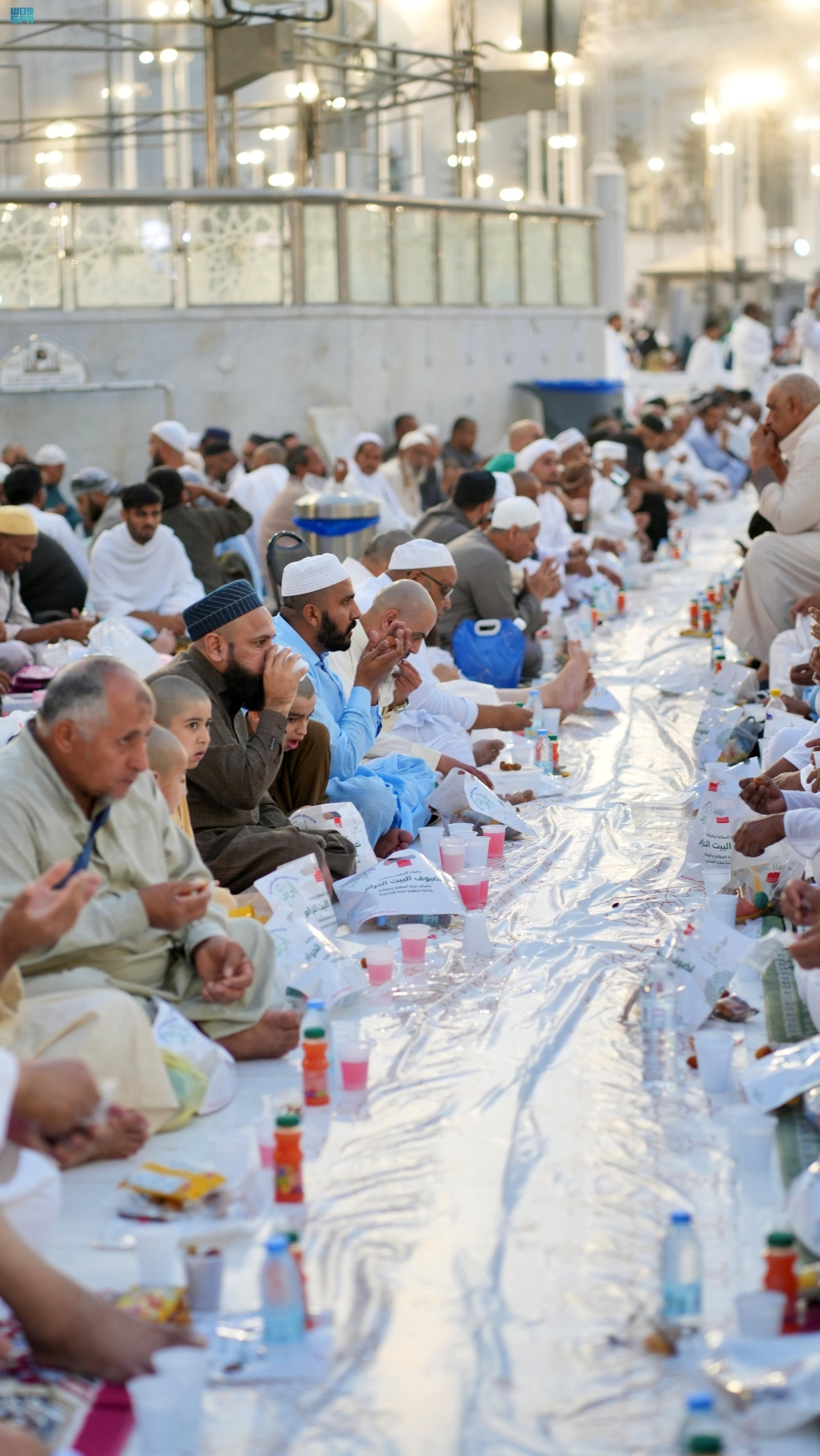
With every sunset in the holy month of Ramadan, the courtyards and corridors of the Grand Mosque in Mecca are transformed into a majestic tableau of faith, as millions of hearts and bodies from all corners of the earth gather for communal iftar meals, in a unique scene that embodies the highest meanings of human brotherhood and Islamic unity.
Historical background and deep-rooted traditions
The tradition of providing iftar meals for fasting Muslims in the Grand Mosque of Mecca is not a recent phenomenon; rather, it is a deeply rooted Islamic tradition deeply embedded in the history of Mecca, inspired by the teachings of Islam, which encourage feeding the hungry, generosity, and giving, especially during the holy month of Ramadan. The Prophet Muhammad (peace be upon him) said: “Whoever provides iftar for a fasting person will have a reward like theirs, without diminishing anything from the reward of the fasting person.” Over the centuries, this practice has evolved from individual initiatives undertaken by charitable residents of Mecca into a massive institutional system overseen by the General Presidency for the Affairs of the Two Holy Mosques and relevant government agencies, in cooperation with thousands of volunteers and benefactors, to ensure that iftar meals are provided to millions of fasting Muslims daily in an organized and efficient manner.
A global scene of unity and equality
The moments before the Maghrib prayer are filled with tranquility and reverence, as hands are raised in supplication and tongues are engaged in remembrance of God. During this time, all social, ethnic, and linguistic distinctions fade away, and the rich sit beside the poor, the white beside the black, the Arab beside the non-Arab, all on the same mat, sharing a few dates and a glass of water or milk. This scene not only reflects the generosity of hospitality but also highlights the essence of the Islamic message, which is based on equality, compassion, and solidarity. It presents a vivid image of the universality of Islam and its ability to unite people under the banner of faith.
Importance and impact on various levels
The significance of the iftar meals at the Grand Mosque in Mecca extends far beyond simply satisfying the hunger of those fasting. Locally, these efforts reflect the Kingdom of Saudi Arabia's leading role in serving the Two Holy Mosques and caring for their visitors, showcasing its exceptional organizational capabilities in managing millions of pilgrims. Regionally and internationally, these images, disseminated through media outlets worldwide, convey a message of peace and brotherhood, contributing to the promotion of Islam's civilized and humanitarian image. They demonstrate to the world how one place can bring together such immense human diversity in perfect harmony and unity. It is a daily reminder that the heart of the Islamic world beats with goodness, love, and peace.
Ultimately, the moments of breaking the fast in the precincts of the Ancient House remain a profound spiritual experience, an indelible memory from the minds of pilgrims and visitors, and a renewed global message that affirms the status of the Holy Mosque in Mecca as a beacon of peace and unity, and a living scene in which Islamic values are embodied in their truest form.