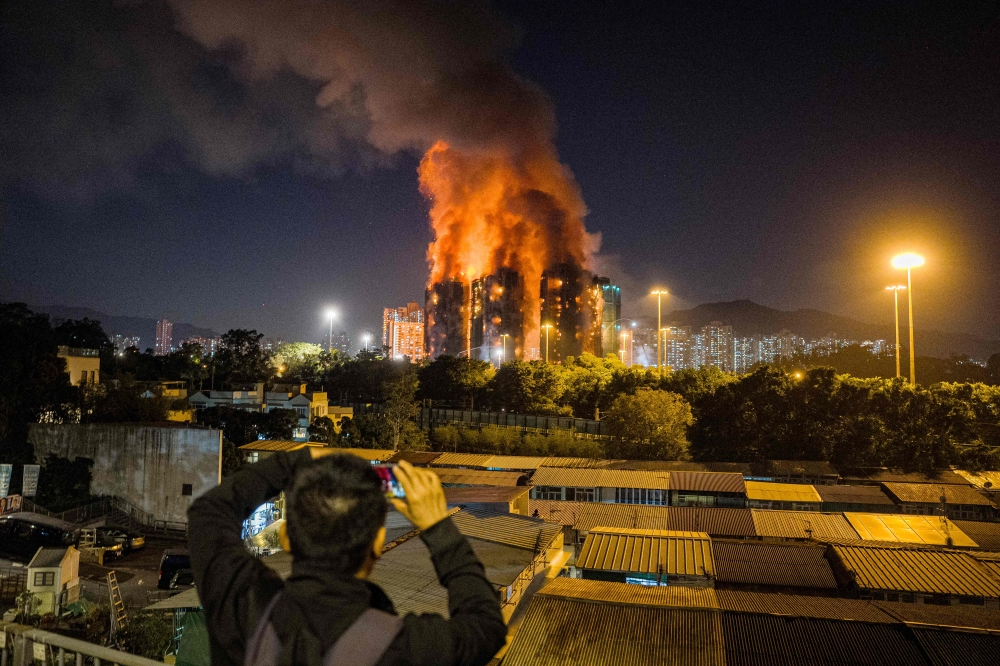
In a tragic turn of events that have shocked local and international public opinion, the death toll from the devastating fire that engulfed a densely populated residential complex in Hong Kong last Wednesday has risen to 159, while concerns remain for the fate of approximately 30 others still missing. These alarming figures come after rescue and search teams completed their complex operations inside the seven apartment towers ravaged by the blaze.
In the ongoing investigation into the disaster, Hong Kong authorities announced the arrest of six people suspected of negligence that exacerbated the loss of life. Initial investigations indicate that the suspects disconnected and disabled vital fire alarms while carrying out maintenance work at the complex, delaying the detection of the fire and hindering the early evacuation of residents, which directly contributed to the high number of casualties.
Details of the disaster and response efforts
The fire raged for nearly 40 hours, with firefighters facing immense challenges in controlling the blaze due to the high population density and the building's age. Police stated they had completed a survey of all residential units in the affected towers, confirming the scale of the destruction.
The ill-fated housing complex dates back to 1983 and was built as part of a government-subsidized housing program. It comprises approximately 2,000 apartments housing over 4,600 people, reflecting Hong Kong's overcrowding crisis, where thousands are forced to live in older buildings that sometimes lack even the latest international safety standards. This situation has sparked widespread debate about the need to upgrade safety infrastructure in older buildings.
Government action and relief fund
In an official response to contain the crisis, Hong Kong Chief Executive John Lee announced the formation of an independent commission of inquiry, headed by a judge, to determine the true causes of the fire and to make binding recommendations to prevent such tragedies from recurring. He also announced the allocation of an emergency relief fund of HK$300 million to assist those affected and the families of the victims, noting that additional donations had been received from major companies in solidarity with the event.
This incident is one of the worst disasters in Hong Kong's recent history, bringing to mind similar incidents that previously prompted authorities to review building and safety regulations. The findings of the investigation are expected to lead to significant changes in maintenance and safety protocols for the city's high-rise residential complexes.