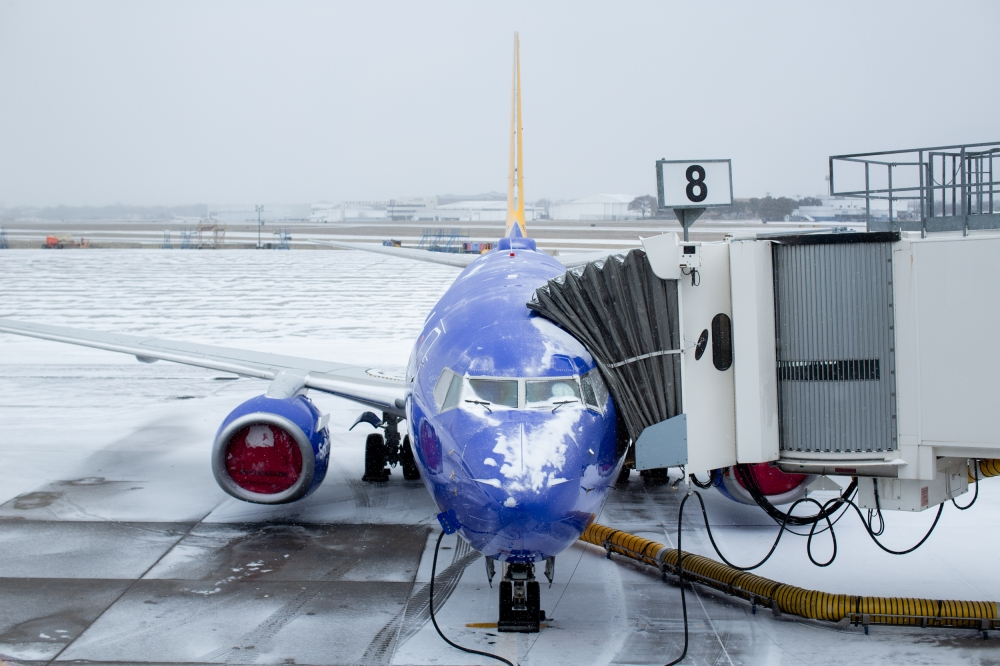
A winter storm described as "historic" hit large areas of the United States, causing widespread chaos in the aviation sector, as airlines were forced to cancel more than 13,000 flights due to heavy snowfall, freezing rain, and strong winds that swept across the country.
According to data from the flight tracking website FlightAware, more than 4,000 flights were canceled on Saturday alone. The greatest impact was concentrated in Texas, where Dallas Fort Worth International Airport, one of the world's busiest, saw nearly 1,500 cancellations, while Dallas Love Field Airport canceled 190 flights—representing the majority of scheduled air operations at both airports. The crisis intensified as the storm moved eastward, with cancellations expected to more than double to around 9,100 on Sunday as the storm reached the densely populated Mid-Atlantic and Northeast regions.
General context and impact of winter storms
The United States is frequently subjected to severe winter storms due to its vast geography and diverse topography, which allows cold polar air masses to collide with warm, moist air from the Gulf of Mexico. These conditions often lead to what are known as "bomb cyclones," which develop rapidly and bring heavy snow and destructive winds. Despite its advanced infrastructure, the aviation sector is highly vulnerable to such extreme weather events, making takeoffs and landings extremely dangerous, hindering the movement of ground equipment, and causing ice to accumulate on aircraft wings.
Importance and expected effects
The impact of this storm extends far beyond stranded travelers, encompassing broad economic and social dimensions. Locally and regionally , the paralysis of major airports like Dallas, New York, and Washington has a ripple effect on the entire national aviation network, as cancellations at these key hubs cause delays and cancellations in other cities not directly affected by the storm. Airlines are suffering significant financial losses, and air cargo traffic is disrupted, disrupting supply chains. Internationally , the cancellation of over 90% of flights at major international airports such as John F. Kennedy, LaGuardia, and Newark Liberty represents a major disruption to global travel, affecting thousands of passengers traveling to and from Europe, Asia, and other regions worldwide.
Authorities, including then-President Donald Trump, described the storms as “historic,” and states of emergency were declared in several affected states. The National Weather Service warned that the storm could affect hundreds of millions of people, with forecasts predicting continued snow and freezing rain from the southern Rockies to New England.