A blessed initiative in the vicinity of the Prophet's Mosque
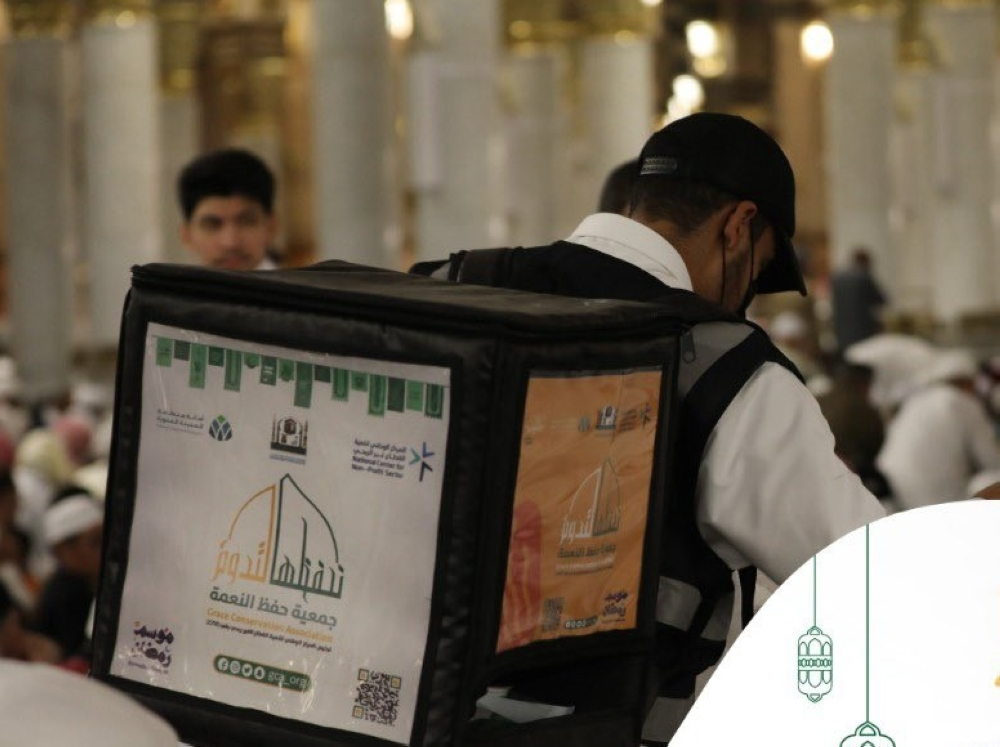
Amidst the blessed efforts witnessed in Madinah during the holy month of Ramadan, the "Preserving Blessings" Association's initiative has emerged as a leading model of organized charitable work. The association announced the collection and distribution of over 22,638 complete iftar meals from surplus food at the Prophet's Mosque. These efforts took place during the first five days of Ramadan 1445 AH, aiming to reduce food waste and maximize the benefit from surplus food in a manner that preserves the dignity of the recipients and is in keeping with the sanctity of the place and time.
Details of the efforts and their tangible impact
The association explained in its report that its efforts were not limited to main meals, but also included collecting and distributing large quantities of other food items. Specifically, 17,250 yogurt containers, 17,172 bottles of water, 98,777 bread packets, 15,796 date packets, 16,185 packets of "duqqa" (a type of spice blend), 15,596 packets of maamoul (a type of filled cookie), and 1,900 packets of pastries were collected. The total value of these food items, which were saved from waste and repurposed, was estimated at approximately 203,742 Saudi Riyals, reflecting the significant scale of the initiative and its economic and social impact.
Historical background and the importance of preserving blessings
Food preservation initiatives are particularly important in holy cities like the Prophet's Mosque, where millions of visitors and pilgrims from around the world gather. Communal iftar meals, known as "sufur al-iftar," are a deeply rooted tradition reflecting generosity and a love of giving. With such massive numbers, managing surplus food becomes a critical challenge. Food preservation societies draw inspiration from the teachings of Islam, which encourage gratitude for blessings and prohibit extravagance and waste. These initiatives are an extension of the social solidarity that has characterized the community of Medina since the time of the Prophet, where efforts are combined to serve the guests of God.
The societal and international impact of the initiative
Locally, these efforts contribute to strengthening the culture of volunteerism, with 160 volunteers participating in the initiative, contributing a total of 2,509 volunteer hours. They also align with the goals of the Kingdom's Vision 2030 to empower the non-profit sector and increase its social impact. Internationally, these initiatives present a positive image of the Kingdom's management of the Two Holy Mosques, highlighting the exceptional care it provides to visitors, not only in terms of organization and security, but also through its attention to humanitarian and social aspects, setting a model for managing crowds and major religious events in a sustainable and responsible manner.