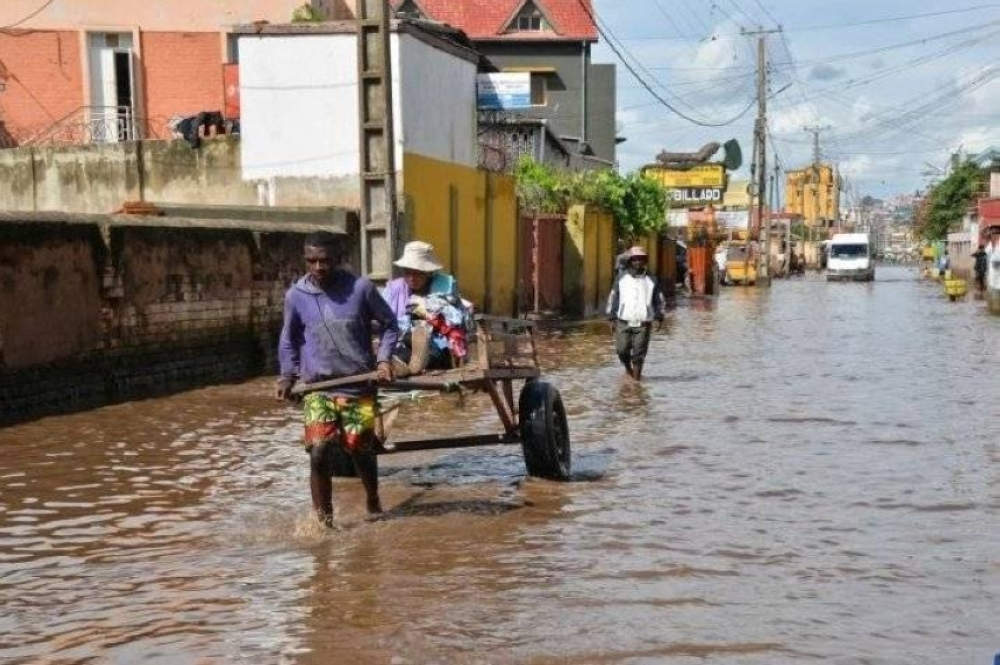
Madagascar has suffered another humanitarian tragedy due to severe weather conditions, with at least 11 people killed and others injured by torrential rains and flash floods that have been battering the island since late November of last year. These events have once again highlighted the vulnerability of the island's infrastructure to natural disasters.
Details of the losses in the capital, Antananarivo
Madagascar's National Disaster Management Agency reported in an official statement that the capital, Antananarivo, was among the areas hardest hit by the severe rainfall. Initial data indicated that the torrential rains directly impacted the lives of 274 people, causing the destruction and severe damage of 26 residential buildings, leaving many families homeless in harsh weather conditions.
Urgent warnings and precautionary measures
Faced with this critical situation, local authorities urged residents to exercise extreme caution. They issued urgent appeals to all families living in traditional, older homes or structurally unsafe buildings to evacuate immediately and head to shelters or safer locations, to avoid potential collapses that could increase the death toll.
In a related context, the Madagascar Meteorological Service predicted that heavy rainfall would continue in the northwestern regions of the country and the central highlands during the coming days, which necessitates the continuation of the state of maximum alert.
The geographical and climatic context of Madagascar
Madagascar, the world's fourth-largest island, is periodically struck by natural disasters, particularly during the rainy and cyclone season, which typically runs from November to April. Due to its location in the Indian Ocean, the country faces tropical storms annually, causing widespread flooding and landslides, especially in mountainous, densely populated, and impoverished areas.
Infrastructure challenges and climate change
Global climate change is exacerbating these weather phenomena in southern African countries, where rainfall has become more intense and unpredictable. The capital, Antananarivo, is particularly affected by rapid and unplanned urban expansion, with many homes built on unstable slopes or in low-lying, flood-prone areas, making residents of these areas the most vulnerable when floods occur. These recurring disasters strain the country's limited economic resources, often necessitating international relief interventions to assist those affected and to rebuild.