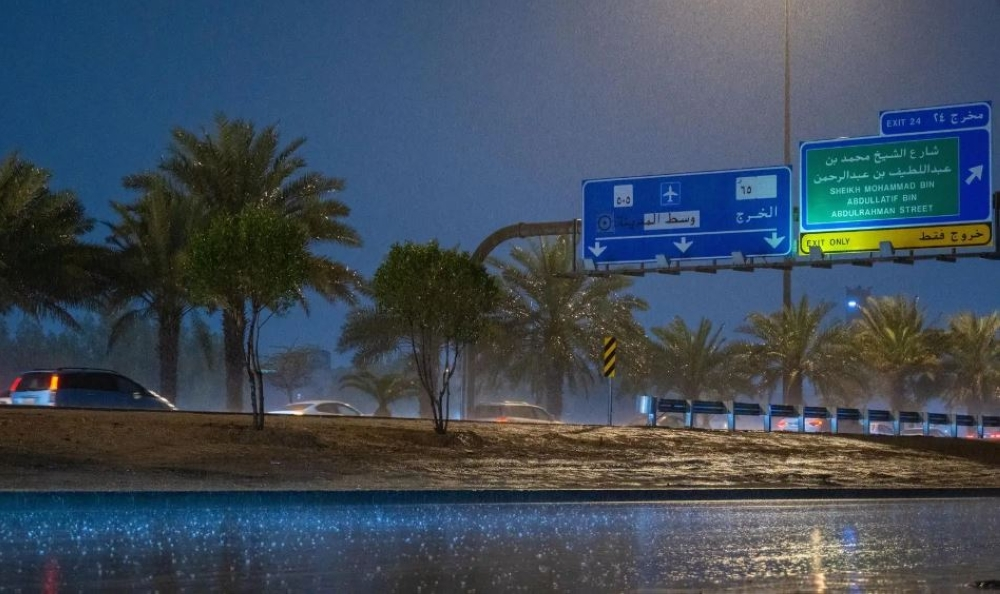
Amid ongoing monitoring of the weather fluctuations affecting the Kingdom of Saudi Arabia, the General Directorate of Civil Defense has issued important warnings to citizens and residents regarding expected heavy rainfall in Riyadh . These warnings are based on periodic reports and forecasts from the National Center for Meteorology, which indicate that large parts of the central region will be affected by a state of atmospheric instability, beginning tomorrow, Wednesday, and continuing until next Monday, thus requiring the utmost caution.
Details of the forecast for heavy rainfall in Riyadh and its governorates
The report issued by the relevant weather authorities clarified that the expected rainfall will not be limited to the capital, but will extend over a wide geographical area. The capital, Riyadh, is expected to experience varying intensities of rainfall, in addition to other governorates and cities including: Al-Dilam, Al-Muzahmiya, Dhurma, Marat, Shaqra, Al-Ghat, Al-Zulfi, Al-Majma'ah, Thadiq, Huraymila, Ad-Diriyah, Rumah, Afif, Ad-Dawadmi, Al-Quway'iyah, Ar-Rayn, Hawtat Bani Tamim, Al-Hariq, and Al-Kharj. This widespread weather event necessitates full preparedness from all service sectors to deal with any emergency.
Unpredictable climate: A history of rainfall events in the Kingdom
To understand the overall context of these warnings, it's essential to consider the climatic nature of Saudi Arabia. Historically, transitional periods between seasons in the Arabian Peninsula are characterized by sharp and rapid weather fluctuations. Riyadh, due to its central location within the Kingdom, is a convergence point for various air masses, leading to the formation of cumulonimbus clouds and thunderstorms. In recent years, the capital and its surrounding governorates have experienced heavy rainfall, resulting in flash floods in valleys and ravines. This has prompted government agencies, primarily the National Center of Meteorology and the Civil Defense, to develop early warning systems to mitigate risks and protect lives and property.
Expected effects of the weather on daily life and the economy
These rainfall forecasts have multifaceted impacts at the local level. On the positive side, the rain contributes to replenishing groundwater, irrigating farms, and raising water levels in dams, thus benefiting the agricultural and environmental sectors in the region. On a daily basis, heavy rainfall may directly affect traffic flow on main roads and in tunnels, sometimes prompting authorities to take precautionary measures to ensure smooth traffic flow and public safety. At the regional level, tracking the path of these weather systems benefits neighboring Gulf countries in preparing for similar weather events that may approach them.
Civil Defense guidelines to ensure public safety
In closing, the General Directorate of Civil Defense urges everyone to fully comply with safety instructions and guidelines. This includes staying away from valleys and flood channels, avoiding areas with standing water, and exercising caution while driving during rainfall and periods of reduced visibility. It also emphasizes the importance of staying updated through official channels and early warning applications. We ask God Almighty to make these rains a blessing and a source of goodness, to spread their benefits throughout the land, and to protect everyone from all harm.