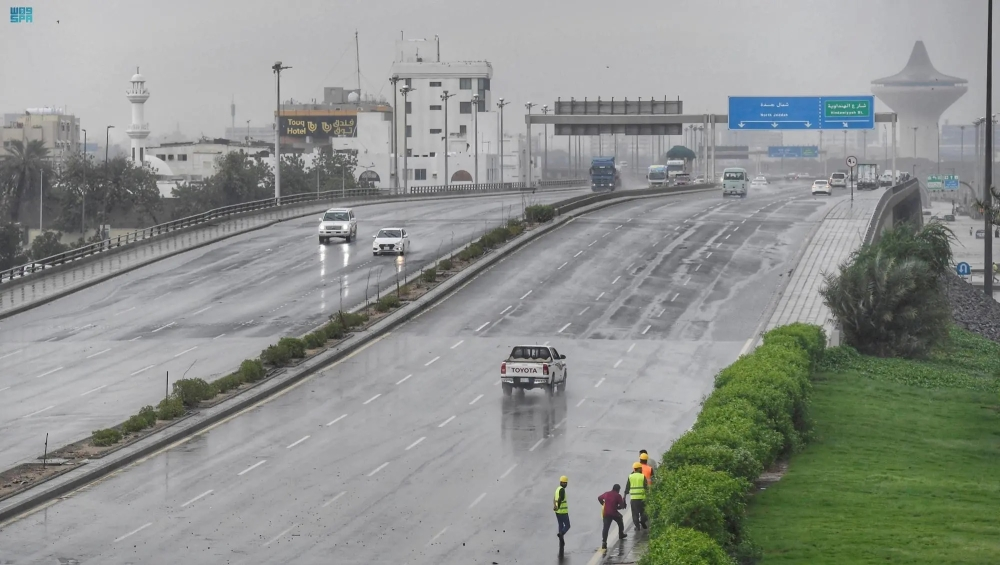
The National Center for Meteorology in Saudi Arabia issued an urgent report, including a "red alert," warning of heavy rainfall across large parts of seven major regions on Wednesday. These warnings come as part of ongoing monitoring of weather conditions and fluctuations affecting the country, urging citizens and residents to exercise extreme caution.
Red alert details and heavy rainfall forecast
heavy rain is expected to begin between 8:00 and 9:00 AM in several locations, with this unstable weather pattern continuing until late evening, specifically between 8:00 and 11:00 PM. The effects of this weather system are not limited to rainfall; they also include high-speed winds leading to reduced horizontal visibility, hail, flash floods in valleys and ravines, high waves in coastal areas, and intense lightning strikes.
Map of areas covered by weather warnings
Rainfall is distributed across wide geographical areas encompassing seven main regions, as follows:
- Makkah Al-Mukarramah: includes Adham, Maysan, Al-Khurmah, Al-Muwayh, Turbah, and Ranyah.
- Medina: Includes Al-Ula, Khaybar, Al-Ais, Al-Rais, Yanbu, Medina, Badr, and Wadi Al-Fara.
- Tabuk: Includes Tayma, Tabuk, Al Wajh, Umluj, Al Bada, Haql, Duba, and Neom Sharma.
- Al-Baha: Al-Hujrah, Al-Makhwah, Far’ah Ghamid Al-Zanad, Qalwah, Al-Baha, Al-Aqiq, Al-Mandaq, Al-Qura, Baljurashi, and Bani Hassan.
- Hail: Al-Shanan, Baqaa, Samira, Al-Hait, Al-Sulaimi, Al-Shamli, Al-Ghazala, Hail, and Muwaqq.
- Asir: Al Namas, Balqarn, Tanomah, Al Harjah, Al Rabua, Al Farsha, Sarat Abidah, Dhahran Al Janoub, Abha, Ahad Rafidah, and Khamis Mushait.
- Jazan: Al-Harth, Al-Dayer, Al-Raith, Al-Ardah, Al-Aydabi, Fifa, and Haroub.
Red alert – #Madinah_Region – #Badr #Wadi_Al_Fara
For details: https://t.co/yPabOZdl5X #EarlyWarning #SaudiWeather #NationalCenterForMeteorology pic.twitter.com/H3i3ErRZdb
— National Center of Meteorology (NCM) (@NCMKSA) March 24, 2026
Climate change and rainfall history in Saudi Arabia
Historically, the Arabian Peninsula has been known for its arid desert climate, but recent years have witnessed a significant shift in weather patterns. The Kingdom has been experiencing higher than usual rainfall, particularly during seasonal transitions. Meteorologists attribute this shift to global climate change, which has affected the movement of low-pressure systems, causing them to extend southward. This historical change in weather patterns has led to more frequent occurrences of atmospheric instability, requiring the activation of early warning systems to protect lives and property.
Local repercussions and proactive efforts by stakeholders
These weather fluctuations have a dual impact. On the one hand, they contribute to replenishing groundwater reserves and supporting the local agricultural sector, which relies heavily on rainwater, thus positively impacting vegetation cover and national afforestation initiatives. On the other hand, they pose challenges to infrastructure and transportation. Therefore, government agencies, represented by the Ministry of Transport and Municipalities, are undertaking intensive proactive efforts to clear drainage channels and secure vital roads to ensure the uninterrupted flow of economic and daily activities and to minimize any potential material losses.
Vital guidelines from the Civil Defense to ensure safety
In conjunction with these warnings, the General Directorate of Civil Defense called on all citizens and residents to exercise extreme caution. It stressed the importance of strictly adhering to preventive guidelines and avoiding going out except when absolutely necessary during peak weather conditions. It also strongly warned against approaching water accumulations, valleys, flood channels, and dams, given the imminent danger they pose to life. The relevant authorities urged everyone to follow the continuous updates issued by the National Center of Meteorology through its official channels to ensure public safety amidst these ongoing weather fluctuations.