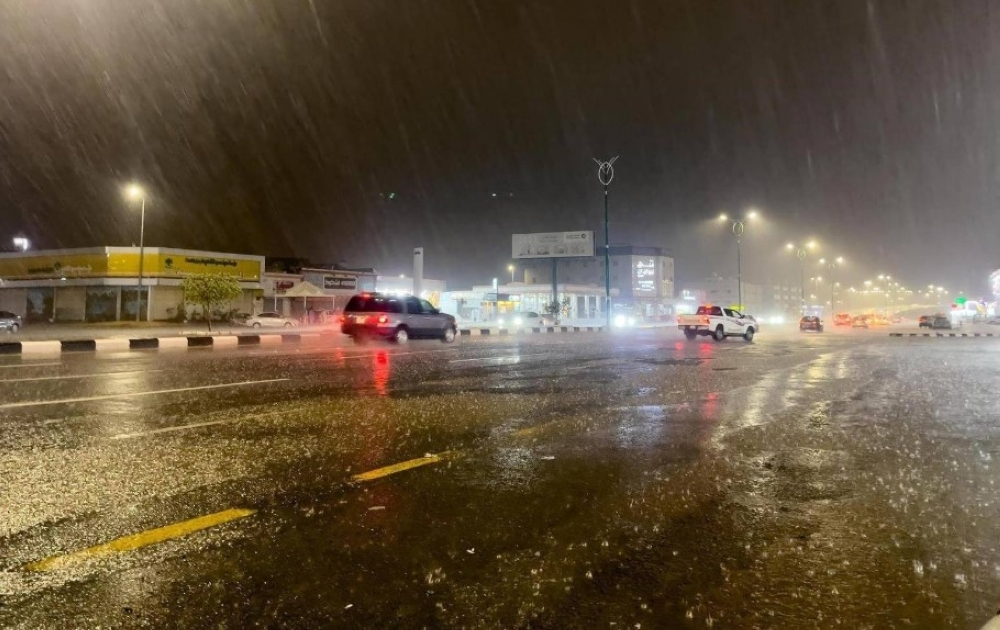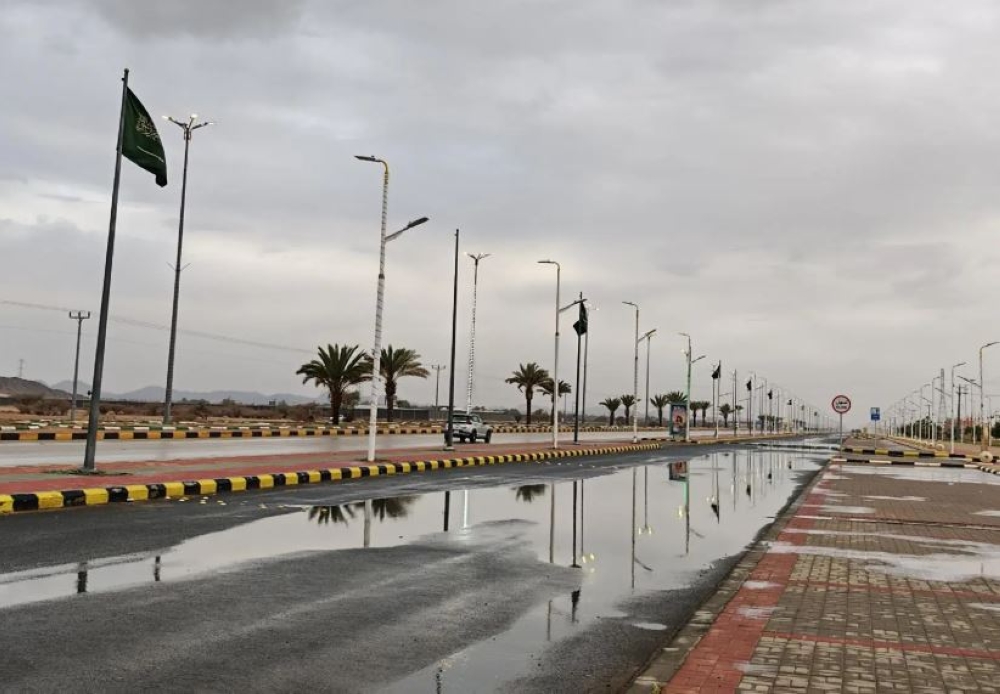
The National Center for Meteorology in Saudi Arabia issued urgent warnings to citizens and residents, issuing a red alert for heavy rainfall in Najran , along with forecasts of fog formation in the Al-Jawf region. These warnings are part of the ongoing monitoring of weather fluctuations across the Kingdom, aimed at ensuring the safety of lives and property.
The center explained in its detailed statement that the advanced warning includes the city of Najran and the governorates of Badr Al-Janoub, Thar, Habuna, Khubash, and Yadma. This exceptional weather condition is accompanied by high-speed winds leading to near-zero horizontal visibility, in addition to hail showers, flash floods in valleys and ravines, and violent thunderstorms. The center confirmed that this severe rainfall will continue, God willing, until 11:00 PM this evening.
Climate change and the history of rainfall events in the Kingdom
Saudi Arabia is characterized by its arid desert climate for most of the year, but the transitional periods between seasons often witness sharp weather fluctuations. Historically, the southern and southwestern regions of the Kingdom, including the Najran region, have been among the areas most prone to receiving significant rainfall compared to other regions. This is due to the complex topography and the influence of monsoon winds that carry moisture towards the highlands. The increasing frequency of such weather events reflects the noticeable climate changes that are now affecting the entire region, necessitating a high level of preparedness to deal with extreme weather phenomena.
The repercussions of heavy rainfall in Najran and its local impact
The issuance of a red alert and the forecast of heavy rainfall in Najran carries significant weight and multiple implications at both the local and national levels. Locally, these weather conditions necessitate a full mobilization of relevant authorities, such as Civil Defense and municipalities, to ensure the smooth flow of traffic and prevent water accumulation that could disrupt daily life. The resulting flash floods also require citizens to stay away from valleys and waterways for their safety. On the other hand, these rains have a positive long-term impact by replenishing groundwater and supporting the agricultural sector, on which some governorates depend. Nationally, these events highlight the efficiency of the Kingdom's early warning system and its ability to effectively manage crises.
Fog wave and reduced horizontal visibility in Al-Jawf region
On the other hand, and in a related context concerning weather fluctuations, the National Center for Meteorology issued a warning today about the formation of light fog over parts of northern Saudi Arabia. This warning includes the city of Sakaka and three major governorates in the Al-Jawf region: Dumat Al-Jandal, Al-Qurayyat, and Tabarjal.
The center's report predicted that these areas would experience a significant decrease in horizontal visibility, with visibility expected to range between 3 and 5 kilometers. The report indicated that this fog would begin affecting the region and continue until 8:00 AM on Monday, requiring drivers to exercise extreme caution while driving on highways and rural roads during those early hours to avoid traffic accidents.