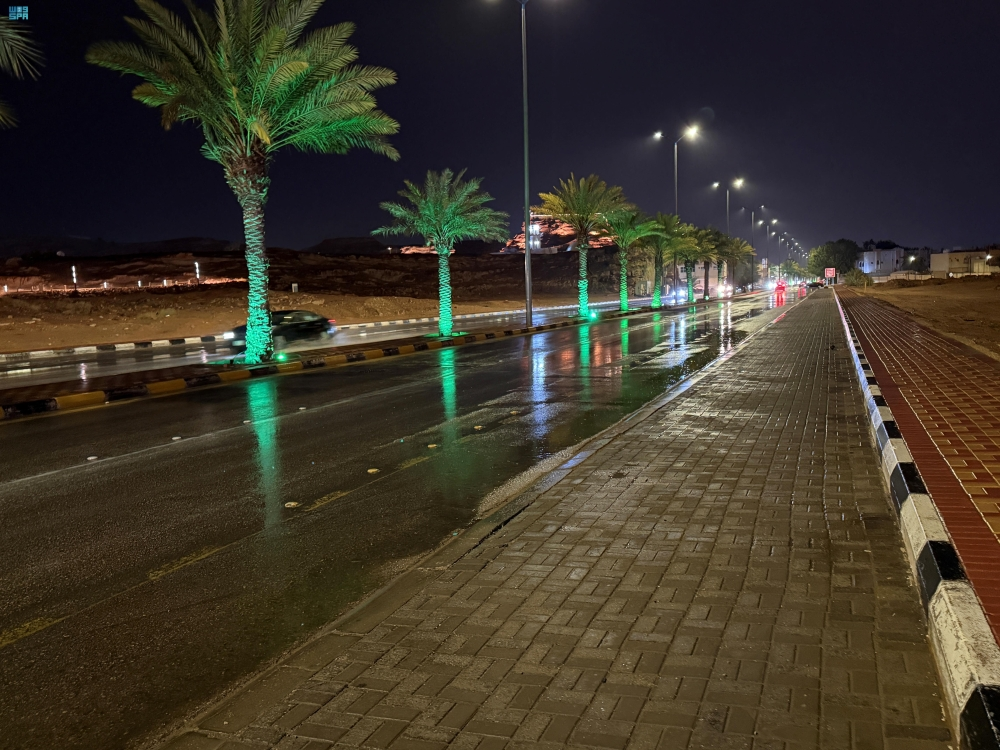
The Tabuk region witnessed rainfall today ranging from light to moderate and heavy, covering large parts of the region and its governorates, a promising sign for a distinctive winter and spring season. Light rain was concentrated in the southern parts of Tabuk city, while the Al-Asafiyah center experienced moderate to heavy rainfall accompanied by intense hail, leading to the flow of some streams and valleys. The rain also extended to the Abayt center in the Tayma governorate, where the ground was covered in white due to the hail.
In the same context, the weather conditions extended to the coastal governorates, with light to moderate rainfall in the districts of Al Wajh Governorate, specifically in Al Manjur, Al Nabaa, As Sadid, and Al Fara’a. Residents documented these moments with photos and videos shared on social media platforms, showing water flowing in the valleys and a noticeable change in the weather.
National Center of Meteorology forecasts
For its part, the National Center for Meteorology issued its daily weather report for the Kingdom, indicating continued chances of thunderstorms. The center warned of the formation of rain-bearing thunderclouds accompanied by active winds and hail in several regions. Forecasts indicate that rainfall may range from moderate to heavy, potentially leading to flash floods in parts of the Madinah, Qassim, Hail, and Al-Jawf regions, as well as the Tabuk and Northern Borders regions.
The weather report also noted that this weather condition extends to include the northern parts of the Eastern Province, while light rain is expected on parts of the highlands of the western and southwestern regions of the Kingdom, amid a decrease in horizontal visibility due to dust or fog accompanying the rain on some highways.
Environmental and agricultural importance of Tabuk rains
The rainfall in the Tabuk region is of paramount strategic and environmental importance, as the region is one of the most important food baskets in the Kingdom of Saudi Arabia. This seasonal rain directly contributes to replenishing the groundwater reserves upon which agriculture in the region heavily depends, particularly the cultivation of wheat, fruits, and roses for which Tabuk is renowned and which it exports to various regions of the Kingdom and abroad.
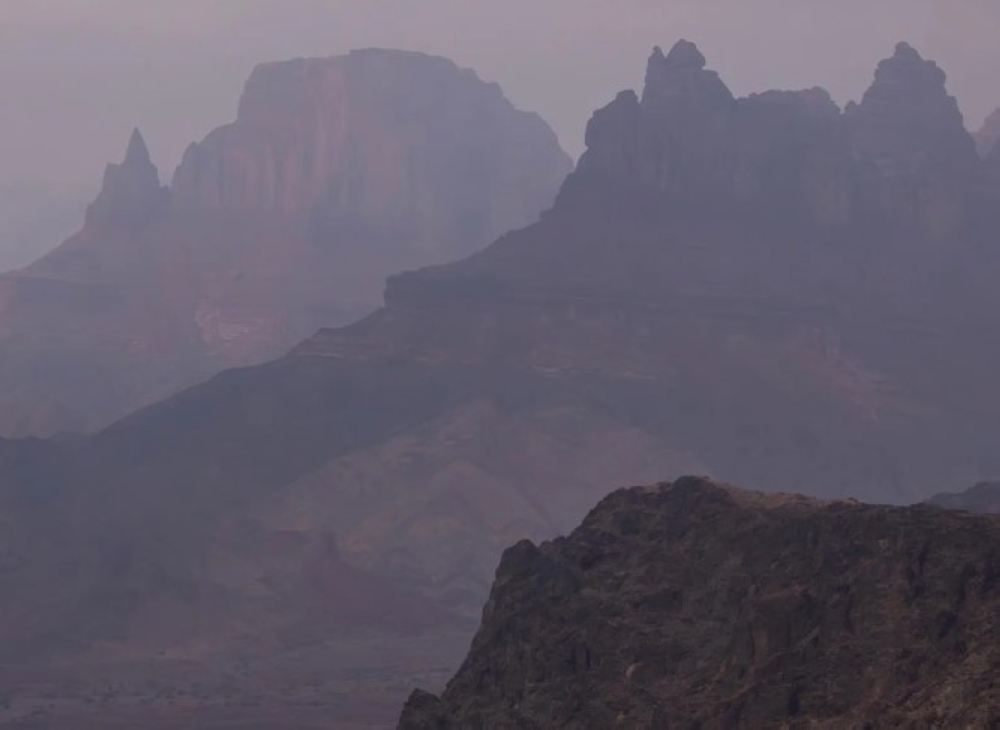
Moreover, rainfall and the flow of valleys are expected to contribute to the revival of wild vegetation, heralding an early spring in the deserts and plateaus of the region, which usually attracts hikers and nature lovers from within and outside the region to enjoy the picturesque atmosphere and landscapes that form after the rainy weather.
Safety warnings and guidelines
Given these weather fluctuations, authorities consistently emphasize the need for caution. Citizens and residents are advised to stay away from floodplains and wadis during rainfall and to avoid attempting to cross them, regardless of how low the water level may seem. Drivers are also advised to exercise extreme caution on highways and coastal roads due to the risk of vehicles skidding or reduced visibility caused by fog or dust.