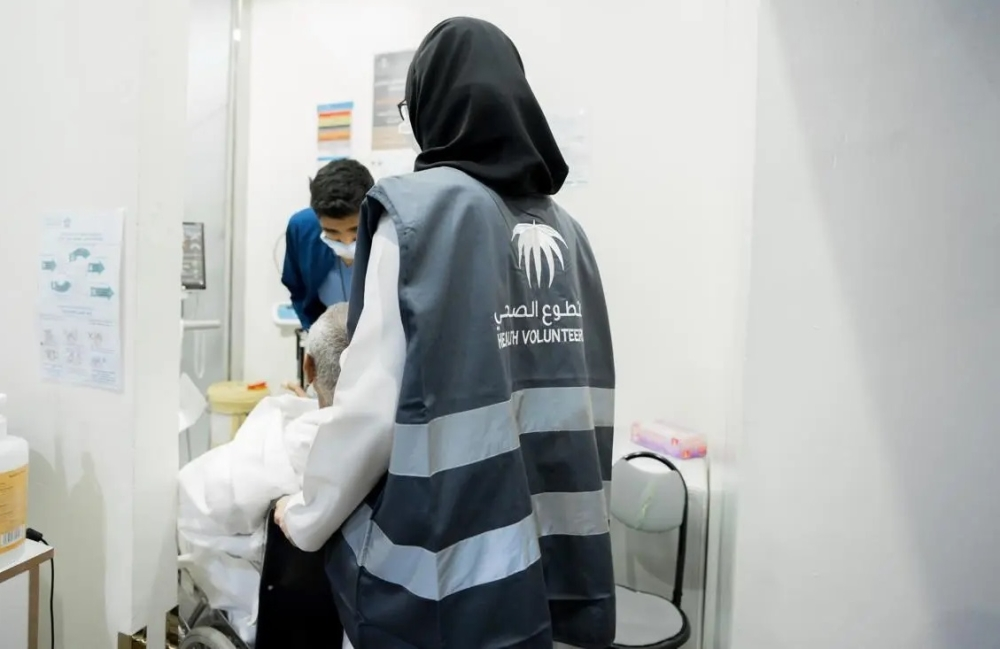
The holy month of Ramadan witnessed exceptional efforts by the healthcare system in the Kingdom of Saudi Arabia, with over 184,000 health services provided to visitors of the Prophet's Mosque and pilgrims. This initiative reflects the wise leadership's commitment to facilitating access to medical care and ensuring it meets the highest standards of quality and safety, thus enhancing the health experience of pilgrims and enabling them to perform their rituals and acts of worship with complete peace of mind and ease.
A history rich in care: The development of health services for visitors to the Prophet's Mosque
For decades, the Kingdom of Saudi Arabia has placed great importance on providing medical care for pilgrims. Historically, healthcare in Medina and Mecca has continuously developed to keep pace with the significant increase in the number of Hajj and Umrah pilgrims. With the launch of Vision 2030, healthcare services for visitors to the Prophet's Mosque have undergone a qualitative leap through the "Health Sector Transformation" and "Serving the Pilgrims" programs. These programs aim to elevate the level of medical services provided and equip hospitals and health centers with the latest medical technologies and qualified personnel to handle the millions of pilgrims during religious seasons, especially during Ramadan, which witnesses the peak influx of visitors from all over the world.
Statistics and figures reflecting the scale of medical care during Ramadan
A total of 184,509 diverse medical services were provided during the holy month. These extensive efforts included 109,793 visits to emergency departments, which operate around the clock to receive urgent cases. Additionally, 64,892 individuals benefited from primary healthcare services, which offer rapid examinations and treatments. Furthermore, 8,687 patients were admitted to hospitals for intensive care and close medical monitoring. These efforts extended beyond primary and emergency care to include complex surgical interventions, with 794 successful surgical procedures performed, all within a comprehensive system of highly efficient healthcare services that ensures the safety of every patient.
Regional and international impact of successful crowd health management
Providing this massive volume of medical care not only has a positive impact locally, but also carries significant importance and a tangible effect regionally and internationally. The Kingdom's success in managing the health of millions of pilgrims serves as a global model for preventive and curative medicine during large gatherings. This excellence reinforces the international community's confidence in Saudi Arabia's ability to host millions annually without outbreaks of epidemics or health crises, thus confirming its global leadership in this field. Furthermore, the return of pilgrims and visitors to their countries in good health after receiving the best medical care contributes to conveying a positive and bright image of the Kingdom's health and humanitarian development.
Integrated coordination and continuous monitoring to ensure quality
These achievements would not have been possible without the integrated coordination between the various components of the healthcare system and other government entities. The Ministry of Health plays an effective supervisory and regulatory role to enhance the efficiency of services in line with its strategic objectives. This regulatory role includes strengthening compliance with approved regulations and standards, and intensifying inspection tours of medical facilities, thus reinforcing the quality of services provided to pilgrims. This integration ensures the continued provision of superior medical care and makes Madinah a safe and healthy environment that welcomes its visitors year-round, providing them with all the necessary medical and psychological support to perform their rituals in a spiritual atmosphere filled with security and peace.