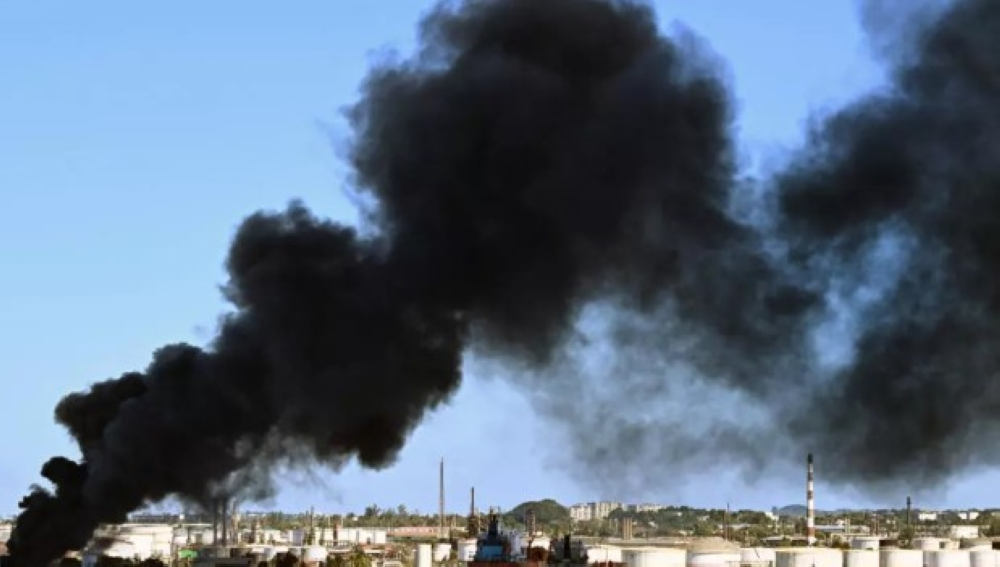
A large fire broke out on Friday at the Nico López oil refinery in Havana Bay, Cuba, sending a thick plume of black smoke visible from across the city. The incident further exacerbates the country's severe energy crisis, which is already plagued by acute fuel shortages due to US sanctions and reduced oil supplies from its ally Venezuela.
Background to the energy crisis in Cuba
Cuba’s energy crisis has its roots in decades of hard-won supplies, with the United States imposing a strict economic embargo on the island since the early 1960s. Cuba had long relied on economic and oil support from the Soviet Union, but with its collapse in 1991, the country entered a severe economic crisis known as the “Special Period.” In the years that followed, Venezuela, under Hugo Chávez, became Cuba’s main energy lifeline, supplying it with approximately 100,000 barrels of oil per day on preferential terms. However, Venezuela’s own economic and political crisis, coupled with tightened U.S. sanctions on the Venezuelan state oil company, PDVSA, led to a sharp decline in these shipments, leaving Cuba facing its worst fuel shortage in decades.
The impact of the fire on the local and regional situation
The fire at the Nico López refinery is a devastating blow to Cuba's crumbling energy infrastructure. This refinery plays a vital role in supplying the capital and surrounding areas with fuel and electricity. The incident is expected to exacerbate power outages, lengthen the already long lines at gas stations, and paralyze public and private transportation. Locally, this incident adds to the daily struggles of citizens and places further strain on an already struggling economy.
Regionally, the fire highlights the fragility of energy security in the Caribbean and reflects the cross-border effects of the Venezuelan crisis and US sanctions. It also underscores the challenges faced by small nations in securing vital energy supplies amidst geopolitical tensions. Just days before the fire, Air Canada announced the suspension of its flights to Cuba due to “ongoing restrictions on jet fuel supplies,” a clear indication of the depth of the crisis, which this fire is now exacerbating.