“Exclusive” steals the spotlight in the historic Janadriyah Square
In a day filled with competition and excitement, the camel “Hasri,” owned by Saudi Arabian Battan bin Masoud Al-Marri, won the fourth race and claimed the Custodian of the Two Holy Mosques Camel Festival Cup in the Thanaia (male camels - general category). “Hasri” recorded a time of 12:45.104 minutes, confirming the dominance of Saudi camels in one of the strongest races of the festival, which is considered the most prestigious and valuable in the region.
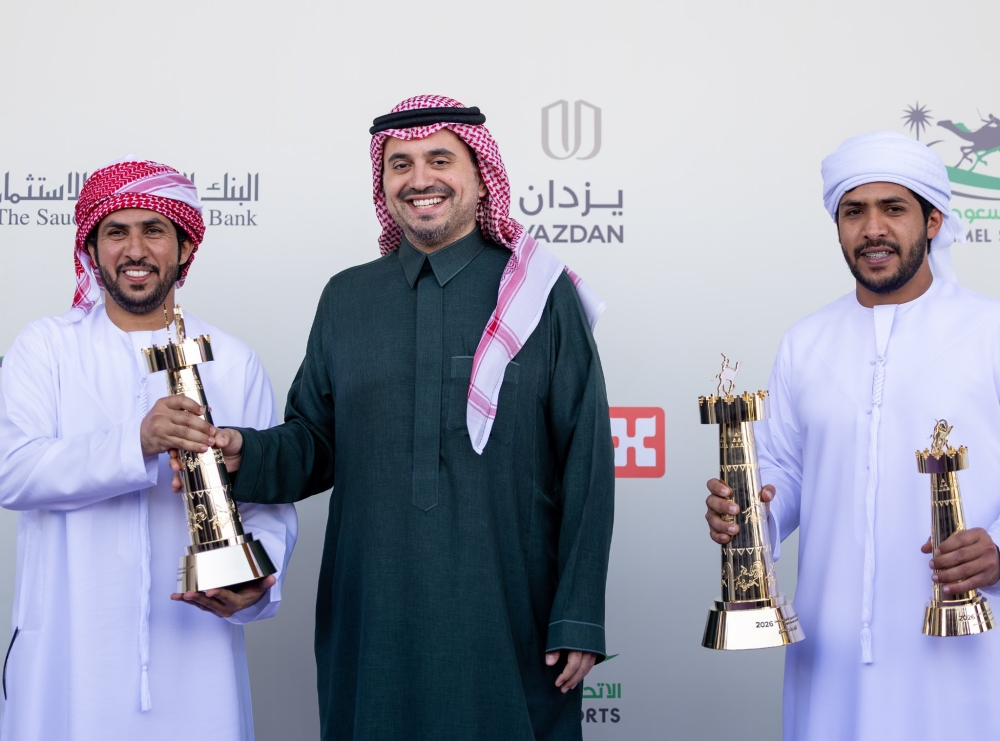
His Highness Prince Fahd bin Jalawi bin Abdulaziz bin Musaed, Chairman of the Board of Directors of the Saudi Camel Racing Federation, crowned the owner, Bathan Al-Marri, with the precious cup, at the conclusion of the “Thanaya” category competitions, which witnessed the participation of elite camels from various Gulf countries.
Historical background and cultural significance of camel racing
Camel racing is an integral part of the cultural and historical heritage of the Arabian Peninsula, having historically served as a means of transportation and a source of tribal pride. Over time, this traditional sport has evolved into organized competitions with significant government support, particularly in Saudi Arabia. The Custodian of the Two Holy Mosques Camel Festival stands as a prime example of this commitment, aiming to preserve and promote this rich heritage as a world-class sport, in line with the goals of Saudi Vision 2030, which emphasizes national pride and its global visibility.
A global festival with record-breaking awards
The third edition of the festival, held under the patronage of the Custodian of the Two Holy Mosques, King Salman bin Abdulaziz Al Saud, was launched at the Janadriyah Camel Racing Track in Riyadh, one of the world's most prestigious camel racing venues. The 10-day festival features wide participation across five approved categories, in addition to rider camel races for men and women, and the "Mazayin" competitions celebrating camel beauty. With total prize money exceeding 75 million Saudi Riyals, the festival has become a major destination for camel owners and enthusiasts from around the globe.
Strong results and prominent Emirati competition
The other main races witnessed fierce competition, with Emirati camels making a strong showing. The camel “Al Wasmiya” from the UAE Presidential Camel Racing Team won the first race and the Open Bakar Cup, while the camel “Malih,” also from the Presidential Camel Racing Team, won the second race and the Open Qadan Cup. The third race was won by the camel “Al Sulay’iyah,” owned by Emirati Maneh Ali Al Shamsi, who took home the General Bakar Cup.
The economic and regional impact of the festival
The festival's impact extends beyond the sporting and cultural spheres, serving as a significant economic driver. It revitalizes the tourism sector, attracting visitors from within the Kingdom and abroad, and supports the multi-billion riyal camel racing industry through buying, selling, and the preservation of purebred camels. Regionally, the festival strengthens fraternal ties among the people of the Gulf Cooperation Council (GCC) countries, providing a platform for fair competition and the exchange of expertise, thus solidifying camel racing as a symbol of shared heritage.
Notable female participation reflects the development of sports
The festival also witnessed a remarkable participation of female camel riders in the human jockey race, a significant addition reflecting the sport's development and its openness to all segments of society. With female camel riders from seven countries, including a first-time participant from the Kingdom of Denmark, the festival sends a global message about the sport's widespread appeal. Saudi Arabia led the way with 19 female camel riders, demonstrating the Saudi Camel Racing Federation's efforts to empower and support women in this traditional sport.
The joy of victory and dedicating the achievement
Owner Battan Al-Marri expressed his overwhelming joy at the victory, emphasizing that this achievement was the result of tireless work and long-term planning. He said, “Praise be to God who crowned our efforts with success in this prestigious festival. The true honor is to carry a cup bearing the name of the Custodian of the Two Holy Mosques.” Al-Marri dedicated the victory to all his supporters and fans, considering this triumph a source of joy for all Saudis.