As part of the Kingdom of Saudi Arabia’s ongoing efforts to enhance Hajj and Umrah services, Kadana Development and Investment Company, the executive arm of the Royal Commission for Makkah City and the Holy Sites, has unveiled a package of high-quality projects planned for the 1447 AH Hajj season. This proactive step underscores the Kingdom’s commitment to providing the utmost comfort and safety for pilgrims, and is part of the early preparations undertaken by relevant authorities to ensure the readiness of infrastructure before the arrival of pilgrims.
A qualitative leap in cooling the atmosphere at the Jamarat facility
Kadana explained that one of the most prominent features of the development plan is the modernization of the climate control systems at the Jamarat facility, which is one of the most densely populated areas during the days of Tashreeq. The company intends to replace the traditional misting columns with more advanced technologies, including the installation of highly efficient misting fans.
The plan includes replacing approximately 190 misting columns with modern fans capable of covering wider areas and serving nearly 180,000 pilgrims per hour. This advanced technology aims to reduce temperatures in the immediate vicinity of pilgrims by up to 8 degrees Celsius, effectively combating heat stress and sunstroke, especially given that the Hajj season in current and future years coincides with hot summer weather.
Expansion of the Mount of Mercy umbrellas: Sustainability and protection
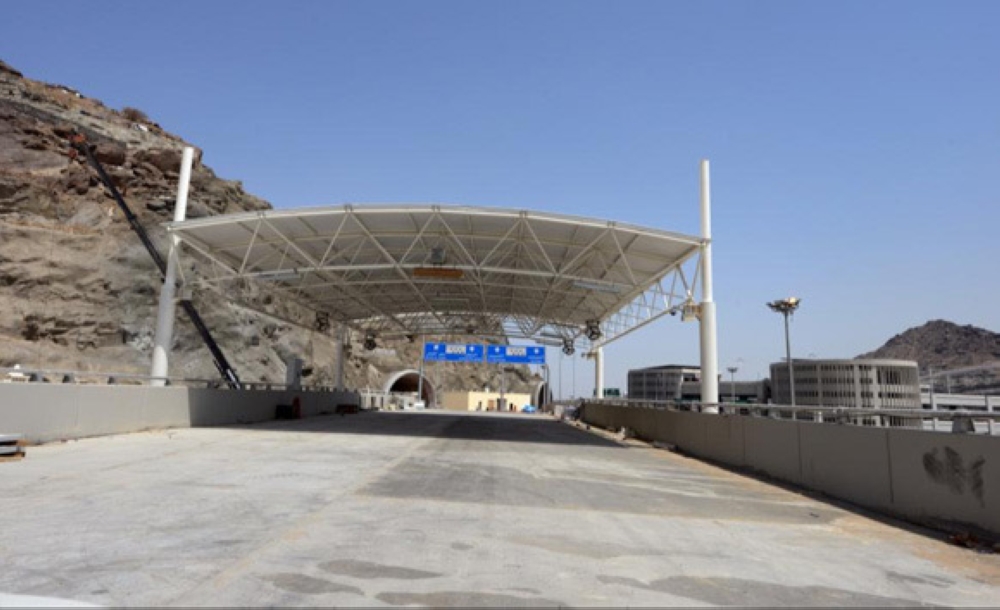
In Arafat, specifically in the area of Jabal al-Rahma, which has been witnessing the arrival of pilgrims since the early morning hours of the ninth day of Dhu al-Hijjah, the company announced the implementation of the second phase of its project to mitigate the effects of heat stress. The project aims to cover large areas with advanced shade structures to protect pilgrims from direct sunlight.
The project includes the construction of canopies with a total area of approximately 14,000 square meters, distributed across 20 canopy units equipped with cooling systems and misting fans. The importance of this project extends beyond the immediate benefit of cooling the air; it also encompasses enhancing environmental sustainability and improving the urban landscape of the Holy Sites, thus providing a serene and comfortable environment that enables pilgrims to perform their rituals with ease and comfort.
Geological studies to enhance public safety
Beyond climate mitigation projects, the Hajj 1447 AH plan places great emphasis on the safety of the geological infrastructure of the holy sites. The Ministry of Hajj and Umrah (Kadana) announced the launch of comprehensive studies to assess the risks of slopes and rockfalls in the Mina, Muzdalifah, and Arafat areas, covering a vast geographical area of approximately 119.6 square kilometers.
The project relies on 81 geotechnical zones comprising 506 precise monitoring stations, designed to collect reliable geological data for proactive engineering protection measures. This initiative reflects the Kingdom's commitment to implementing the highest international safety standards in crowd management and mountainous sites, ensuring that the holy sites are free from any potential natural hazards that could threaten the safety of pilgrims or workers.
Strategic context and Vision 2030
These projects align with the goals of Saudi Vision 2030 and the Guests of God Service Program, which aims to facilitate the hosting of more Umrah and Hajj pilgrims while providing high-quality services. These improvements are part of a series of ambitious projects designed to transform the Hajj journey into a seamless and safe spiritual experience, relying on smart solutions and sustainable infrastructure that takes into account climate change and the steadily increasing number of pilgrims each year.