حائل على رأس قائمة المدن الأبرد في المملكة
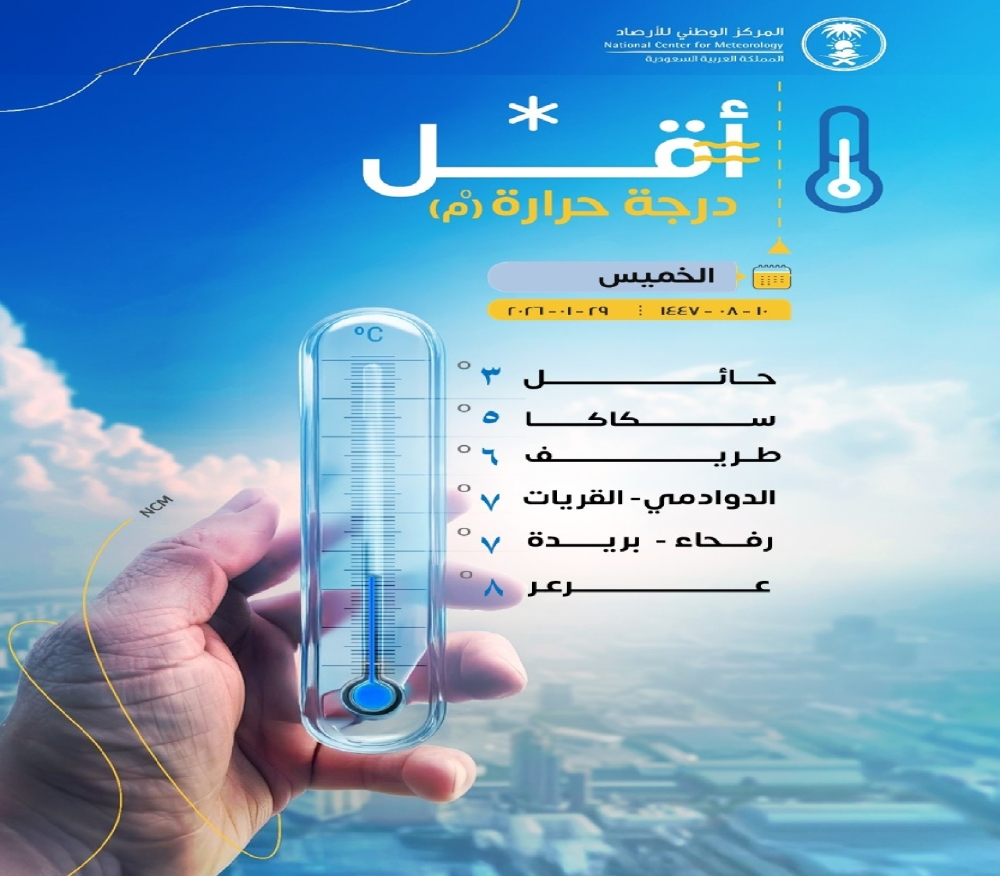
أعلن المركز الوطني للأرصاد أن مدينة حائل سجلت أدنى درجة حرارة في المملكة العربية السعودية اليوم الخميس، حيث بلغت 3 درجات مئوية فقط. ويأتي هذا الانخفاض الملحوظ في درجات الحرارة كجزء من موجة برد تؤثر على المناطق الشمالية والوسطى من البلاد، مؤكدة على التنوع المناخي الذي تتمتع به السعودية. وقد أصدر المركز بياناً مفصلاً يوضح درجات الحرارة الصغرى المسجلة في عدد من المدن، والتي جاءت على النحو التالي:
- حائل: 3 درجات مئوية
- سكاكا: 5 درجات مئوية
- طريف: 6 درجات مئوية
- الدوادمي: 7 درجات مئوية
- القريات: 7 درجات مئوية
- رفحاء: 7 درجات مئوية
- بريدة: 7 درجات مئوية
- عرعر: 8 درجات مئوية
السياق المناخي لشتاء السعودية
على عكس الصورة النمطية السائدة عن المملكة كبلد صحراوي حار على مدار العام، تتميز مناطقها الشمالية، مثل حائل والجوف والحدود الشمالية وتبوك، بشتاء قارس البرودة. يعود ذلك إلى موقعها الجغرافي المتقدم شمالاً وتأثرها بالكتل الهوائية الباردة القادمة من أواسط آسيا وأوروبا خلال فصل الشتاء. وتلعب التضاريس دوراً مهماً أيضاً؛ فمدينة حائل، التي تقع في قلب منطقة جبل شمر، ترتفع عن سطح البحر، مما يساهم في انخفاض درجات حرارتها بشكل أكبر مقارنة بالمناطق الساحلية أو المنخفضة. وتُعرف هذه الفترة من العام محلياً بـ “المربعانية”، وهي ذروة فصل الشتاء التي تمتد لأربعين يوماً وتشتهر بالبرد الشديد والصقيع.
التأثيرات المحلية وأهمية الحدث
لا يقتصر تأثير موجات البرد هذه على مجرد أرقام في تقارير الأرصاد الجوية، بل يمتد ليلامس كافة جوانب الحياة اليومية للسكان. فعلى الصعيد المحلي، يزداد الطلب بشكل كبير على وسائل التدفئة، سواء كانت كهربائية أو تقليدية كالحطب، مما ينعكس على استهلاك الطاقة والأنماط الشرائية. كما تُصدر الجهات المعنية، مثل الدفاع المدني، تحذيرات مستمرة للمواطنين والمقيمين بضرورة أخذ الحيطة والحذر، خاصة فيما يتعلق بالاستخدام الآمن لوسائل التدفئة لتجنب الحرائق أو حوادث الاختناق، بالإضافة إلى توخي الحذر أثناء القيادة في الصباح الباكر بسبب احتمالية تكون الضباب أو الصقيع على الطرقات.
من ناحية أخرى، تساهم هذه الأجواء في تنشيط السياحة الشتوية الداخلية، حيث يقصد الكثيرون المناطق البرية للاستمتاع بـ “الكشتات” والتخييم حول مواقد النار، وهي عادة اجتماعية متجذرة في ثقافة المنطقة. وعلى المستوى الزراعي، يشكل الصقيع تحدياً للمزارعين لحماية محاصيلهم، ولكنه في الوقت نفسه ضروري لبعض أنواع الزراعات التي تحتاج إلى ساعات برودة معينة لتنمو بشكل سليم، مما يبرز التوازن الدقيق الذي يفرضه المناخ على القطاع الزراعي في هذه المناطق.