An urgent international appeal at a critical historical moment
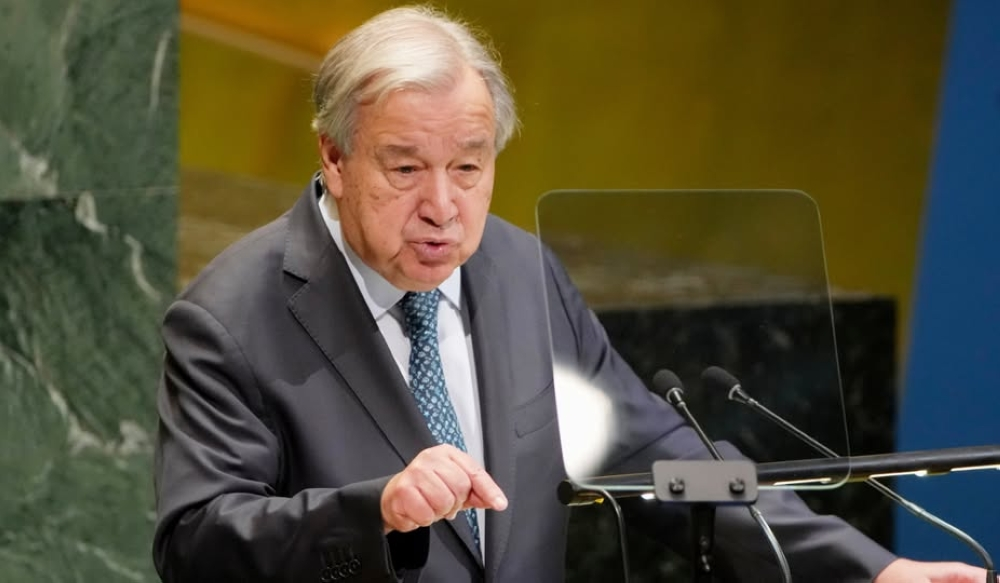
In what he described as a “critical moment for international peace and security,” UN Secretary-General António Guterres issued an urgent appeal to the United States and Russia to return immediately to the negotiating table to reach a new nuclear arms control agreement. This appeal comes as the New START treaty, the last major arms control agreement between the two nuclear powers, is set to expire, ushering in a new era of uncertainty and heightened risks.
Historical background: Decades of efforts to tame the nuclear monster
The New START Treaty, signed in 2010, was not a spontaneous event, but rather the culmination of decades of arduous diplomacy that began at the height of the Cold War. Agreements such as SALT in the 1970s and START I in 1991 sought to limit the massive nuclear arsenals of the Soviet Union and the United States, with the goal of preventing a devastating nuclear war. These treaties were not merely numbers and limits; they were fundamental to building trust and providing a degree of transparency and predictability regarding adversary behavior, which contributed to global stability for decades. With the collapse of the Intermediate-Range Nuclear Forces (INF) Treaty in 2019, the end of New START represented a near-complete unraveling of the painstakingly constructed arms control architecture.
The importance of “New Start” and the repercussions of its absence
The New START Treaty capped the number of strategic nuclear warheads each country could deploy at 1,550, in addition to restrictions on the missiles and launchers that could carry them. Crucially, it established a robust system of mutual verification, including on-site inspections that allowed each party to confirm the other's compliance. Although these inspections were suspended due to the COVID-19 pandemic and have not yet resumed, the treaty's existence itself provided a vital channel of communication. "For the first time in more than half a century, we are facing a world without any binding limits on the strategic nuclear arsenals of the Russian Federation and the United States of America," Guterres stated, emphasizing that the risk of nuclear weapons use is "highest it has been in decades.".
Widespread international impact and an uncertain future
The absence of a binding legal framework not only affects Washington and Moscow, which control more than 80% of the world’s nuclear weapons, but also sends shockwaves across the entire geopolitical landscape. Experts fear this vacuum could lead to a new and costly arms race, with each power striving to develop and expand its arsenal to counter perceived threats. This situation could also encourage other states to pursue nuclear weapons, seriously undermining the Treaty on the Non-Proliferation of Nuclear Weapons (NPT), the cornerstone of global security. Guterres’s call is not merely a diplomatic appeal; it is a stark warning that the world stands on the brink of a new and more dangerous era, one that will require wisdom and courage from leaders to avert catastrophic consequences.