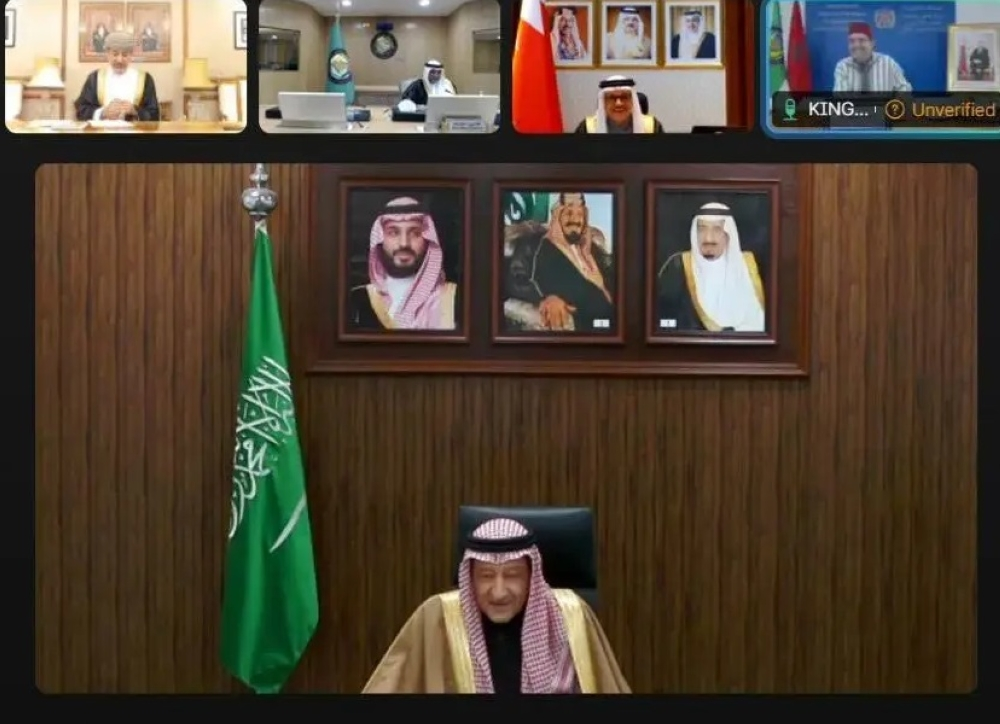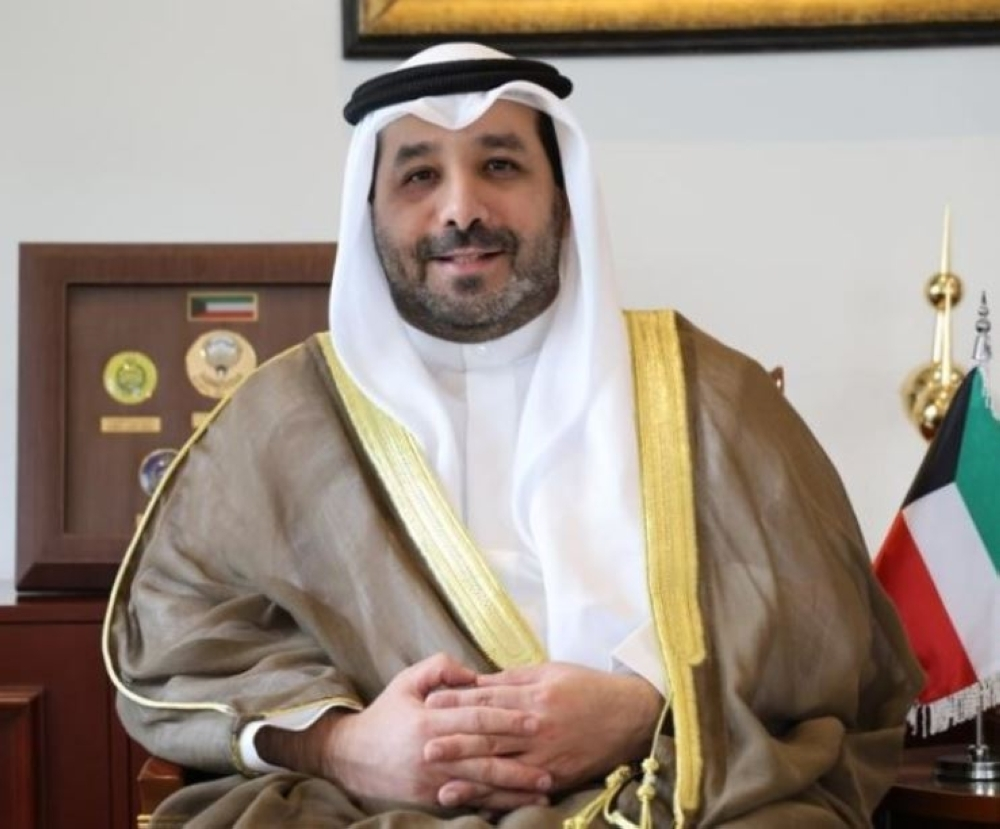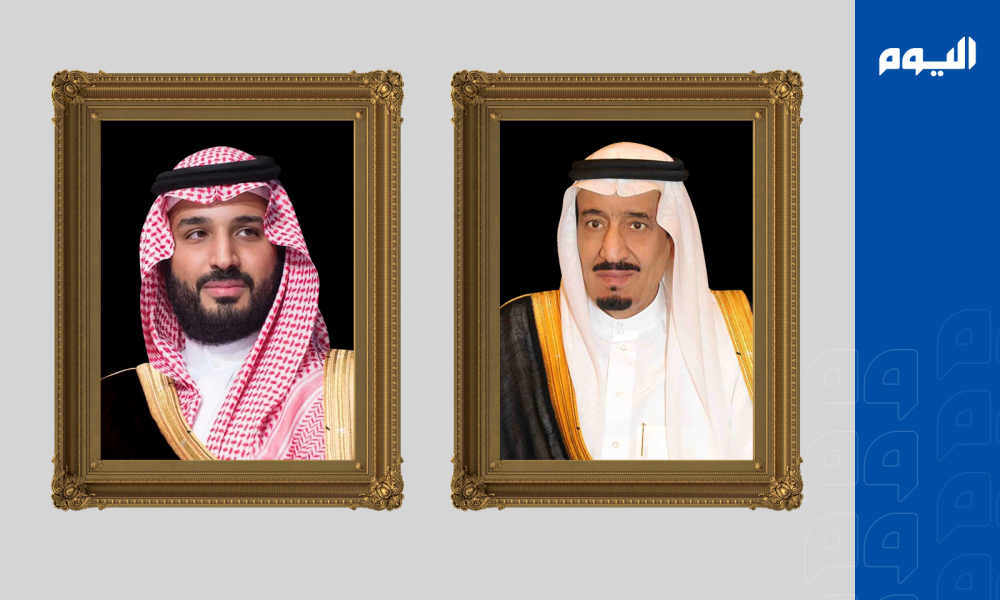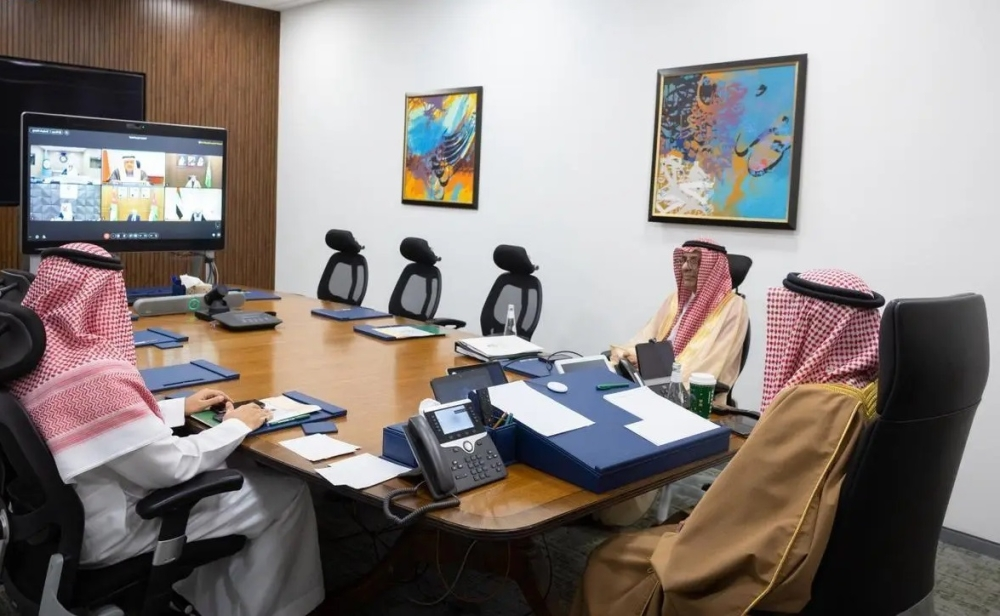
On behalf of His Highness Prince Faisal bin Farhan bin Abdullah, the Saudi Minister of Foreign Affairs, the Deputy Minister of Foreign Affairs, Engineer Waleed bin Abdulkarim Al-Khuraiji, participated yesterday evening in the Gulf-Jordanian ministerial meeting . This important diplomatic event was held via video conference and brought together the foreign ministers of the Gulf Cooperation Council (GCC) member states, chaired by the Minister of Foreign Affairs of the Kingdom of Bahrain and current session chair, Dr. Abdullatif bin Rashid Al-Zayani, along with representatives of the Hashemite Kingdom of Jordan.
The meeting included a comprehensive review of the strong fraternal relations between the Gulf Cooperation Council (GCC) countries and the Hashemite Kingdom of Jordan. Participants also discussed ways to enhance and develop these relations across various vital sectors, emphasizing the importance of supporting and expanding the existing strategic partnership frameworks to serve mutual interests and fulfill the aspirations of the brotherly peoples.
The historical context of Gulf-Jordanian relations
Relations between the Gulf Cooperation Council (GCC) states and Jordan are rooted in deep historical ties and close cultural and social bonds. For decades, the Hashemite Kingdom of Jordan has served as a strategic depth for the GCC states, and vice versa. This relationship has been solidified through numerous bilateral and multilateral agreements encompassing economic, security, and political cooperation. This meeting is a continuation of ongoing dialogues aimed at unifying visions and positions on regional and international issues, reflecting the leadership's commitment to sustained joint coordination amidst the rapidly evolving challenges facing the Middle East.
Outcomes of the Gulf-Jordanian Ministerial Meeting and its Regional Importance
the Gulf-Jordanian ministerial meeting lies in its sensitive timing, as the region navigates complex geopolitical circumstances that necessitate concerted efforts. Regionally, this coordination sends a clear message of Arab unity in the face of external threats and strengthens security and economic stability in the region. Internationally, this strategic alliance affirms to the international community the ability of the region's countries to manage their crises and protect their resources independently and effectively, which positively impacts global peace and security and guarantees freedom of navigation and international trade.
A firm stance against Iranian interference and aggression
In a unified and firm stance, Their Highnesses and Excellencies the Foreign Ministers reiterated their strongest condemnation of the blatant and unjustified attacks perpetrated by Iran against the Gulf Cooperation Council (GCC) states and the Hashemite Kingdom of Jordan. The ministers emphasized the inherent and legitimate right of the GCC states and Jordan to take all necessary measures and utilize all available resources to protect their national security and territorial integrity, categorically rejecting any infringement upon national sovereignty or interference in the internal affairs of Arab states.
The meeting was attended by a number of senior officials, most notably the Undersecretary of the Ministry of Foreign Affairs for Multilateral International Affairs, Dr. Abdulrahman Al-Rassi, and the Director of the Gulf Cooperation Council Department at the Ministry of Foreign Affairs, Mr. Faisal bin Saeed. This high-level attendance reflects the great importance that the Kingdom of Saudi Arabia attaches to strengthening joint Arab action and supporting the stability and prosperity of the entire region.