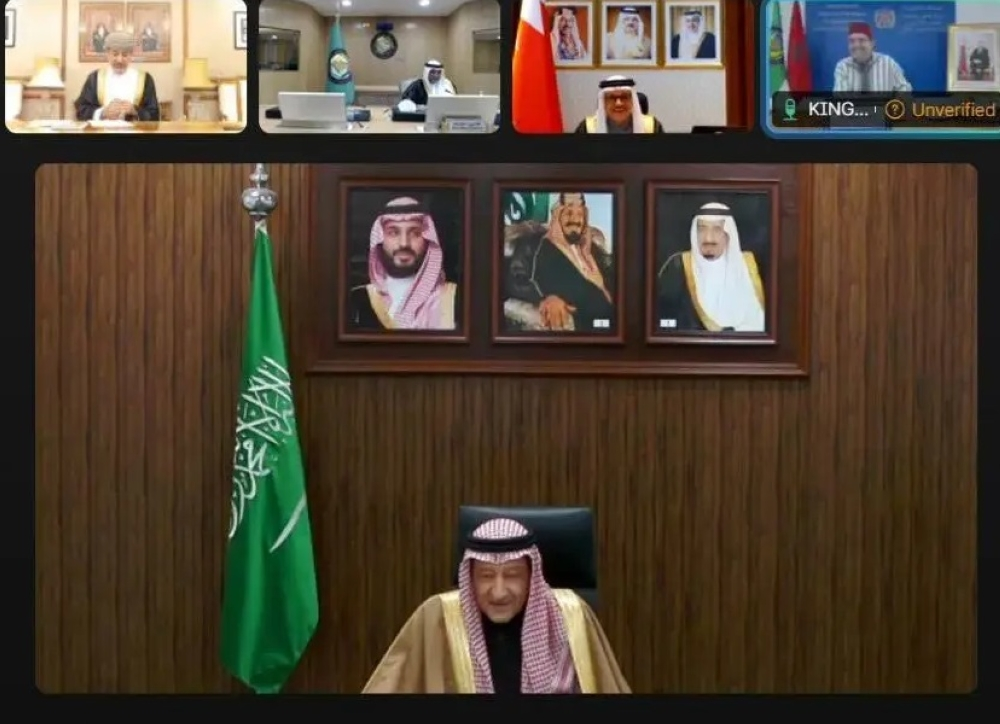
On behalf of His Highness Prince Faisal bin Farhan bin Abdullah, the Saudi Minister of Foreign Affairs, Deputy Foreign Minister Waleed bin Abdulkarim Al-Khuraiji participated yesterday evening in the Gulf-British ministerial meeting . This important meeting, held virtually, brought together the foreign ministers of the Gulf Cooperation Council (GCC) member states and the United Kingdom. The GCC side was headed by Dr. Abdullatif bin Rashid Al-Zayani, Minister of Foreign Affairs of the Kingdom of Bahrain and current chair of the Council. This meeting comes at a time when the regional arena is witnessing increasing challenges that require high-level coordination among strategic allies.
Topics of the Gulf-British ministerial meeting and key security issues
The meeting witnessed extensive discussions on current security challenges, focusing on the ongoing Iranian aggression and its negative impact on the Gulf states and the Middle East in general. Participants exchanged views on these transgressions, emphasizing the need for joint measures to safeguard the security and safety of citizens and residents in the region. They also discussed the escalating tensions in the region and the international and regional efforts underway to contain these crises and prevent the region from sliding into wider conflicts. The Saudi delegation included Dr. Abdulrahman Al-Rassi, Undersecretary of the Ministry of Foreign Affairs for Multilateral International Affairs, and Faisal bin Saeed Al-Sati, Director of the Gulf Cooperation Council Department, reflecting the Kingdom's keen interest in these discussions.
Roots of the strategic partnership between the GCC countries and the United Kingdom
Relations between the Gulf Cooperation Council (GCC) countries and the United Kingdom are based on a long history of strategic, political, and economic cooperation. For decades, Britain has been a key ally of the Gulf states, with close ties aimed at ensuring freedom of navigation in vital waterways such as the Strait of Hormuz and the Red Sea, which are essential to the global economy. Historically, Britain has worked alongside the Gulf states to enhance defense capabilities and share intelligence to combat terrorism and counter foreign interference in the internal affairs of the region. This long-standing partnership makes continued coordination essential to address any emerging threats that could hinder development and stability.
Expected implications of strengthening regional and international security coordination
This diplomatic and security coordination carries significant weight, extending beyond local boundaries to encompass regional and international dimensions. Locally and regionally, the Gulf-British consensus sends a reassuring message to the people of the region and investors that concerted efforts are underway to protect economic and social gains from any military escalation. Internationally, the stability of the Arabian Gulf region is a cornerstone for the stability of global energy markets and supply chains. Unifying positions against destabilizing interventions contributes to effective international diplomatic pressure and supports the efforts of the United Nations and the international community to uphold international law and respect for state sovereignty, thus paving the way for a more secure and prosperous Middle East.