New political crisis in Guinea-Bissau
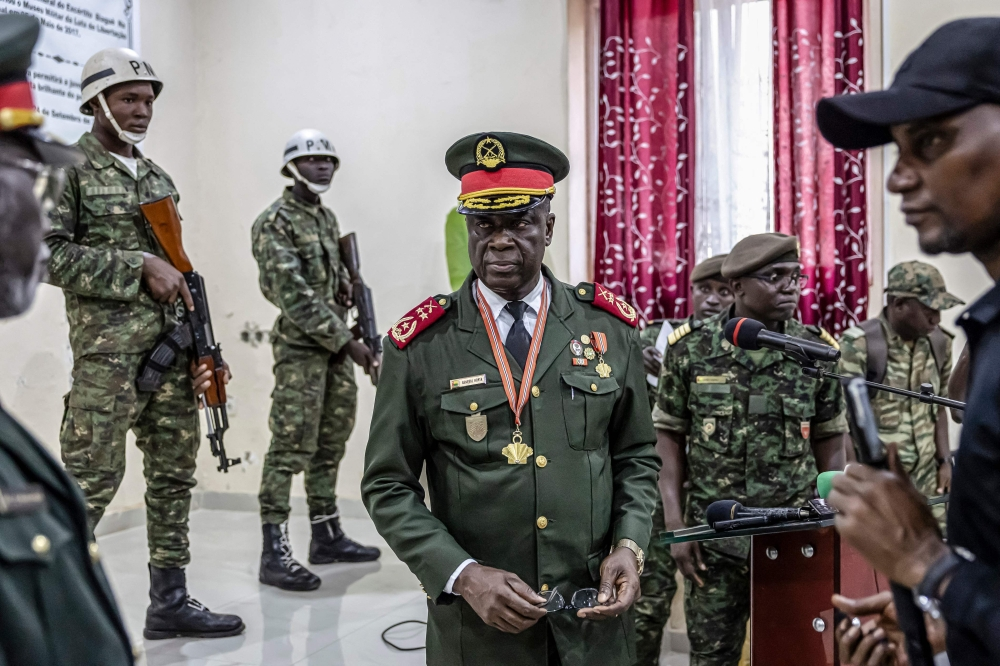
Guinea-Bissau, the small West African nation, is experiencing a new chapter of political instability, as the military junta that seized power announced the appointment of General Horta Ntam as president for a one-year transitional period. This development came after the army ousted President Umaro Sissoco Embaló and suspended the electoral process, the results of which the country was awaiting. The opposition categorically rejected this move, describing it as a “coup orchestrated” by the outgoing president to deny them a certain electoral victory.
A historical context of coups and instability
The current events in Guinea-Bissau cannot be understood in isolation from its turbulent history. Since gaining independence from Portugal in 1974, the country has suffered from chronic instability, experiencing at least four successful military coups, numerous failed attempts, and a series of political assassinations. This heavy legacy has made the military a major player in political life, frequently intervening in governance and hindering the development of robust democratic institutions. The country also suffers from extreme poverty and widespread corruption, ranking among the poorest nations in the world, creating fertile ground for social and political unrest.
The repercussions of the crisis and its potential impact
This crisis represents a major setback for the country's fragile democratic transition and raises serious concerns both domestically and regionally. Domestically, the events have brought the capital, Bissau, to a near standstill, with a heavy security presence and the closure of shops and markets, foreshadowing a further deterioration of the economic and living conditions of citizens. Regionally, this coup reinforces the phenomenon of a "belt of coups" in the Sahel and West Africa, posing a significant challenge to regional organizations such as the Economic Community of West African States (ECOWAS) and the African Union, which were quick to condemn the power grab and demand the immediate restoration of constitutional order.
Mutual accusations and an uncertain future
The coup leaders justified their actions by claiming there was a “plan to destabilize the country involving drug traffickers,” a justification many analysts doubt, arguing that halting the electoral process actually benefits President Embaló’s camp. Opposition leader Fernando Dias, for his part, insisted on his victory, accusing Embaló of orchestrating the coup to prevent him from assuming power. Amid these accusations, the future of Guinea-Bissau remains uncertain, as the transitional period faces formidable challenges: rebuilding trust between political factions, addressing the root causes of instability, and ensuring free and fair elections that reflect the will of the people.
International reactions
The coup was met with widespread international condemnation. The African Union denounced the power grab and demanded the immediate release of President Embaló. The European Union also called for an “immediate return to constitutional order” and the resumption of the stalled electoral process. These positions reflect international concern that the coup will isolate Guinea-Bissau and exacerbate its economic crisis, particularly given its heavy reliance on international aid.