Greenland’s main political parties issued a decisive joint declaration, expressing their categorical rejection of US efforts to annex their Arctic island, stressing that the country’s future should be determined only by its people.
This rare political move, uniting the five parties in the local parliament, came in response to increasing reports and statements by US President Donald Trump about his desire to buy the island. “We don’t want to be Americans, we don’t want to be Danes, we want to be Greenlandic,” the party leaders said in a statement released late Friday. “Greenlandic people must decide the future of Greenland,” they added firmly.
Trump and the Big Real Estate Deal
US President Donald Trump had confirmed to reporters his strategic interest in the island, describing it as a “big real estate deal” and suggesting that Denmark was losing vast sums of money subsidizing it. These remarks sparked a diplomatic crisis, with Danish Prime Minister Mette Frederiksen dismissing the idea as “absurd” and asserting that Greenland was not for sale. This prompted Trump to cancel a planned state visit to Denmark.
The strategic and economic importance of the island
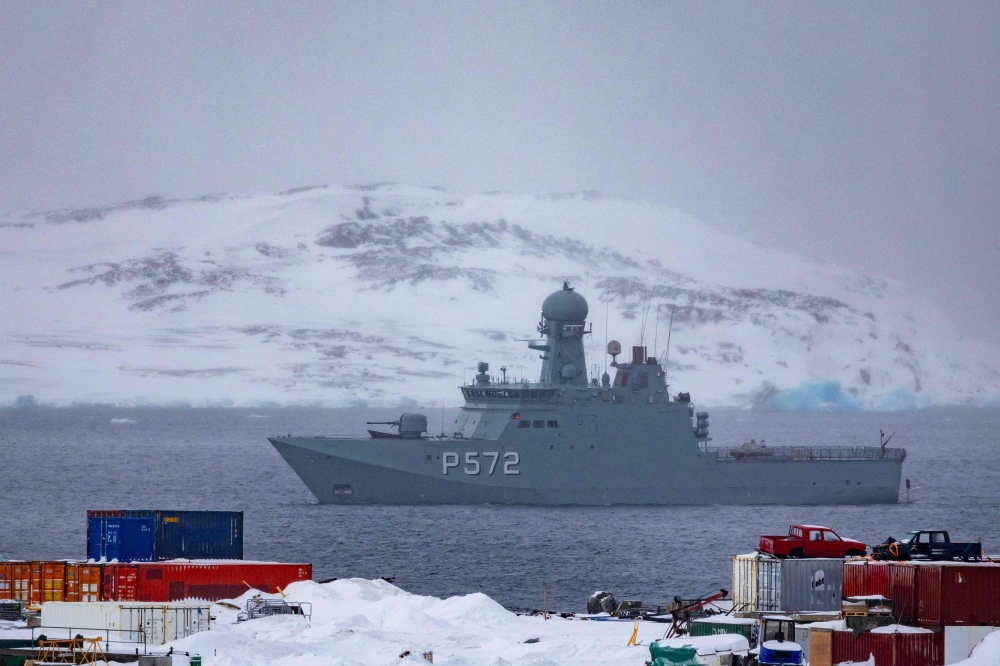
American interest in Greenland is not without reason; the island enjoys a highly strategic geopolitical location in the Arctic, especially as melting ice opens new shipping lanes and facilitates access to natural resources. Greenland is also home to Thule Air Base, the northernmost US military base, which plays a vital role in ballistic missile early warning and space surveillance.
In addition, the island is rich in vast reserves of rare earth minerals, gold, uranium, oil, and gas, making it an arena of increasing international competition, especially with China and Russia attempting to expand their influence in the Arctic region.
Historical background: This is not the first attempt
It is worth noting that Washington’s desire to acquire Greenland is not a recent development; in 1946, US President Harry Truman offered Denmark $100 million in gold to buy the island, given its military importance after World War II, but the offer was rejected at the time as well.
Greenland currently enjoys extensive self-governance within the Kingdom of Denmark since 2009, managing its internal affairs while Copenhagen takes responsibility for defense and foreign policy, at a time when the aspirations of the local population for full independence in the future are growing.