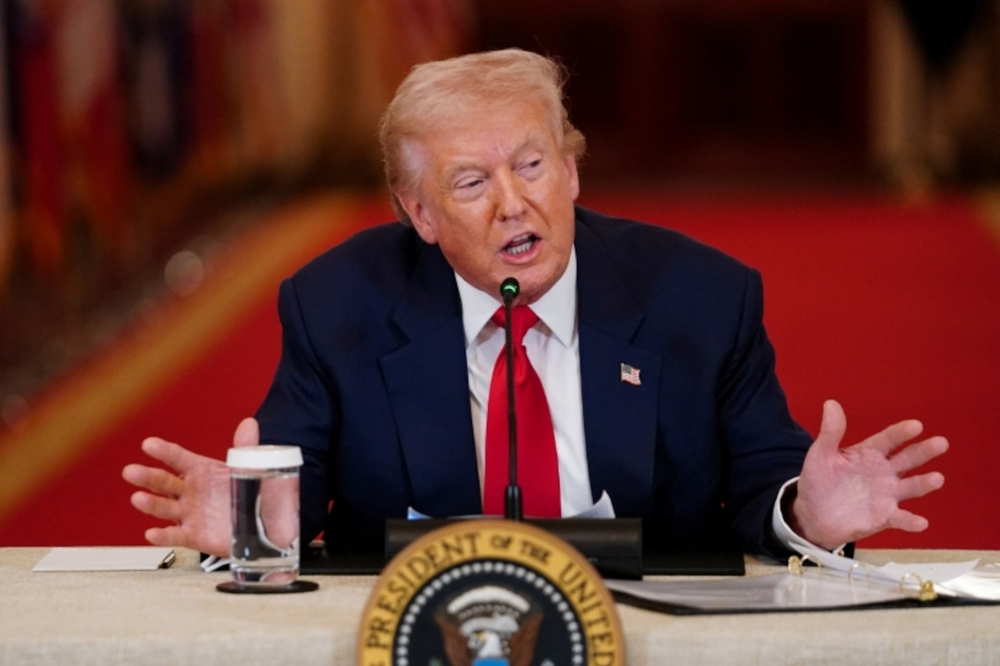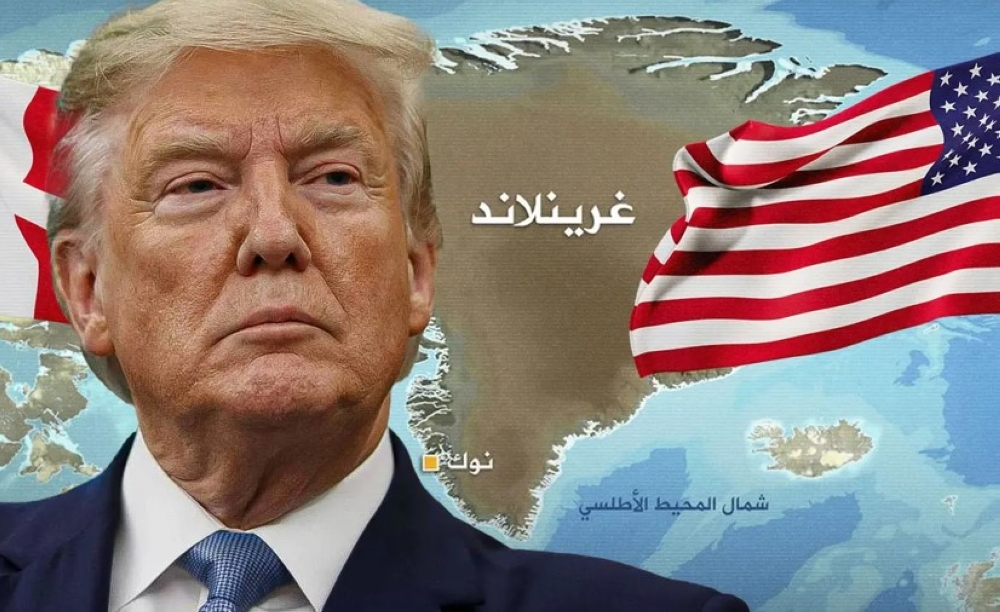
In a significant development in the escalating crisis between the United States and Denmark over the future of Greenland, NATO and the Greenlandic government announced their joint intention to bolster the military defenses of the self-governing Danish territory. This move comes as a preemptive attempt to curb the ambitions of US President Donald Trump, who has renewed his desire to bring the strategic island under US sovereignty, whether through negotiation or by threatening the use of force.
Seeking refuge in the Atlantic umbrella
Faced with scenarios that could escalate to forced annexation, the head of the regional government, Jens-Frederik Nielsen, placed his full hopes on NATO's protection. "Our security and defense are NATO's responsibility," Nielsen stated on social media, emphasizing that his government would work closely with the alliance and Denmark to strengthen defenses on and around the island, while keeping channels of dialogue open with allies, including the United States.
Historical background: This is not the first time
To understand the depth of this crisis, one must look back at history. American interest in Greenland is not a recent phenomenon, nor is it limited to the Trump era. In 1946, US President Harry Truman offered to buy the island from Denmark for $100 million in gold, given its vital geopolitical location. In 1951, a defense agreement was signed between the United States and Denmark, granting Washington extensive military rights, most notably Thule Air Base (now Petavik Space Base), the northernmost US military base and a cornerstone of the US missile early warning system.
Strategic importance and conflict in the Arctic
The Greenland issue transcends the “real estate deal” Trump promotes; the island lies at the heart of a new international competition for the Arctic. As the ice melts, new shipping lanes open up, and vast natural resources, including rare earth minerals, oil, and gas, become available for exploitation. Washington fears growing Russian and Chinese influence in this vital region, making control of Greenland a matter of U.S. national security from the Trump administration’s perspective.
NATO's position and Denmark's warnings
For his part, NATO Secretary General Mark Rutte confirmed that the alliance is currently developing a strategy to bolster security in the Arctic region, noting that Denmark does not object to an increased US military presence, but only within the framework of the alliance and not through annexation. However, Danish Prime Minister Mette Frederiksen issued a stark warning that any US military attack on Greenland would mean “the end of the alliance,” placing the alliance before an unprecedented existential test, as one of its key members threatens to violate the sovereignty of another.