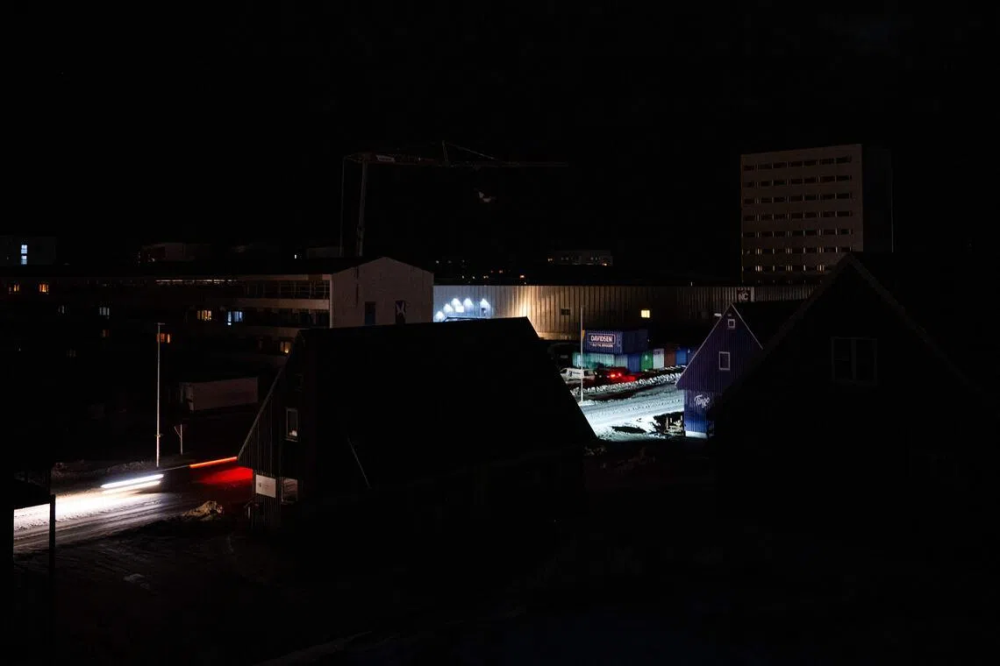
Nuuk, the capital of Greenland, was plunged into darkness over the weekend after powerful winds severely damaged the electricity grid. The sudden outage affected the entire city, impacting the lives of thousands of residents in this polar region that relies heavily on electricity for heating and lighting.
According to the state-owned electricity company Nokissiorfiit, the blackout began at approximately 12:30 a.m. on Saturday, when strong winds caused technical faults in the main transmission lines. The capital's roughly 20,000 residents – about a third of the island's population – found themselves temporarily cut off after the power outage disrupted internet and telephone services across large parts of the city.
Infrastructure and the challenges of the polar climate
The capital city of Nuuk relies primarily on the Boxfjord hydroelectric power station, a vital facility located several dozen kilometers from the city, for its electricity supply. While hydroelectric power is part of Greenland's clean energy strategy, the long transmission lines that traverse rugged, mountainous terrain make the network vulnerable to the region's harsh weather conditions and frequent snowstorms.
This incident highlights the significant challenges facing infrastructure in the Arctic, where maintaining essential services requires extraordinary engineering efforts to withstand polar winds and extremely low temperatures. Electricity in these regions is not merely a luxury; it is the lifeblood of the region, ensuring the operation of central heating systems that protect residents from freezing.
Emergency response and alternative solutions
In a swift response to the crisis, Nokyseurvet stated that emergency teams were immediately dispatched to assess the damage, despite the challenging conditions caused by strong winds. To mitigate the situation, emergency plans were activated, relying on backup diesel-powered generators within the city to compensate for the power outage caused by the hydroelectric plant's shutdown.
After nearly three hours of darkness, electricity gradually returned to some residential areas and vital facilities, bringing a sense of relief to residents. This event underscores the importance of having alternative energy sources and robust backup systems in remote and geographically isolated areas like Greenland to ensure the continuation of life in the face of nature's fury.