Air traffic in Greece was thrown into chaos on Sunday as the Greek Civil Aviation Authority announced the cancellation and delay of numerous flights at several major airports. This emergency measure followed an "unprecedented" technical malfunction in navigation systems, characterized by a sudden interruption of radio frequencies in the airspace, which severed vital communication channels between air traffic control towers and aircraft in flight.
Details of the crisis at Athens airport
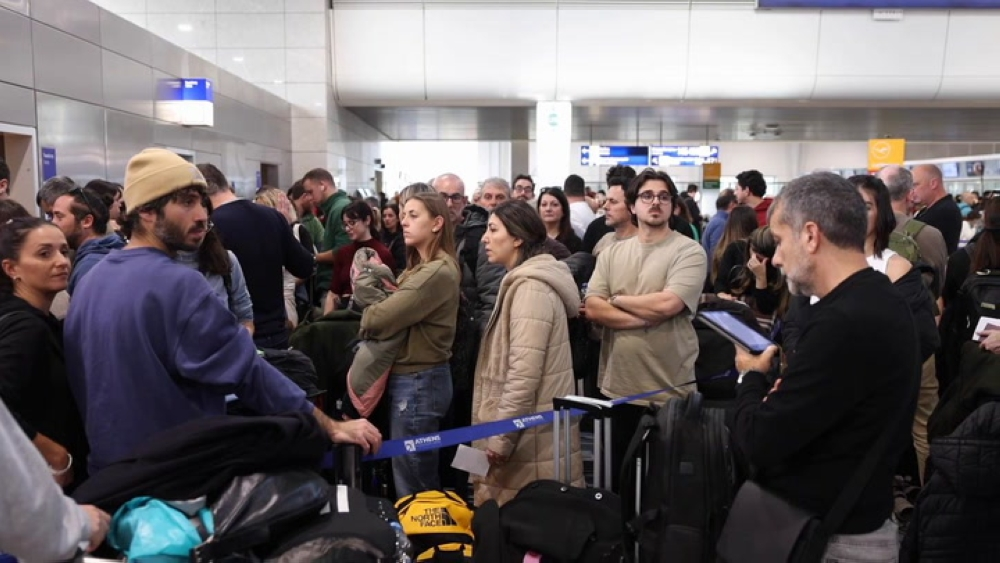
The crisis was primarily centered at Eleftherios Venizelos International Airport in Athens, where reports indicated thousands of passengers queuing in long lines inside the terminals, amid anxiety and anticipation due to the suspension of domestic and international flights. According to official data from the airport's press office, which serves as the country's main gateway and handled approximately 31.6 million passengers during the first 11 months of 2025, takeoffs and landings were completely halted for at least two hours, causing a backlog of aircraft and passengers.
The importance of wireless communications and the seriousness of the situation
A radio frequency outage is a major event in the world of aviation, as the safety of air navigation depends entirely on continuous and precise communication between pilots and air traffic controllers. These frequencies provide the necessary instructions for takeoff, landing, and course changes to avoid collisions. Therefore, any disruption to this system leaves authorities with only one option: to immediately suspend air traffic to ensure the safety of passengers and aircraft. This explains the strict measures taken by Greek authorities as soon as the fault was detected at 07:00 GMT.
Shifting routes and regional cooperation
In light of this emergency situation, authorities were forced to activate international emergency protocols, diverting most flights bound for Greek airports to neighboring Turkish airports. Greek state broadcaster ERT reported that the diversions lasted for up to three hours, reflecting the scale of the crisis and its impact on regional airspace in the Eastern Mediterranean.
dilapidated infrastructure and economic challenges
This incident sparked a wave of criticism regarding the readiness of Greek airport infrastructure. In this context, Panagiotis Psaros, head of the Greek air traffic controllers' union, described the incident as "very serious," directly blaming what he called "outdated equipment." This statement opens the door to broader discussions about the need to modernize air navigation systems in Greece, especially since the country relies heavily on tourism as a key pillar of its national economy, and any recurrence of such incidents could negatively impact Greece's reputation as a safe global tourist destination.
Air traffic gradually returned to normal starting at 11:00 GMT, after technical teams were able to control the malfunction, but the repercussions of the delay continued for several hours afterward to clear the backlog of flights.