
In a sudden development that disrupted air traffic in southeastern Europe, Greek authorities announced the complete closure of their airspace until further notice, bringing flights across the country to a standstill on Sunday. This emergency measure followed a sudden collapse in the radio frequencies used by air traffic control systems, the vital link between ground and air traffic control for ensuring aircraft safety.
Details of the technical malfunction and its impact
A major technical malfunction brought air traffic to a complete standstill, stranding thousands of passengers and halting operations at Greek airports, according to Reuters. The exact cause of the outage, which began early Sunday morning and escalated rapidly, remains unclear, prompting immediate intervention from civil aviation authorities to prevent any air disasters.
In a statement to Greek public broadcaster ERT, Panagiotis Psaros, president of the Greek Air Traffic Controllers Association, said: "For some reason, all frequencies suddenly went down… We were unable to communicate with aircraft in the air." He explained that the problem stemmed from the collapse of the central radio frequency systems at the Athens-Macedonia Regional Control Center, the largest and most important center in the country, which manages the Athens Flight Information Region, a vast area of airspace under Greek sovereignty.
The importance of communication systems and the context of aviation safety
Radio communication systems (VHF/UHF) are the cornerstone of global air traffic control operations. Without these frequencies, air traffic controllers lose the ability to direct aircraft, determine their flight paths, or ensure safe separation between them to prevent collisions. Closing airspace in such situations is a mandatory precautionary measure according to the standards of the International Civil Aviation Organization (ICAO), where safety takes precedence over any commercial or operational considerations.
Economic and geographical impact
This disruption has a significant impact given Greece's geographical location as a gateway between Europe and the Middle East, as well as its geography comprising thousands of islands that rely entirely on air travel for connectivity to the mainland. The aviation sector is a vital artery for the Greek economy, which is heavily dependent on tourism and constant movement of people.
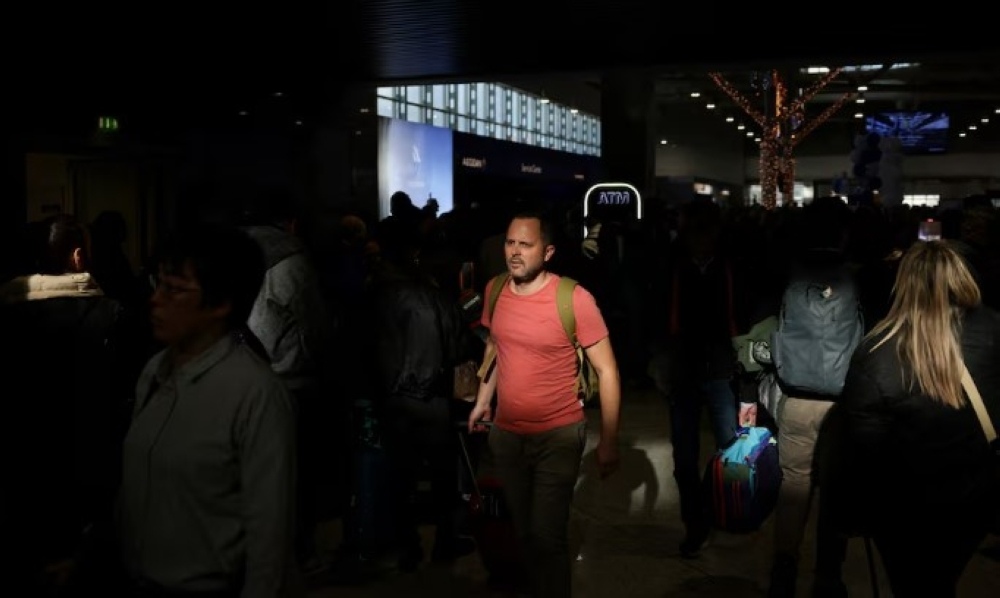
Flight tracking systems showed that Greek airspace was almost entirely clear of aircraft, while media reports indicated that departure lounges, particularly at Athens International Airport (Eleftherios Venizelos), were overcrowded with stranded passengers. Despite the crisis, the Civil Aviation Authority stated that some overflights (flying at high altitudes and not landing in Greece) might continue with limited flexibility, but strict restrictions remained in place on takeoffs and landings for public safety reasons.