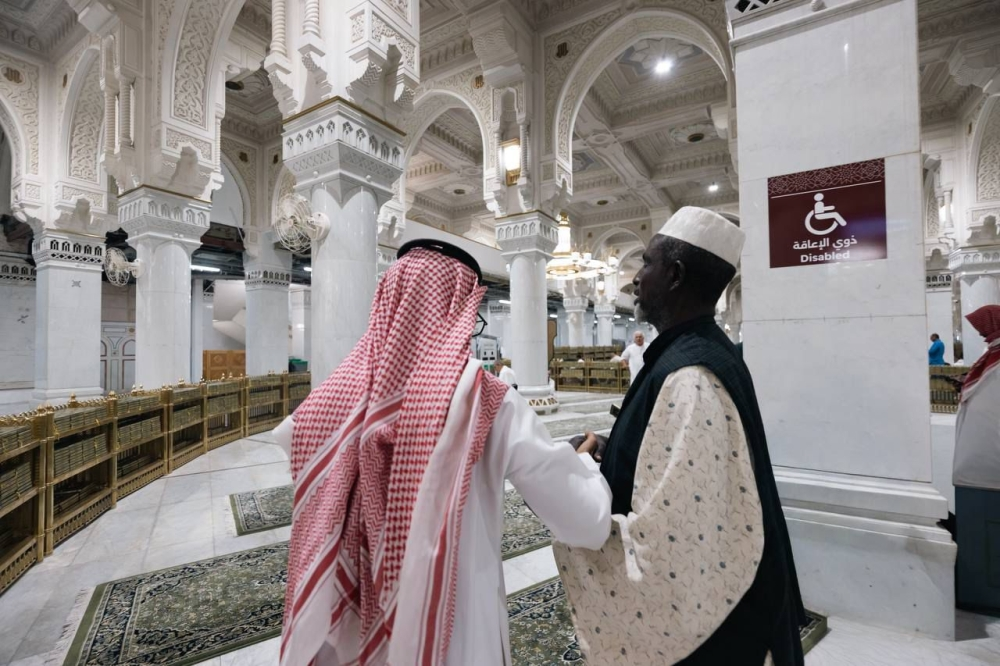
With the approach of the holy month of Ramadan, which sees millions of Muslims flocking to Mecca, the General Authority for the Care of the Grand Mosque and the Prophet's Mosque announced the completion of its preparations by setting up fully equipped and specialized prayer areas to serve the elderly and people with disabilities within the Grand Mosque and its courtyards. This step is part of a comprehensive system of services aimed at facilitating the performance of religious rites and ensuring a comfortable and safe spiritual environment for all visitors to the Grand Mosque.
Historical background and ongoing efforts:
Since its founding, the Kingdom of Saudi Arabia has placed great importance on serving the Two Holy Mosques and providing the utmost comfort for pilgrims. Over the decades, the Grand Mosque has witnessed massive expansion projects, most notably the successive Saudi expansions, which have not only aimed to increase capacity but have also focused on developing infrastructure to be more comprehensive and accessible to all. The initiative to allocate specially equipped prayer areas is an extension of this historical approach, reflecting a firm commitment to applying the highest standards of care and attention to all worshippers, especially those with special needs.
Details of facilities and locations:
The authority explained that these prayer areas were carefully designed and distributed to facilitate access and minimize effort for worshippers. Their locations were chosen near main entrances, elevators, and escalators. They are also equipped with all necessary amenities, including Zamzam water, copies of the Quran, and Quran stands, in addition to clear pathways and wide corridors to ensure ease of movement. The areas designated for men include:
- Ground floor opposite King Abdullah Gate (No. 68).
- First floor opposite King Fahd Gate (number 91).
- The prayer area of the southern square near Ajyad Bridge.
- Two prayer areas in the eastern courtyard.
- The prayer areas of the third Saudi expansion are located at gate number 123.
As for the prayer areas designated for women, they were distributed in the following locations:
- Ground floor near King Abdul Aziz Gate (No. 88).
- Ground floor in the Al-Shabika area, near door number 68.
- The prayer area of the southern square near Ajyad Bridge.
Importance and expected impact:
This initiative is of paramount importance both locally and internationally. Locally, these efforts align with the goals of Saudi Vision 2030, which emphasizes improving the quality of life, raising the level of services provided to citizens, residents, and visitors, and enhancing the Hajj and Umrah experience. Internationally, these facilities send a positive message to the entire Muslim world, affirming that the Two Holy Mosques are welcoming places for all, without exception. Millions of pilgrims from around the world benefit from these services, reinforcing the Kingdom's position as a leader in crowd management and the provision of humanitarian services in the holiest of places, and setting a model for making major religious sites more inclusive and humane.