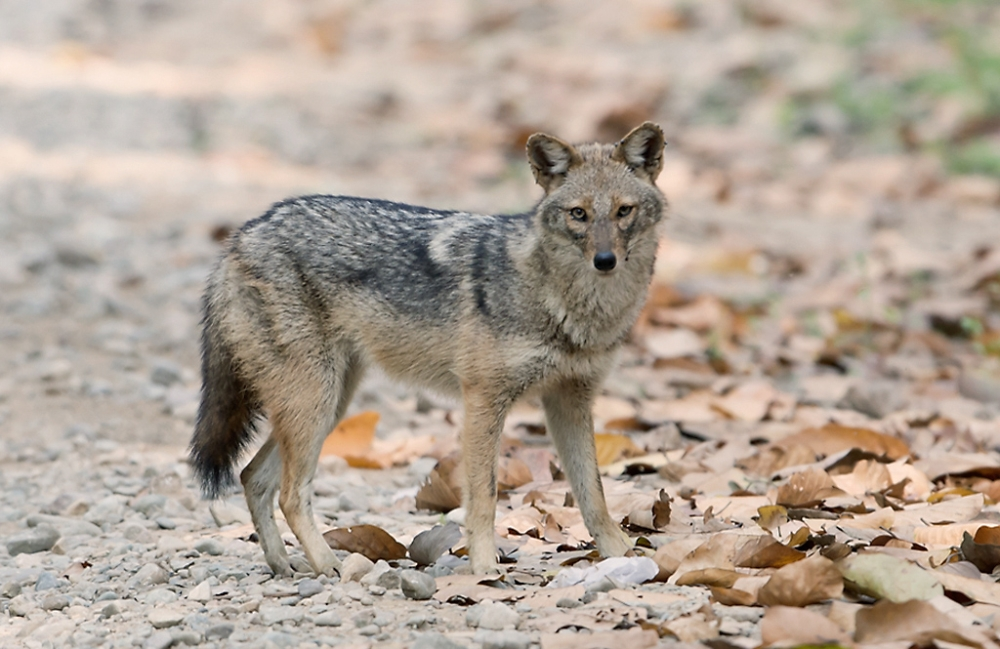
In a significant environmental and scientific achievement, the King Abdulaziz Royal Reserve Development Authority announced the first documented sighting of the golden jackal (Canis aureus) within the reserve's boundaries in the Riyadh region. This discovery, documented through a specialized monitoring program, is tangible evidence of the Kingdom's successful efforts in rehabilitating ecosystems and enhancing biodiversity, in line with the ambitious goals of Vision 2030.
The importance of the discovery in the context of environmental conservation
The appearance of the golden jackal is not merely the recording of a new species in the area, but a vital indicator of the reserve's ecosystem recovery. The presence of predators like the jackal signifies that the food chain is beginning to regain its natural balance, demonstrating the availability of prey and the resources necessary for its sustainability. Abdulaziz Al-Furaih, the official spokesperson for the King Abdulaziz Royal Reserve Development Authority, confirmed that this sighting is living proof of the effectiveness of the rehabilitation projects adopted by the Authority, noting that the artificial Tanha Oasis has proven its success as a leading model in creating attractive environments for wildlife.
Historical background and national efforts
The King Abdulaziz Royal Reserve was established as part of the network of royal reserves launched by royal decree in 2018, as part of a strategic transformation aimed at protecting and reintroducing wildlife in the Kingdom. These efforts are part of broader initiatives such as the Saudi Green Initiative, which seeks to increase vegetation cover and combat desertification. Historically, the Arabian Peninsula was home to many animal species whose numbers have dwindled due to overhunting and urban expansion. The golden jackal is a highly adaptable animal, ranging from southeastern Europe to southern Asia, but its presence in central Saudi Arabia has been very limited in documentation, giving this discovery particular scientific significance.
Advanced technologies in environmental monitoring
This achievement was made possible by the use of modern monitoring technologies. The authority explained that the environmental monitoring program relied on the deployment of 103 field cameras (camera traps) in various natural environments within the reserve. These cameras, which activate automatically upon motion detection, are an effective tool for documenting large and medium-sized mammals that are difficult to observe using traditional methods due to their shy nature and nocturnal activity. The cameras successfully captured images of two golden jackals within the Tanha Oasis, providing conclusive evidence of their presence.
Future impact on research and biodiversity
This observation opens new horizons for researchers and ecologists to study the behavior and geographical distribution of the golden jackal in environments where it has not been previously recorded. Previously, confirmed sightings were limited to areas such as Al-Hofuf and Jubail in the east, and Tabuk and Dumat Al-Jandal in the north. This documentation helps fill a significant knowledge gap regarding the spread of this species in the Kingdom. It also reinforces the status of royal reserves as vital natural laboratories that contribute to achieving environmental sustainability goals and protecting natural treasures for future generations, and supports the Kingdom's leading role regionally and internationally in the field of wildlife conservation.