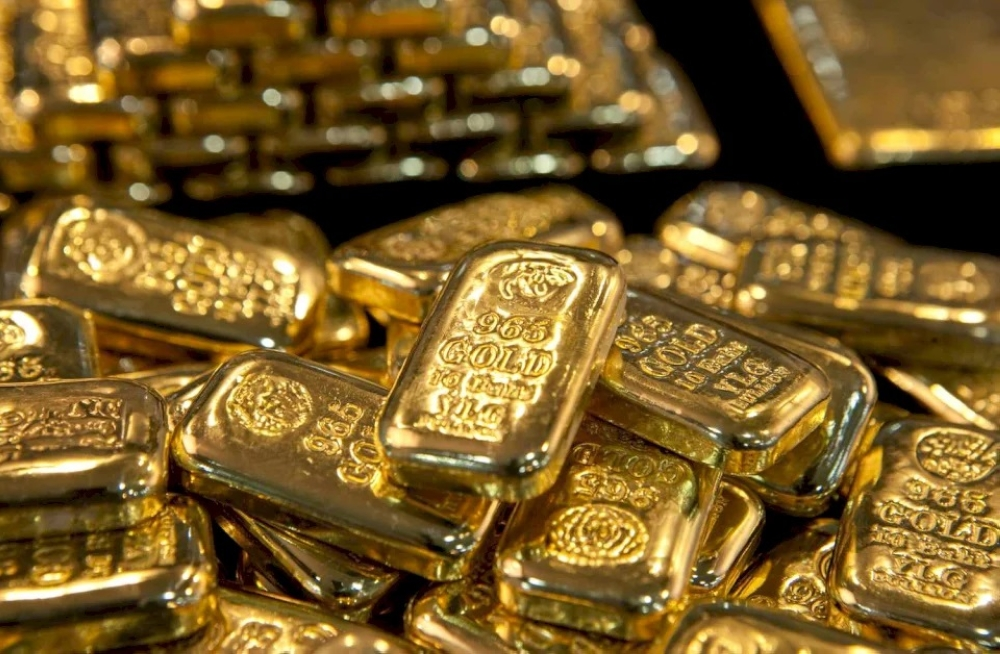
Gold prices experienced a volatile week, fluctuating between gains and losses as investors awaited key US economic data that could influence the Federal Reserve's monetary policy. While gold reached highs in some sessions, supported by a temporary weakening of the dollar, it retreated in others following data showing a strong labor market, which reduced expectations of near-term interest rate cuts.
General context: Gold as a safe haven in the face of economic uncertainty
Historically, gold has been considered a primary hedge and safe haven for investors during times of economic uncertainty and geopolitical tensions. This status stems from its being a scarce physical asset whose performance is not directly correlated with stock or bond markets. During periods of high inflation, gold tends to retain its value better than paper currencies, further enhancing its appeal. The inverse relationship between gold and the US dollar is a key market driver; when the dollar weakens, gold becomes cheaper for holders of other currencies, increasing demand, and vice versa.
The importance of economic data and Federal Reserve decisions
Market attention is currently focused on the Federal Reserve's interest rate decisions. Higher interest rates negatively impact gold, which does not yield returns, as they increase the opportunity cost of holding the precious metal compared to investing in bonds that offer guaranteed returns. Therefore, investors are closely monitoring key economic indicators such as inflation data (the Consumer Price Index) and jobs figures, as these provide clues about the Fed's future actions. Any sign of an economic slowdown could prompt the central bank to cut interest rates, which would be positive news for gold prices.
The global and regional impact of gold price fluctuations
The effects of gold price volatility extend beyond individual and institutional investors to encompass the global economy. Central banks worldwide, particularly in emerging economies like China and India, are increasing their gold reserves as part of a strategy to diversify assets and reduce reliance on the US dollar. Regionally, gold markets in the Middle East are directly affected, as gold is an integral part of the culture and a key component in retail and jewelry markets. Any sharp price increase can lead to a temporary slowdown in consumer demand, while a decrease encourages buying.
Looking ahead: Expect new record highs
Despite short-term volatility, many analysts predict that gold's upward trend could continue in the long term. Supporting factors include ongoing central bank purchases, persistent geopolitical risks, and the inevitable expectation of a shift toward a more accommodative monetary policy by the Federal Reserve. Experts believe gold is poised to achieve a new record high in the near future, especially if clear signs emerge of a global monetary easing cycle.