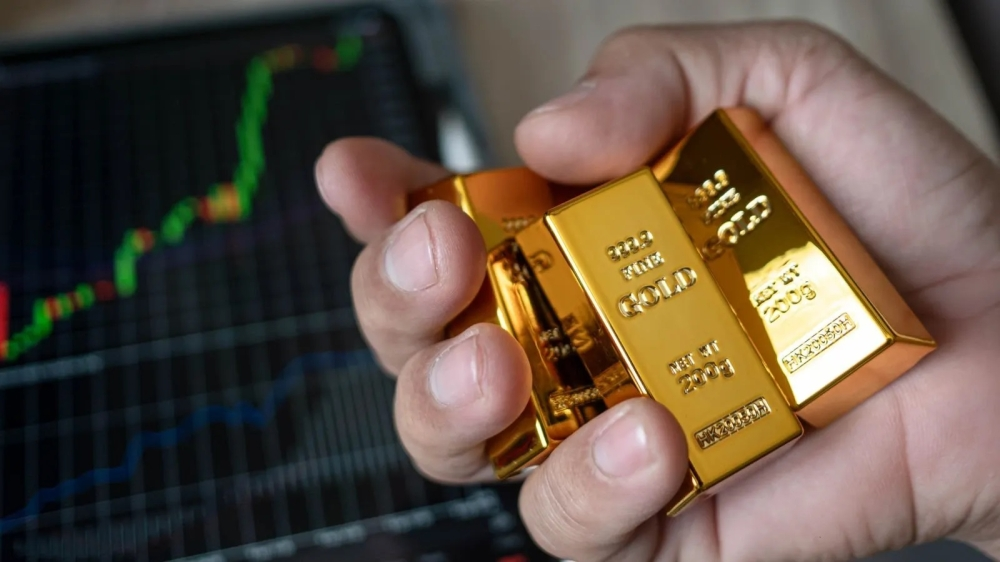
Gold prices have risen sharply in recent trading, settling above key support levels, driven by renewed investor demand for safe-haven assets. This move comes amid escalating geopolitical tensions in various parts of the world, which are increasing uncertainty in financial markets and driving capital towards the precious metal as a hedge against risk.
The historical context of gold as a safe haven
Throughout history, gold has established itself as a unique investment asset and a safe haven for investors during times of crisis. In periods of economic turmoil, such as the 2008 global financial crisis, health crises like the COVID-19 pandemic, or even military conflicts, gold has proven its ability to maintain its value and even generate significant gains. This is due to its unique characteristics: it is a tangible, physical asset, not tied to the performance of any particular government or company, and its relative scarcity protects it from inflation and the erosion of the purchasing power of paper currencies. Therefore, when market uncertainty prevails, demand for gold increases among both individuals and central banks, driving up its price.
Analysis of current prices and their impact
In today's trading, the spot price of gold rose to approximately $2,355 per ounce, while gold futures climbed to trade near $2,370 per ounce. This increase directly reflects investor anxiety over global events, with ongoing tensions in the Middle East and Eastern Europe serving as a primary driver of this rise. Internationally, the rising price of gold is influencing the strategies of central banks, which continue to increase their reserves of the precious metal to diversify their assets away from the US dollar. Regionally, this increase is enhancing the importance of gold as an investment tool for citizens in the Middle East, who have historically favored it as a means of preserving their wealth. Locally, this rise is directly reflected in gold prices in local markets, impacting the trade in gold jewelry and household savings decisions.
Performance of other precious metals
The positive performance wasn't limited to gold; it extended to other precious metals, which often move in the same direction. Silver saw a notable rise, reaching nearly $30 an ounce, benefiting from its dual role as both an investment asset and a vital industrial metal. Similarly, platinum climbed to around $1,040 an ounce, while palladium traded at approximately $980, supported by industrial demand in addition to their status as precious metals.
Future gold price forecasts
Many analysts expect gold prices to remain supported in the medium term, especially if geopolitical and economic uncertainty persists. Reports from major investment banks indicate that continued strong central bank purchases, coupled with rising demand from Asian markets, will provide a solid foundation for prices. However, the future path of interest rates by global central banks, particularly the US Federal Reserve, remains the most influential factor. Any move toward tighter monetary policy could put downward pressure on gold prices, given its status as a non-yielding asset.