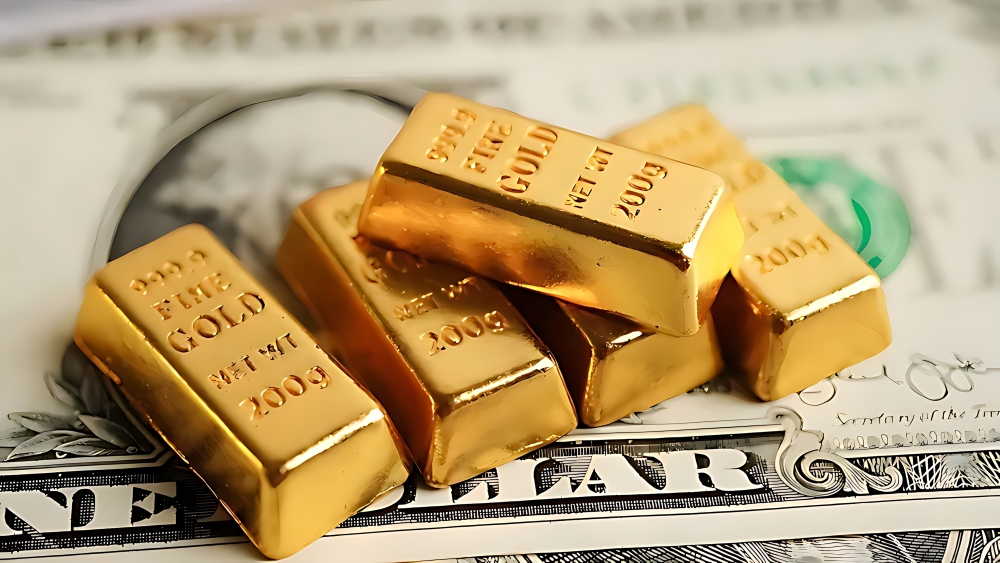
Gold prices continued their strong upward trend today, supported by a broad wave of demand for safe-haven assets, as global markets cautiously await the release of US jobs data. This data is a crucial indicator that could shape the Federal Reserve's (the US central bank) monetary policy in the coming period, particularly regarding the path of interest rates.
Gold performance and record numbers
In a practical translation of this momentum, gold rose 0.8% in spot trading to $4,485.39 per ounce, nearing its all-time high, after a significant jump of nearly 3% in the previous session. US gold futures for February delivery also saw a notable increase of 1% at settlement, reaching $4,496.10, reflecting investor optimism about the continuation of the buying momentum.
Economic context and interest rate impact
This rise comes amid a traditional inverse relationship between gold and interest rates; the precious metal tends to thrive in low or expected low-interest-rate environments, given that it is an asset that does not generate cyclical returns like bonds. Markets are awaiting US labor market data for clues about the health of the world's largest economy. If the data comes in weaker than expected, it will strengthen the likelihood of monetary policy easing and interest rate cuts, which would directly benefit gold.
recovery of other precious metals
The rally wasn't limited to gold; the positive wave extended to other precious metals, indicating a broad flow of funds into real assets. Silver saw a significant jump in spot trading, rising 5.4% to $80.68 per ounce. In the industrial precious metals sector, platinum climbed 7.2% to $2,435.20 per ounce, while palladium rose 5.9% to $1,821.68 per ounce.
Strategic importance and safe haven
These movements are particularly significant given the geopolitical tensions and economic uncertainty that may be clouding the global landscape. Historically, gold has been considered a store of value and a hedge against inflation and currency volatility. The simultaneous rise in gold, silver, and other precious metals reflects investors' desire to diversify their portfolios and reduce risk—a behavior that typically occurs before major economic announcements or during times of financial uncertainty.