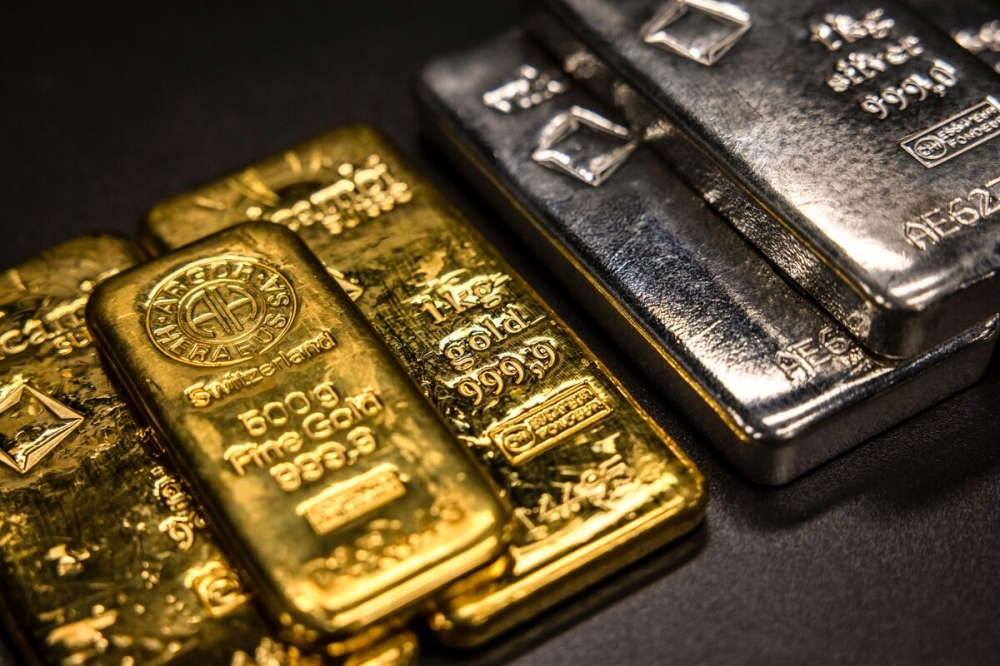
Precious metals markets saw mixed and interesting movements on Thursday, with gold prices declining significantly due to a relative rise in the value of the US dollar and a prevailing sense of caution and anticipation among investors in global markets. This temporary shift away from the yellow metal comes as financial markets eagerly await the release of crucial US inflation data, which will shape the Federal Reserve's monetary policy in the coming period.
Gold and US dollar performance
According to the latest data, spot gold prices fell 0.4% to $4,323.57 per ounce by 12:10 GMT. US gold futures also declined, dropping 0.4% to settle at $4,356.10. This decline is closely linked to the rise in the US dollar index, which edged up slightly after reaching its highest level in nearly a week. It is a well-established economic principle that there is an inverse relationship between the dollar and gold; when the US currency strengthens, the cost of holding gold increases for investors using other currencies, thus putting downward pressure on demand and driving prices down.
Silver and platinum set record highs
In contrast to gold, other metals showed strong performance, reflecting different supply and demand dynamics. Silver hovered near record highs, and despite a slight dip of 0.1% to $66.19 an ounce, it remained very close to its all-time high of $66.88 reached in the previous session. Platinum also saw a significant jump, rising 1.3% to $1,924.05, its highest level in over 17 years, reflecting increasing industrial and investment demand. Palladium followed suit, climbing 2.8% to $1,693.55, its highest level in nearly three years.
The importance of inflation data and its economic impact
The upcoming US inflation data is of paramount importance in determining the path of interest rates. Historically, gold has been a traditional hedge against inflation and economic instability, but its appeal is negatively affected in a high-interest-rate environment. This is because gold is a non-recurring asset (unlike bonds or deposits), and therefore, higher interest rates increase the "opportunity cost" of holding it. Consequently, investors closely monitor economic indicators; any sign of persistently high inflation could prompt the Federal Reserve to tighten monetary policy, which would support the dollar and put pressure on gold, and vice versa.
In conclusion, markets remain in flux between economic concerns that support safe havens, and monetary data that strengthens the dollar, making the coming period crucial in determining the overall direction of precious metals.