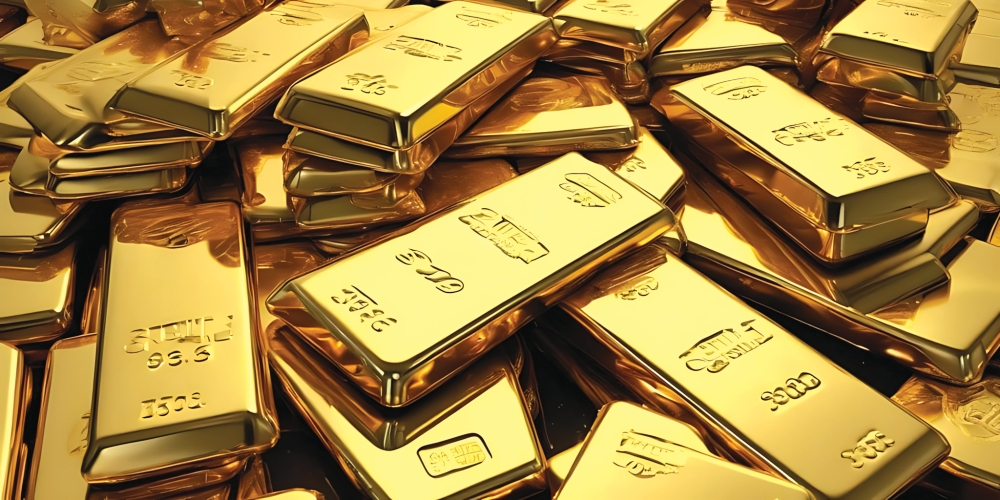
Gold retreats from three-week high
Gold prices saw a notable decline of over 1.5% during Tuesday's trading session, retreating from their highest level in three weeks. This drop was driven by a combination of economic and financial factors, most prominently the significant rise in the value of the US dollar, in addition to profit-taking by investors following the precious metal's gains in previous sessions. Specifically, spot gold fell by 1.6%, while US gold futures declined by 1.25%, reflecting a cautious sentiment prevailing in the markets.
General context: The impact of the strong dollar and Federal Reserve policies
Historically, there has been a strong inverse relationship between the dollar and gold. When the dollar index, which measures its value against a basket of major currencies, rises, dollar-denominated gold becomes more expensive for buyers using other currencies, thus reducing demand. The dollar rose 0.1%, supported by comments from Federal Reserve officials indicating no intention to cut interest rates in the near future to combat inflation. A higher interest rate environment increases the opportunity cost of holding gold, which does not generate a yield, thus diminishing its appeal as an investment asset.
Atlanta Federal Reserve President Raphael Bostic's remarks added another dimension to the situation, as he warned that the US economy could enter a period of structurally high unemployment due to companies adopting artificial intelligence technologies—a shift the Fed may not be able to counter using traditional monetary policy tools like interest rate cuts. This outlook reinforces uncertainty and supports the dollar's strength in the foreseeable future.
Importance and expected impact: between geopolitical tensions and economic pressures
Despite current pressures, gold continues to serve as a safe haven during times of political and economic turmoil. Traders are closely monitoring global geopolitical tensions, including the nuclear talks between Iran and the United States, and ongoing concerns about global trade disputes. These tensions typically lead to increased demand for gold as a hedge against risk. However, the strength of the dollar and expectations of higher interest rates appear to have temporarily diminished gold's appeal as a safe haven.
As for other precious metals, markets saw mixed movements; silver fell by 1.2%, while platinum rose by 1% and palladium by 2.3%, reflecting varying industrial supply and demand dynamics for each metal. The future of gold prices remains contingent on a delicate balance between upcoming economic data, particularly inflation and employment figures, and developments on the global geopolitical stage.