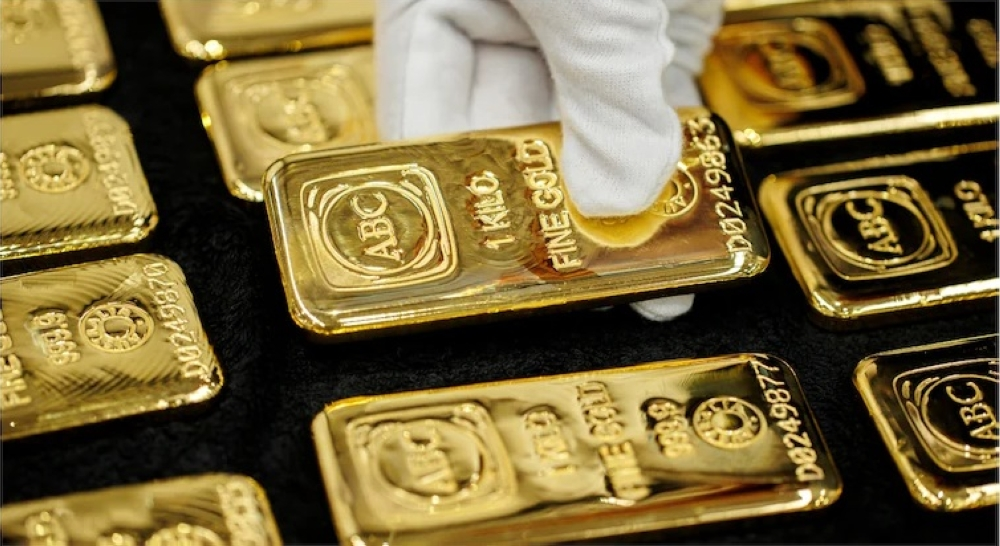
Gold prices experienced a sharp decline of over 2% in daily trading, reflecting a significant shift in investor appetite as they began to shy away from safe-haven assets. This drop comes amid strong economic data and expectations of tighter monetary policies from major central banks, diminishing the appeal of the non-yielding precious metal.
In trading details, the price of gold in spot transactions fell significantly, and US gold futures also declined. The decline wasn't limited to gold alone; other precious metals also saw a sharp drop, with silver, platinum, and palladium all declining. This underscores the cautious optimism currently prevailing in financial markets and investors' desire to seek higher returns through riskier assets such as stocks.
The historical context of gold as a safe haven
Throughout history, gold has earned its reputation as a “safe haven” thanks to its unique properties. It is a rare physical asset, cannot be printed like paper money, and retains its value over the long term. For this reason, investors, financial institutions, and even central banks turn to it during times of economic crisis, geopolitical tensions, and war. During crises such as the 2008 global financial crisis or the 2020 COVID-19 pandemic, gold prices rose sharply as investors sought to protect their wealth from stock market volatility and currency devaluation due to inflation.
The importance of the event and its expected impact
The current decline in gold prices is not merely a temporary price movement, but rather a significant indicator of improving confidence in the global economy. When investors sell gold, they are signaling their expectation of strong economic growth and stability in financial markets, making investments in stocks and bonds more attractive.
Internationally, this trend impacts central bank policies, particularly those of the US Federal Reserve. With improving economic data, the Fed may continue its tight monetary policy and raise interest rates, increasing the opportunity cost of holding gold. Furthermore, the strength of the US dollar, which often accompanies interest rate hikes, makes gold more expensive for buyers using other currencies, thus reducing demand.
Regionally and locally: In regions like the Middle East and South Asia, where gold is an important part of the culture and a personal investment, lower prices may encourage increased demand from consumers and individuals for adornment and savings purposes. However, for investors who hold gold as part of their portfolios, this decline may represent short-term losses, prompting them to reassess their investment strategies in light of new economic data.