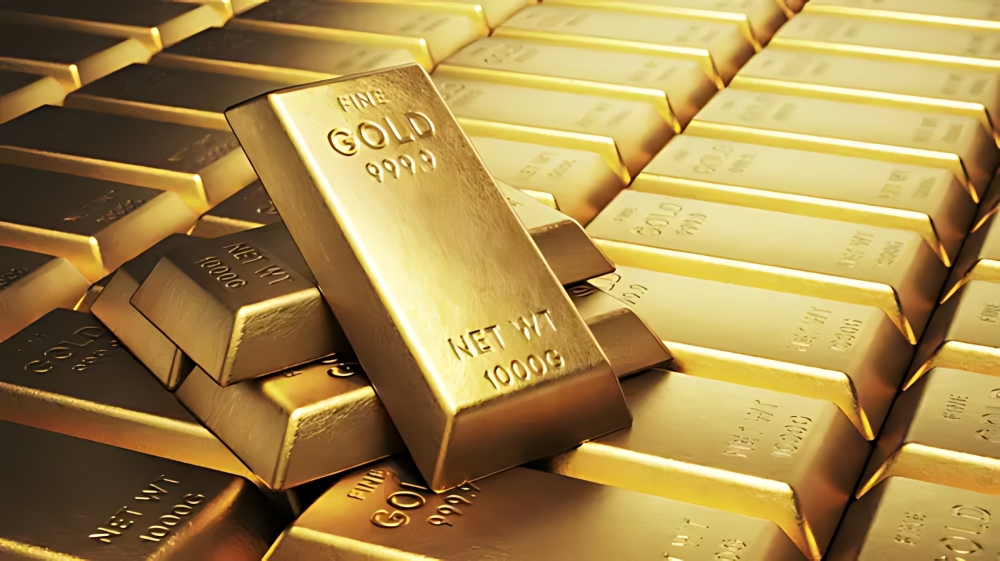
Gold prices edged lower today as investors took profits after the precious metal's gains in the previous session, which saw it reach its highest level in nearly two weeks. This decline comes amid cautious anticipation in global markets, as traders analyze conflicting signals from US Federal Reserve officials regarding the future path of interest rates.
In the latest trading, spot gold prices dipped slightly to around $2,353.49 an ounce , while U.S. gold futures also fell by a similar margin to settle at $2,350.00 an ounce . This move comes after mixed economic data, increasing uncertainty about the timing of the first interest rate cut by the world's most powerful central bank.
General context and impact of monetary policy
Historically, gold has been considered a safe haven for investors during times of economic and geopolitical turmoil. However, its price has a strong inverse relationship with interest rates and the US dollar. When interest rates rise, the return on interest-bearing assets like bonds increases, reducing the appeal of gold, which does not generate returns. Conversely, lower interest rates reduce the opportunity cost of holding gold and support its price.
The current dilemma lies in the fact that some Federal Reserve members are hinting at a possible interest rate cut soon to support economic growth, while others insist on maintaining a tight monetary policy to fully curb inflation. This split in opinion keeps markets on edge, awaiting any new data, particularly inflation and labor market figures, which will be crucial in shaping the Fed's decision at its upcoming meetings.
Importance and expected impact on markets
The US Federal Reserve's decision not only affects the domestic economy but also has repercussions worldwide. Lowering US interest rates typically weakens the dollar, making dollar-denominated gold cheaper for buyers using other currencies, which can increase global demand. This impact extends to central banks around the world, which have been among the largest buyers of gold in recent years as they seek to diversify their reserves away from the dollar.
Regionally, gold markets in the Middle East and North Africa remain highly sensitive to these fluctuations, as the precious metal is a key investment and cultural asset. Other precious metals also saw mixed movements; silver fell 0.6% to $30.04 per ounce , while platinum rose 0.3% to $1,024.75 , and palladium lost 0.3% to $919.00 . These metals are also influenced by industrial demand in addition to monetary factors.