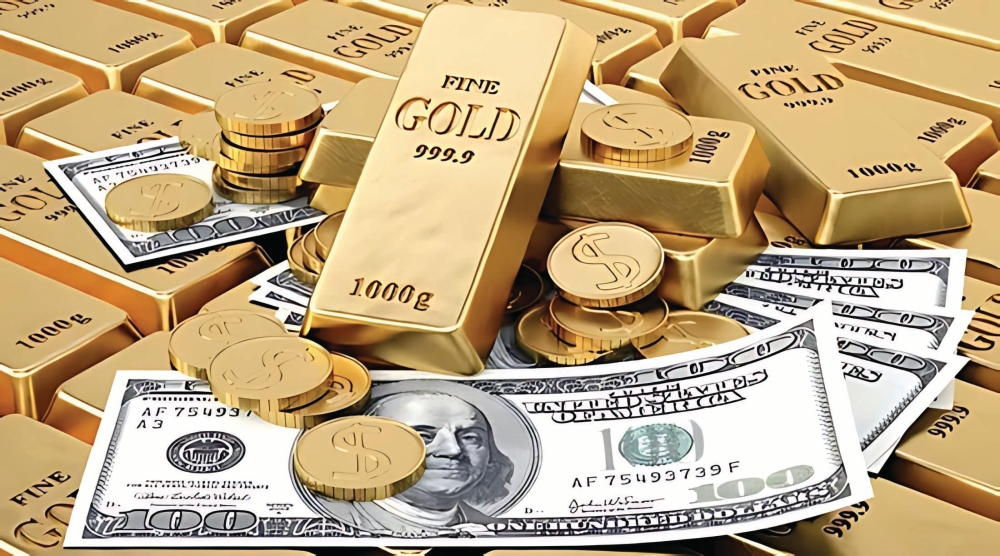
Gold prices fell sharply on Thursday, pressured by a stronger US dollar, as investors remained cautious ahead of key US labor market data. These movements come as markets assess the future path of interest rates and monitor geopolitical developments related to US pressure on Venezuela.
Details of price movements and precious metals
According to the latest data, spot gold fell 0.7% to $4,423.20 per ounce by 05:39 GMT. US gold futures (February delivery) also declined, dropping 0.7% to $4,432.00. This synchronized decline in spot and futures prices suggests a widespread belief among traders that short-term selling pressure persists.
As for other metals, silver suffered greater losses, with its price falling by 2.7% to $76.01 per ounce, after a strong upward surge that saw it reach an all-time high of $83.62 on December 29, 2025. Platinum also fell by 3.2% to $2,232.50, and palladium declined by 2.4% to $1,720.75 per ounce.
The inverse relationship between the dollar and gold
This decline in gold prices coincides with the dollar stabilizing near its highest level in over two weeks. Historically, gold prices have an inverse relationship with the US dollar; a stronger dollar makes gold—which is priced in dollars—more expensive for holders of other currencies, thus reducing global demand and putting downward pressure on prices.
The importance of job data and its impact on interest rates
Global markets are currently focused on the upcoming US jobs report, due later this week. This report is crucial as it serves as a key indicator for the Federal Reserve (the US central bank) in formulating its monetary policy. Strong jobs data could suggest continued inflation or a robust economy, giving the Fed justification to keep interest rates high for an extended period.
It is economically known that high interest rates increase the “opportunity cost” of holding gold, which does not generate a periodic return (such as bank interest or stock dividends), prompting investors to shift towards bonds or dollar deposits, thus diminishing the appeal of gold as an investment haven in a high-interest environment.
The geopolitical context and its impact
Despite economic pressures, geopolitical factors continue to influence prices, with investors closely monitoring ongoing US pressure on Venezuela. While investors typically turn to gold as a safe haven during times of political tension and uncertainty, the strength of US economic data and the dollar's influence appear to be the dominant factors shaping market sentiment at present, limiting gold's ability to capitalize on current geopolitical tensions.