Gold prices fell sharply on Tuesday, pressured by improved risk appetite in global financial markets, which prompted investors to shift towards higher-yielding assets such as stocks. This decline comes as markets await a series of key economic data releases from the United States this week, which are expected to provide further clues about the Federal Reserve's monetary policy path and interest rate forecasts.
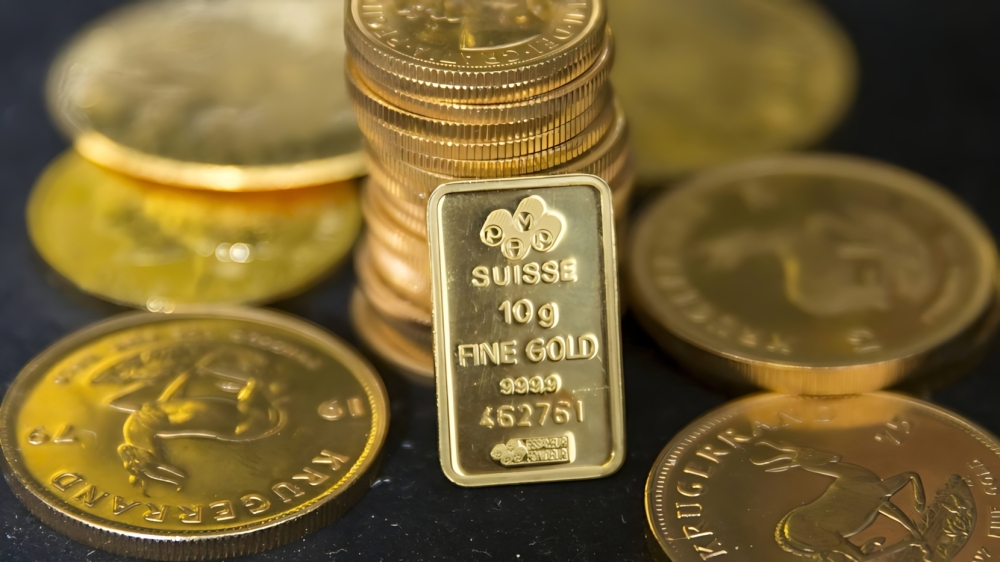
In trading details, the price of gold fell in spot transactions, and US gold futures also declined. The decline wasn't limited to gold; it extended to other precious metals, with silver, platinum, and palladium all falling, reflecting a broader sell-off in commodity markets linked to safe havens.
Historical context: Gold as a safe haven
Gold has historically been known as a “safe haven” for investors during times of economic uncertainty and geopolitical tensions. When market risks increase, whether due to a potential recession, financial crises, or international conflicts, investors tend to buy gold to preserve the value of their assets. The relationship between gold and riskier assets, such as stocks, is generally inverse; a booming stock market typically means a decline in gold's appeal, and vice versa. The current shift towards stocks suggests that investors are more optimistic about global economic growth, thus reducing the need to hedge with gold.
The importance of economic data and its expected impact
This week, all eyes in the markets are on the United States, where key data releases such as the Consumer Price Index (CPI) and retail sales figures are scheduled. These figures are crucial because they directly influence the Federal Reserve's interest rate decisions. If the data comes in stronger than expected, it could prompt the Fed to keep interest rates high for longer to curb inflation—a negative scenario for gold. Higher interest rates increase the opportunity cost of holding gold, which does not generate a yield. Conversely, if the data points to an economic slowdown, it could reinforce expectations of an interest rate cut, weakening the dollar and supporting gold prices in the long term.
Despite the current pressures, the long-term outlook for gold remains supported by several factors, including continued geopolitical uncertainty in various parts of the world, as well as the possibility of a future monetary easing cycle by the Federal Reserve, which could weaken the US dollar and make gold more attractive to international investors.